


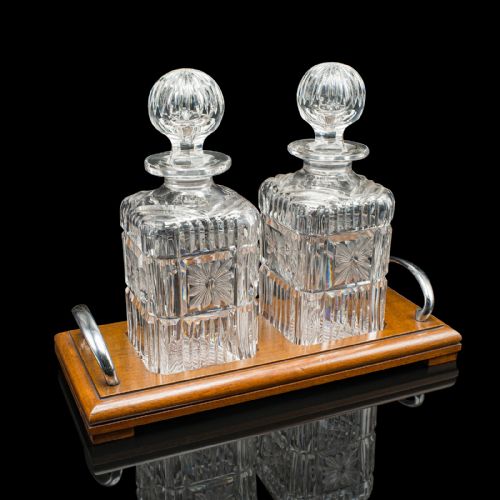
Clear Handle Decanter
These clear handle decanter pieces combine glass and metalwork from the Victorian and Edwardian eras, offering functional elegance for the table.
Clear Handle Decanter
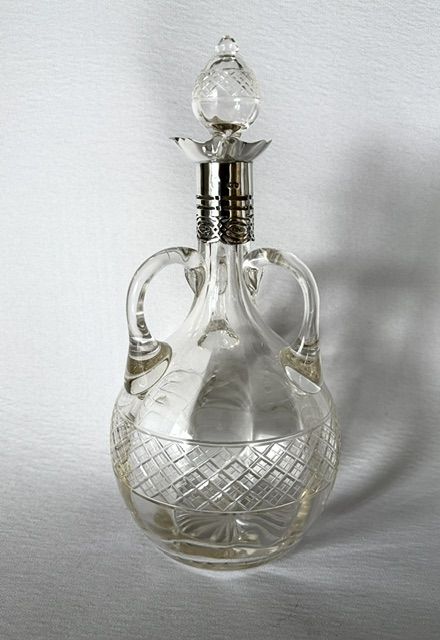
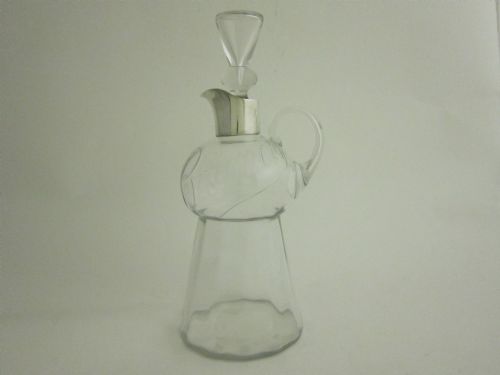
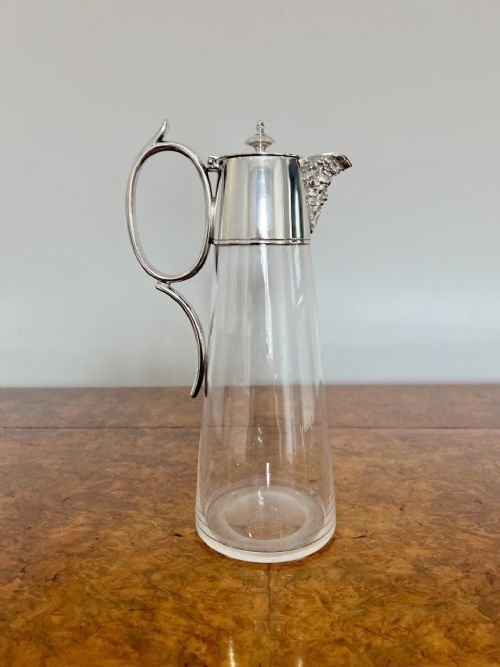
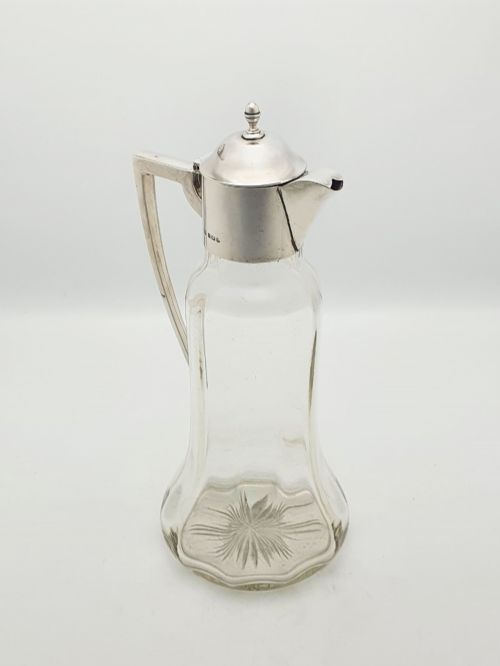
When you search for a clear handle decanter, you look at vessels designed to hold wine, spirits, or water during the nineteenth and early twentieth centuries. The form typically combines a transparent glass body with a prominent handle, often accompanied by silver plate or sterling silver mounts.
You are most likely to meet Edwardian and Victorian examples on this page, spanning periods from the 1860s through to the 1910s. These pieces appear as claret jugs, spirit ewers, and brandy decanters, frequently displaying cut glass or cranberry glass bodies alongside metal mounts in styles like Art Nouveau and the Aesthetic Movement.
How they were made
Makers utilised clear glass, lead crystal, and cranberry glass, shaping vessels through blowing and cutting techniques. Surface decoration often involved intricate engraving or latticinio threads embedded within the glass material.
Metal components were cast from sterling silver or silver plate to form handles, collars, and hinged lids. These metal mounts were securely fitted to the glass bodies, sometimes incorporating naturalistic Art Nouveau curves or geometric Aesthetic Movement lines.
Some Victorian households deployed these jugs not just for claret, but for secretly watering down the port before anyone noticed.
What varies in quality
The standard of cutting on the glass body distinguishes finer examples from simpler vessels, with deep, crisp facets catching the light more effectively. Weight and wall thickness also play a role in how substantial the piece feels in the hand.
Metalwork execution marks the difference at the upper end of the range, particularly where mounts are cast with distinct detailing and robust hinge mechanisms. Maker attribution, through stamped hallmarks or registry marks, adds another layer of distinction.
Hukin & Heath·Mappin & Webb·Dr Christopher Dresser
The Clear Handle Decanter Glossary
- Claret jug
- A pouring vessel specifically designed for serving red wine at the dining table. They frequently feature silver-plated or sterling silver mounts and hinged lids.
- Cranberry glass
- A rich red-pink transparent glass created by adding gold chloride to the molten metal batch. It is characteristic of nineteenth-century decorative tableware.
- Latticinio
- A decorative glass technique incorporating opaque white or coloured glass threads into a clear glass matrix. This creates delicate twisted patterns within the body of the vessel.
- Silver plate
- A manufacturing method where a thin layer of silver is bonded to a base metal substrate. This technique allowed makers to produce elaborate mounts at a lower cost than solid silver.
Clear Handle Decanter: Frequently Asked Questions
How do I know if it is Victorian or Edwardian?
Victorian pieces often display heavier cut glass patterns, deep ruby cranberry tones, or ornate ornamentation typical of the nineteenth century. Aesthetic Movement and early Art Nouveau influences also point towards the later Victorian decades.
Edwardian examples tend to show lighter, more refined proportions and brighter silver plating. Stylistic shifts towards simpler Edwardian tastes or crisper Edwardian cut glass help separate them from older 1860s and 1880s items.
Are these decanters safe to use for serving wine?
Most of these antique glass vessels remain robust enough for holding and pouring wine or water today. The interior glass surfaces are non-porous and generally clean up well with careful washing.
Care must be taken with pieces featuring silver-plated mounts or hinged lids, which should be hand washed gently. Avoiding harsh abras<bos>4ves preserves both the glass clarity and the original metal plating.
What is the difference between crystal and glass?
Lead crystal contains a proportion of lead oxide, which increases the weight, refractive index, and acoustic resonance of the material. This allows for deeper and sharper cutting without weakening the structure.
Standard glass lacks this lead content, resulting in a lighter vessel with a different way of catching the light. Both materials appear across the nineteenth-century pieces on this page.