


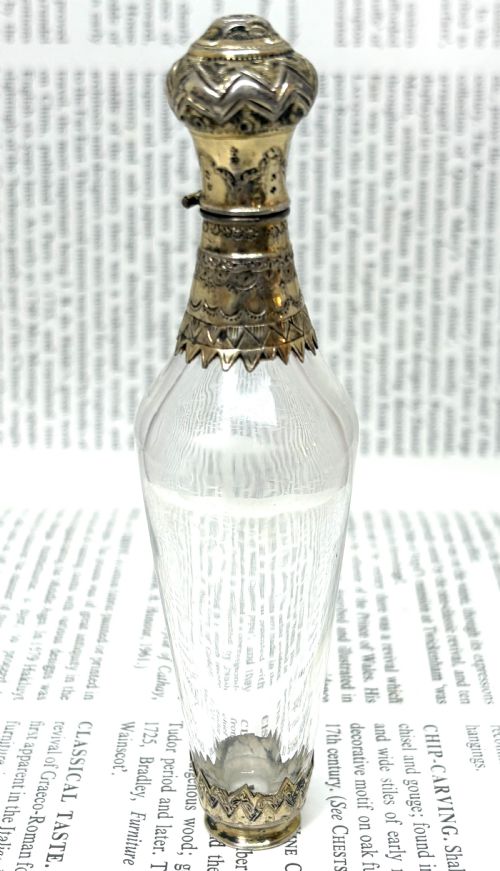


Clear Glass Perfume
Clear glass perfume bottles bring tactile weight and refined craftsmanship to a dressing table.
Clear Glass Perfume
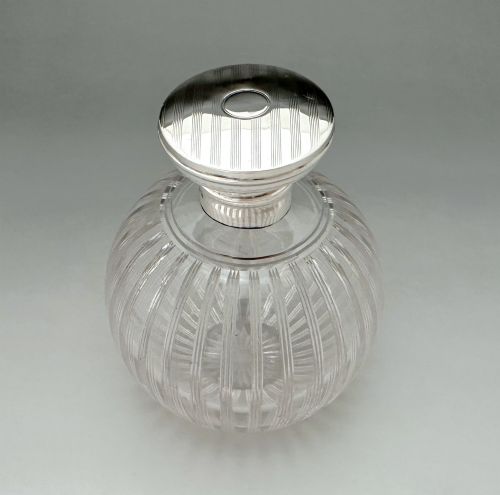
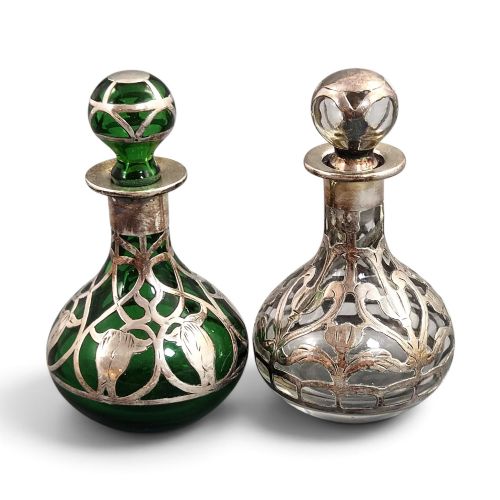
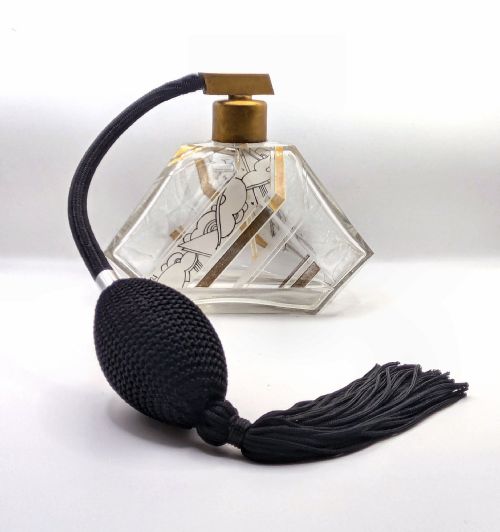
Clear glass perfume vessels span utilitarian travel containers and decorative dressing table accessories from past centuries. A buyer investigating clear glass perfume discovers diverse forms including scent bottles, atomisers, and ewers.
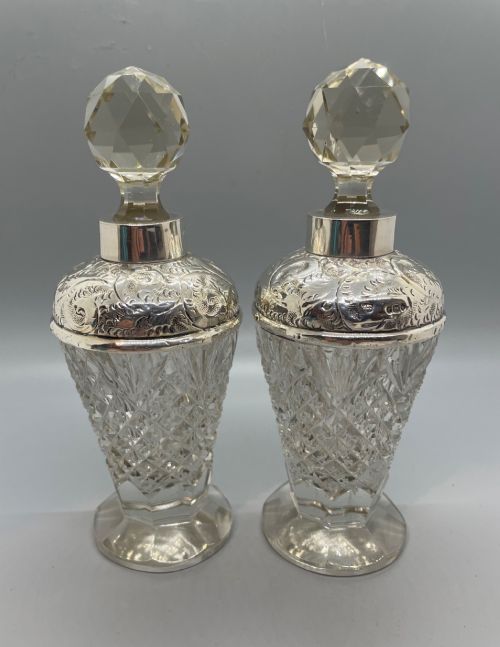
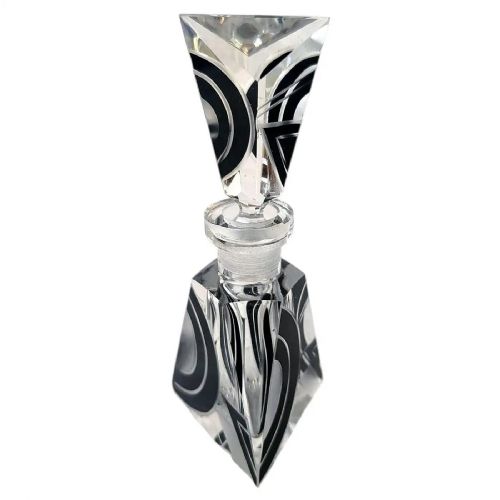
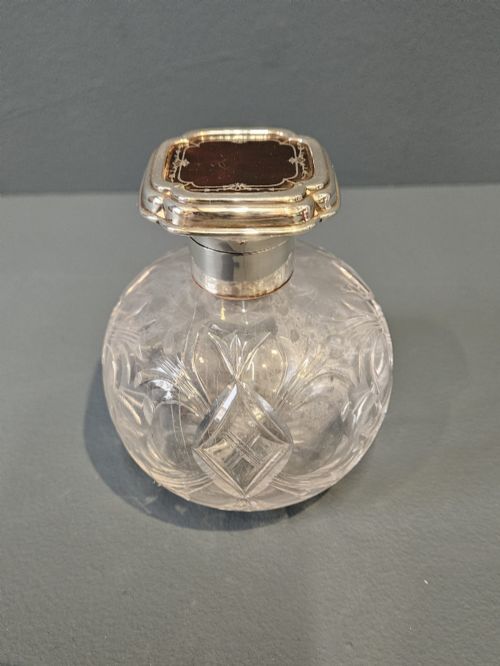
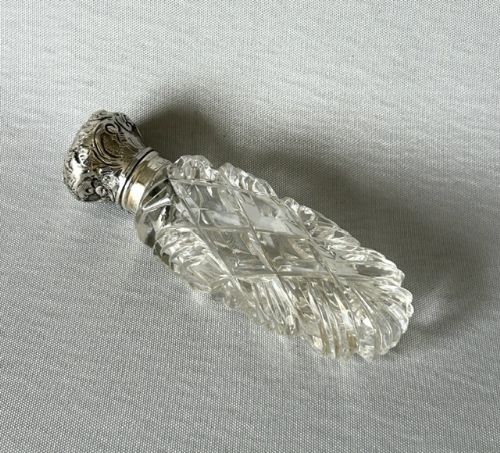
Victorian cut glass examples with sterling silver mounts appear frequently alongside geometric Art Deco designs from the nineteen thirties. These objects reflect the changing aesthetic priorities of domestic life across the nineteenth and twentieth centuries.
Origins range across English, French, and Czech workshops, uniting different regional traditions of glass-cutting, silver-mounting, and enamel work under a single functional purpose.
Materials and Construction
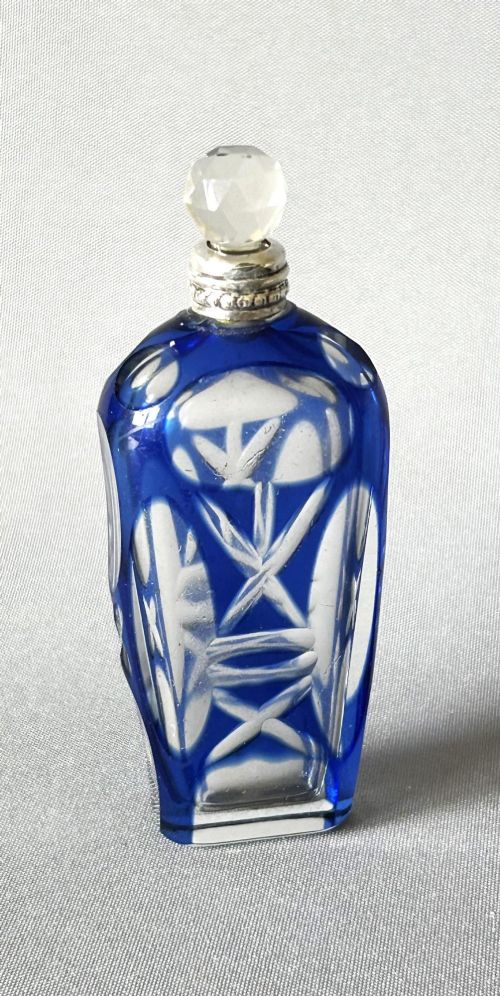
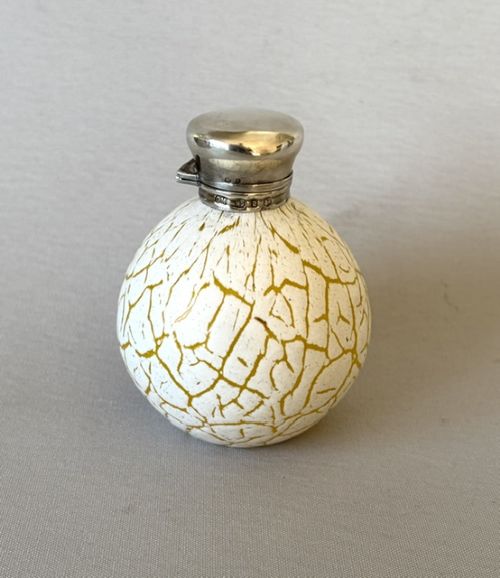
Glass bodies were formed through blowing, moulding, or cutting, utilising crystal and crackle glass to achieve transparency and light refraction. Cut glass surfaces required steady manual labour with abrasive wheels to grind precise geometric or floral patterns.
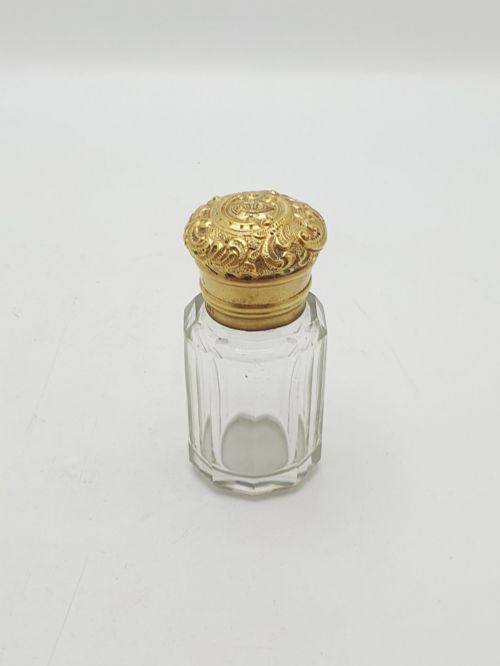
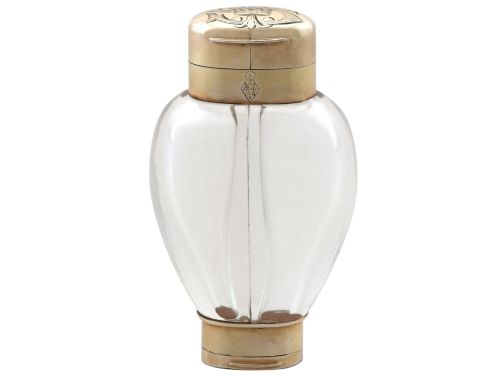
Metal mounts in sterling silver, silver gilt, and chrome provided secure closures and hinged caps, often stamped with hallmarks indicating assay offices and manufacturing years. Enamel, tortoise shell, and gold leaf added decorative contrast to the transparent glass bodies.
Clear Glass Perfume Retail Price Guide 2026
Typical asking prices for clear glass perfume among the pieces listed under this phrase on Sellingantiques today, from the lower quarter to the upper quarter. They describe what is for sale here now, not the wider market.
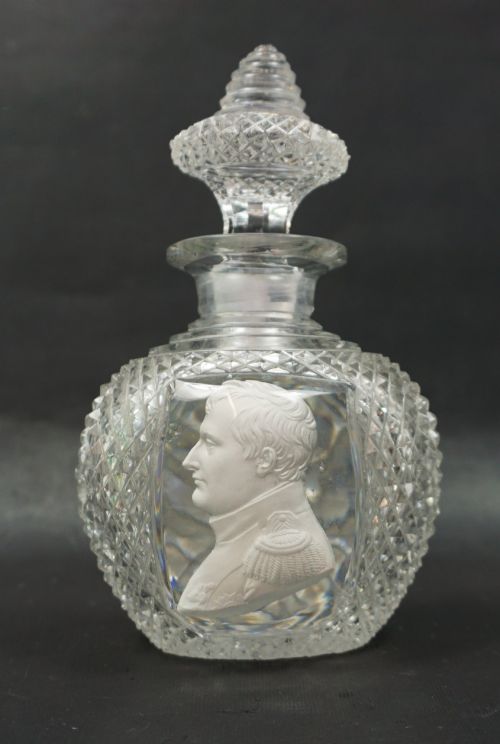
Napoleon Bonaparte once found his way into a nineteenth-century glass bottle as a sulphide portrait.
Distinctions in Quality
The precision of glass-cutting dictates visual clarity, with deep, crisp facets catching light more effectively than shallow or smoothed moulding. Clean optical properties in the glass body indicate superior raw materials and careful annealing during production.
Metal mountings demonstrate quality through heavy gauge silver, secure hinge action, and legible maker marks rather than thin plated alternatives. Intricate details such as hand-engraved silver collars or complex enamel panels separate standard utilitarian vessels from elite commissions.
Karl Palda·Rene Lalique·Gorham·Barnsley and Co·Adie Brothers Ltd·Rudolf Hlousek
The Clear Glass Perfume Glossary
- Atomiser
- A perfume container fitted with a bulb and spray mechanism to distribute scent in a fine mist.
- Vinaigrette
- A small ornamental box or bottle containing a perforated grille, holding a sponge soaked in aromatic vinegar.
- Hallmark
- An official stamp applied by an assay office to precious metal items, indicating purity, maker, and year of testing.
- Sulphide
- A small white ceramic plaque embedded within clear glass during manufacturing, creating a cameo effect.
- Ewer
- A large jug with a wide spout, used historically for water or perfume in domestic settings.
Clear Glass Perfume: Frequently Asked Questions
How do I date a glass perfume bottle?
Dating relies primarily on the style of the glass cutting, the shape of the bottle, and any accompanying metal mounts. Hallmarks on silver collars provide precise years and assay office locations.
Changes in stopper design and manufacturing techniques from the Victorian era to the Art Deco period also help establish an accurate timeline.
How should I clean antique glass perfume bottles?
Cleaning requires warm water and mild soap, avoiding harsh scrubbing that might damage fragile silver mounts or enamel work. Residue inside old bottles dissolves slowly with diluted vinegar rather than aggressive chemical solvents.
Metal components should be kept dry to prevent tarnishing or corrosion of historical plating and hinges.
Are Art Deco atomisers different from Victorian bottles?
Art Deco atomisers embrace geometric lines, stylised motifs, and Czech or French glass production methods from the nineteen thirties. Victorian examples lean towards heavy cut crystal, floral engraving, and ornate sterling silver mountings.
Mechanical spray mechanisms became more common and sophisticated in the twentieth century compared to earlier stoppered bottles.