






Clear Etched Glass Goblets
Clear etched glass goblets bring remarkable table presence, offering historical weight and luminous decoration across Georgian, Victorian, and Edwardian drinking vessels.
Clear Etched Glass Goblets
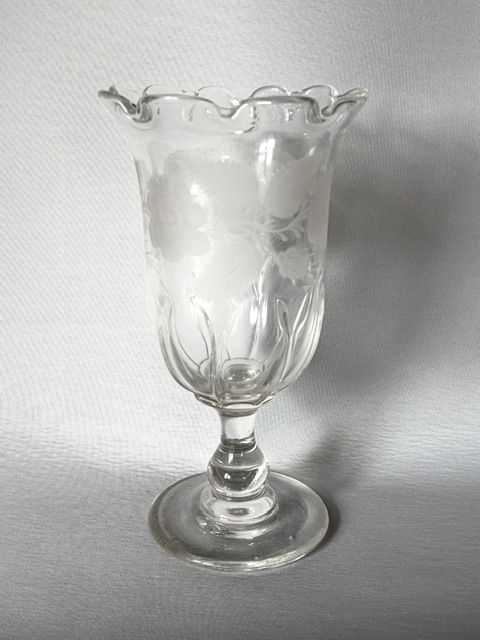
When you search for clear etched glass goblets, you encounter drinking vessels and display pieces spanning the Georgian, Victorian, and Edwardian eras. The selection ranges from rummers and cordials to celery vases and chalices.
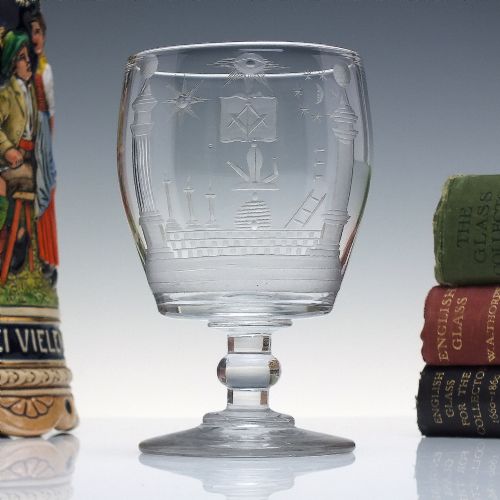
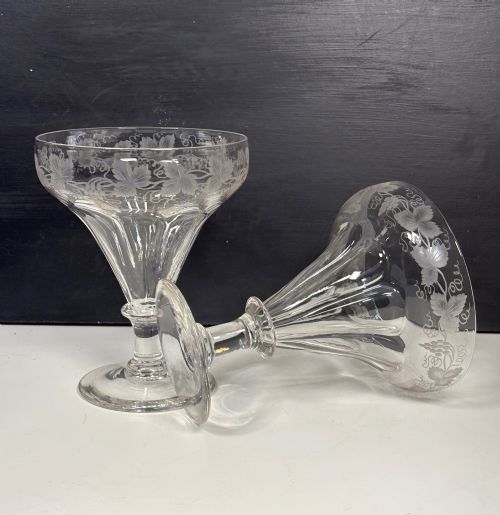
Victorian examples dominate the offerings, appearing frequently as matched sets or individual rummers and wine glasses with decorated bowls. Georgian forms bring earlier weight, including square base rummers and air twist stems with hunting scenes.
Edwardian and later pieces extend into the twentieth century, bringing cordial glasses and Jugendstil chalices into the mix. Vases also appear among the forms, showing that glassmakers applied these decorative techniques to more than simple drinking vessels.
How They Were Made
Maker operations utilised clear glass, lead crystal, flint glass, and hand-blown glass to form the foundational bodies of these vessels. Artisans shaped the hot metal into stems, bowls, and heavy foot bases before applying further work.
Decoration relied on engraving, acid cutting, frosting, and wheel-cutting techniques to etch designs into the surface. These methods produced the hunting scenes, pan motifs, and foliate patterns seen across the periods.
Clear Etched Glass Goblets Retail Price Guide 2026
Typical asking prices for clear etched glass goblets among the pieces listed under this phrase on Sellingantiques today, from the lower quarter to the upper quarter. They describe what is for sale here now, not the wider market.
Georgian drinkers chased away the gloom with sturdy rummers bearing naive hunting scenes that seem to gallop right off the glass.
What Varies in Quality
The clarity of the material and the crispness of the wheel-cut or etched detail distinguish finer examples from simpler production pieces. Weight and balance in the hand also indicate the level of craftsmanship invested in the vessel.
Design complexity plays a role, as naive rural work differs visibly from sophisticated urban glasshouse execution. The integration of structural elements like faceted stems and wide foot bases marks the degree of finish.
Stevens and Williams·Riihimaki Savoy·Adelbert Niemeyer
The Clear Etched Glass Goblets Glossary
- Rummer
- A heavy drinking glass popular in the Georgian and Victorian periods, typically featuring a short stem and a capacious bowl. These vessels served for ale, wine, and rum.
- Air twist
- A decorative stem formation containing spiral channels of trapped air created during the glass-drawing process. This technique appears on eighteenth-century pieces.
- Celery vase
- A tall vessel designed to display and hold celery stalks on the Victorian dining table. Examples often feature heavy etching and footed bases.
- Jugendstil
- The continental European manifestation of Art Nouveau, influencing decorative arts around nineteen hundred. Pieces in this style show organic, flowing motifs.
Clear Etched Glass Goblets: Frequently Asked Questions
Were rummers used for wine?
Rummers served multiple purposes on the dining table, holding ale, punch, and wine depending on the occasion. Their robust build made them practical for everyday tavern and domestic use.
Over time, specialised forms evolved, but these versatile vessels remained popular through the Victorian era for heavy toasts and gatherings.
What is lead crystal?
Lead crystal is glass containing a significant proportion of lead oxide, which increases weight, brilliance, and refractive index. This composition makes the material softer and easier to cut and engrave.
Artisans utilised lead glass to achieve the deep brilliance and ringing tone characteristic of fine Georgian and Victorian tableware.
How do I date an etched goblet?
Dating relies on observing the form of the bowl, the presence of pontil marks, and the style of the decorative engraving. Georgian pieces often display heavier proportions and naive motifs, while Victorian items show varied cutting and pan panels.
Matching the object type with recorded periods helps narrow the timeframe of manufacture. Examining the base and stem construction provides further clues to the era.