




Clear Cut Glass Stems
Clear cut glass stems are drinking vessels and tablewares defined by faceted supports, carrying light through lead crystal and plain glass from the eighteenth and nineteenth centuries.
Clear Cut Glass Stems
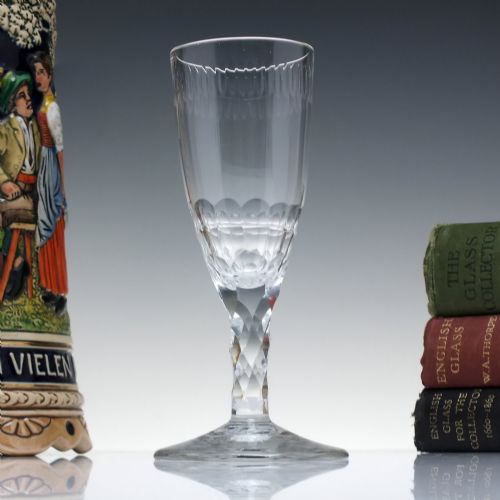
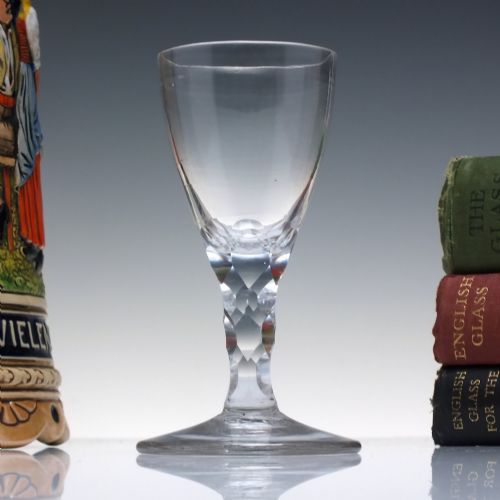
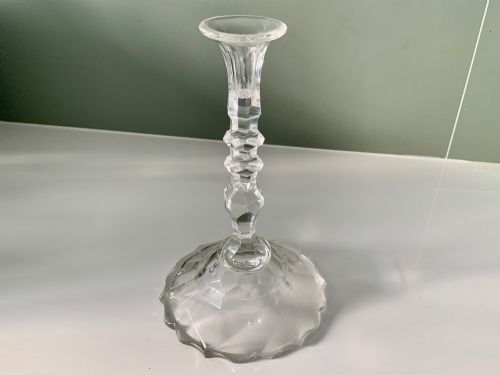
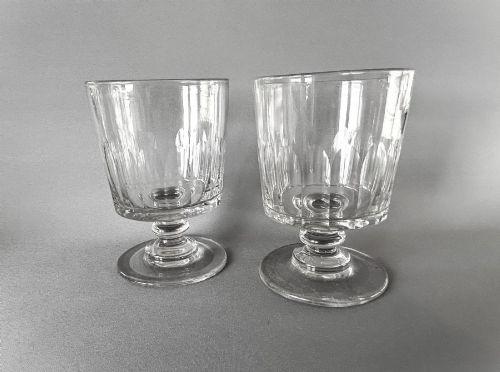
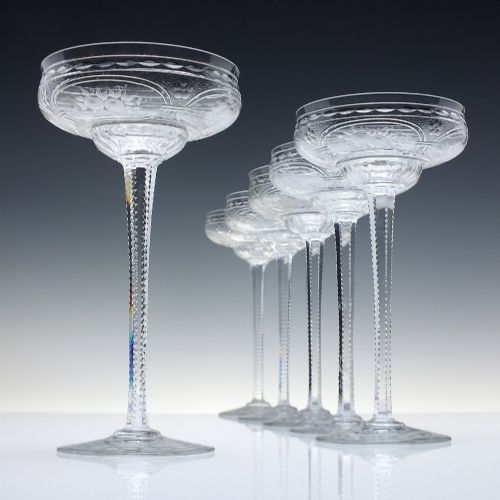
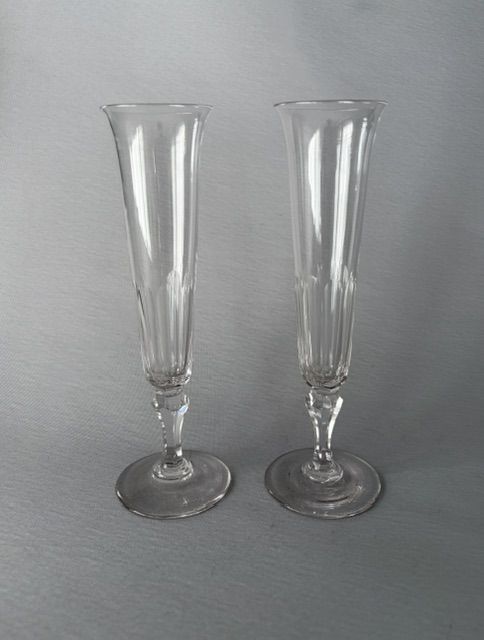
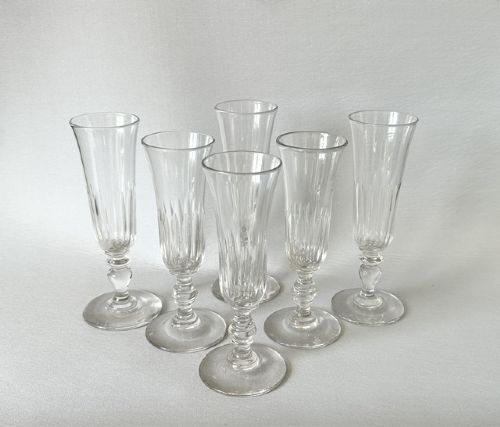
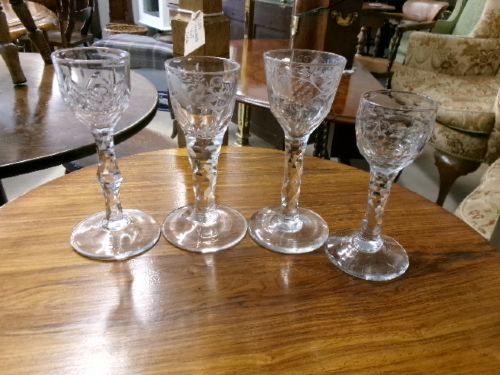
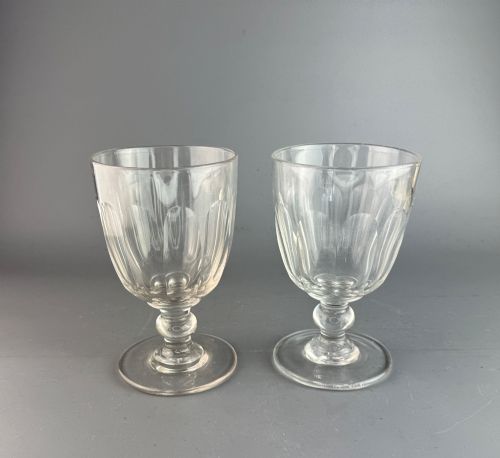
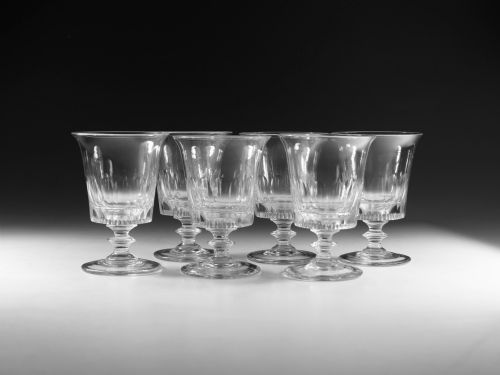
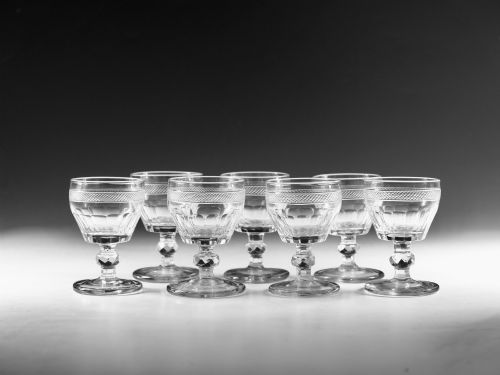
Clear cut glass stems encompass drinking vessels and centrepiece bowls originating from eighteenth-century Georgian production through to the Victorian era and the beginning of the twentieth century. The selection on this page leans heavily toward Georgian rummers, faceted wine glasses, and Victorian champagne flutes alongside centrepiece bowls and cordials.
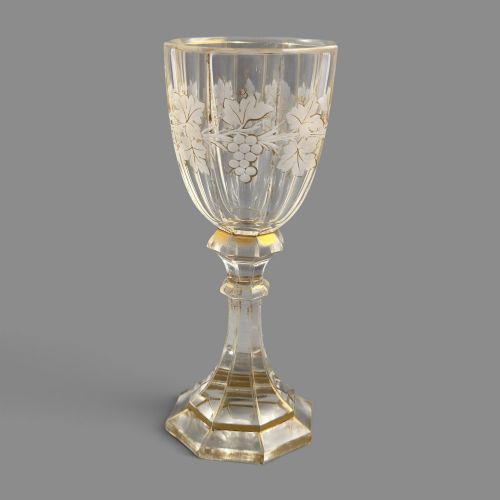
Forms range from sturdy eighteenth-century ale flutes and Jacobite glasses with facet-cut supports to heavy nineteenth-century rummers and Bohemian hock wine glasses. Buyers meet matched sets of six alongside pairs and individual goblets, spanning English and continental workshops.
The prevailing shapes adapt to changing tastes in dining and entertaining across the periods represented. Earlier pieces often display deep facet cutting on the stem while later Victorian examples introduce frosted details, etching, and coloured accents alongside the clear lead crystal.
Distinctions in quality
The clarity of the metal and the precision of the facet cutting determine the distinction between ordinary production and superior examples. Crisp edges on the stem facets and brilliance in the crystal indicate higher proficiency in the glasshouse.
Proportion and weight also govern the standing of a piece, particularly in heavy rummers and large centrepiece bowls where balance matters to the utility and form. The depth and skill of the engraving, whether floral or symbolic, separate standard drinking vessels from exhibition pieces.
Clear Cut Glass Stems Retail Price Guide 2026
Typical asking prices for clear cut glass stems among the pieces listed under this phrase on Sellingantiques today, from the lower quarter to the upper quarter. They describe what is for sale here now, not the wider market.
Listings feature lead crystal, clear glass, and gilding across Georgian, Victorian, and Bohemian styles.
Baccarat Vallee·Moser Bohemian·James Giles
The Clear Cut Glass Stems Glossary
- Facet cut
- A decorative technique involving the grinding of flat planes into the surface of the glass or stem to reflect light. This treatment appears frequently on Georgian wine glasses and rummers.
- Rummer
- A large, sturdy drinking glass popular in the eighteenth and nineteenth centuries, often possessing a short stem and a capacious bowl. These pieces frequently feature cut decoration around the lower bowl.
- Lead crystal
- Glass containing lead oxide which increases the weight, clarity, and refractive index of the material. This composition allows for sharper cutting along the stems and bowls.
- Baluster stem
- A support column shaped like an architectural baluster, thick at the top and tapering toward the foot. Examples appear on heavy crystal rummers from the nineteenth century.
- Hock glass
- A tall wine glass traditionally used for German white wines, often featuring coloured or clear bowls supported by decorative stems. Bohemian examples display elaborate engraving and gilding.
Clear Cut Glass Stems: Frequently Asked Questions
How do I date a clear cut glass stem?
Dating relies on the form of the bowl, the style of the stem, and the characteristics of the metal itself. Eighteenth-century pieces often show simpler facet cutting and darker metal, while Victorian examples tend to be heavier with more varied etching.
Examination of the pontil mark on the underside of the foot also helps determine the period of manufacture. Earlier vessels typically display rough pontil scars left by the snapping off of the punty rod during blowing.
Were these glasses used for daily dining?
Many of these vessels served functional roles at the dining table for wine, ale, sherry, and cordials. Rummers in particular were common household items for consuming beer or punch during the Georgian and Victorian periods.
Heavier rummers and centrepiece bowls were built for robust social gatherings rather than delicate display. Their substantial weight and lead crystal composition allowed them to withstand regular use.
Can I use antique cut glass stems today?
These glasses can be used for special occasions provided they receive careful handling and hand washing. The lead crystal and old glass require gentle treatment to preserve the clarity and prevent thermal shock.
Dishwashers are unsuitable for antique glassware because the heat and harsh detergents cloud the metal and damage the surface. Hand washing in lukewarm water with mild soap keeps the pieces safe for occasional toasts.
What is the difference between lead glass and crystal?
Lead glass and crystal both contain lead oxide which gives the material its characteristic weight and brilliance. In antique terminology, lead crystal refers to high-clarity glass formulated for deep cutting.
The presence of lead allows artisans to cut sharper facets into the stems without fracturing the material. This chemical composition is what enables the high light refraction seen in Georgian and Victorian stemware.