

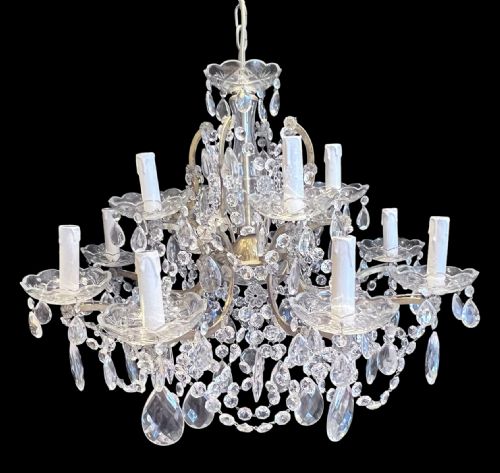
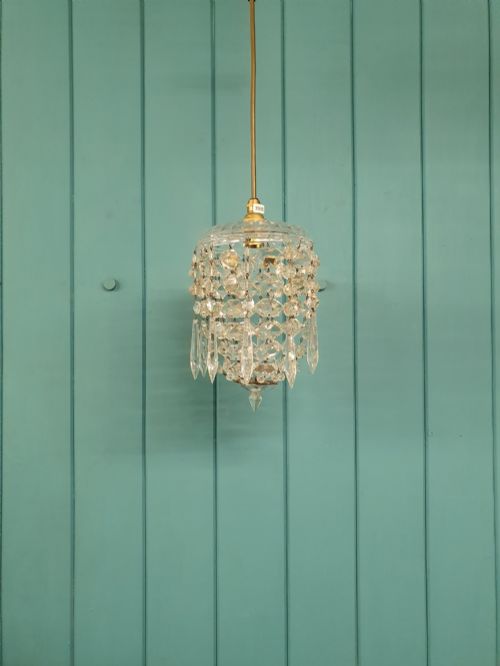
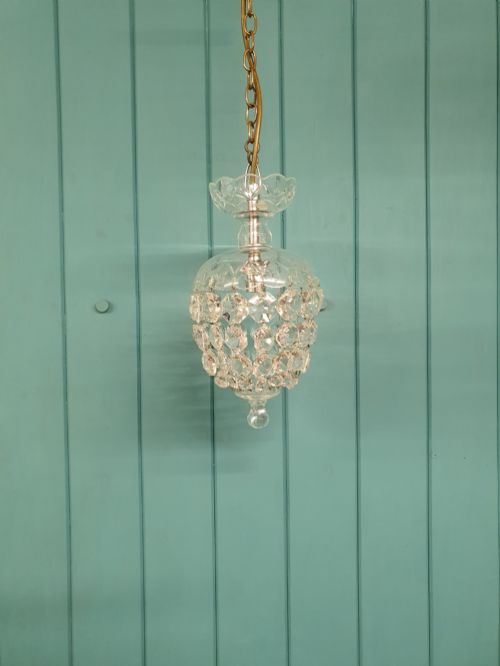
Clear Cut Glass Pendant
A clear cut glass pendant brings focused brilliance to a room, suspending worked crystal and brass from the ceiling.
Clear Cut Glass Pendant
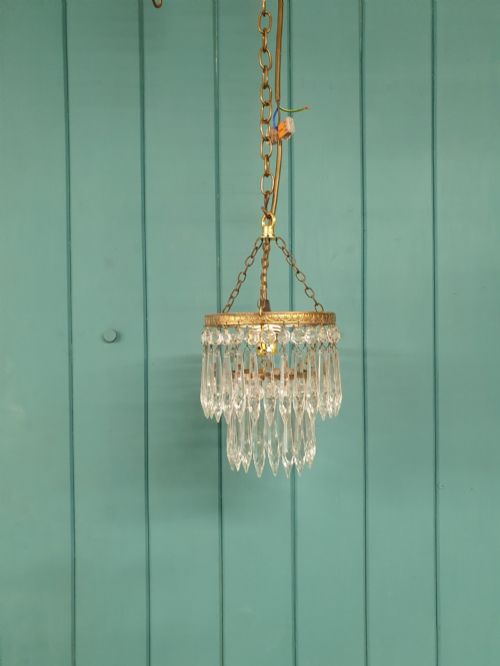
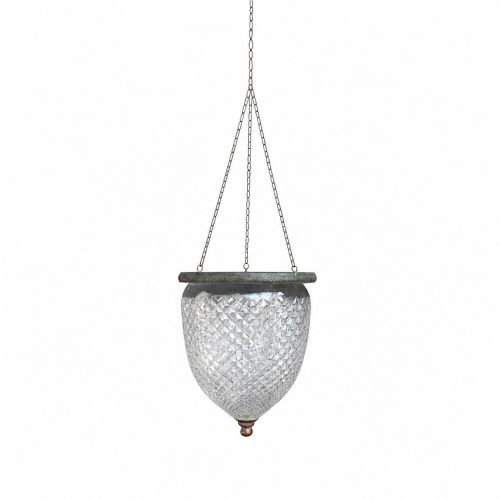
When you search for a clear cut glass pendant, you encounter hanging light fixtures designed to diffuse illumination through faceted surfaces. These pieces include single-light ceiling fittings, small domes, plafonniers, and structured lanterns suspended on chains or mounted close to the ceiling.
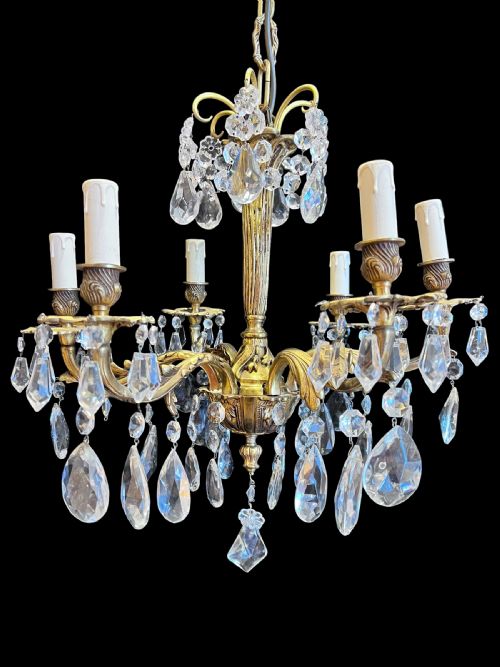
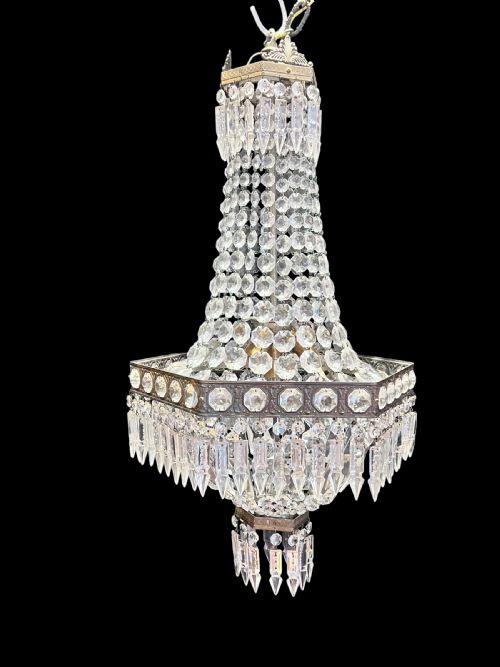
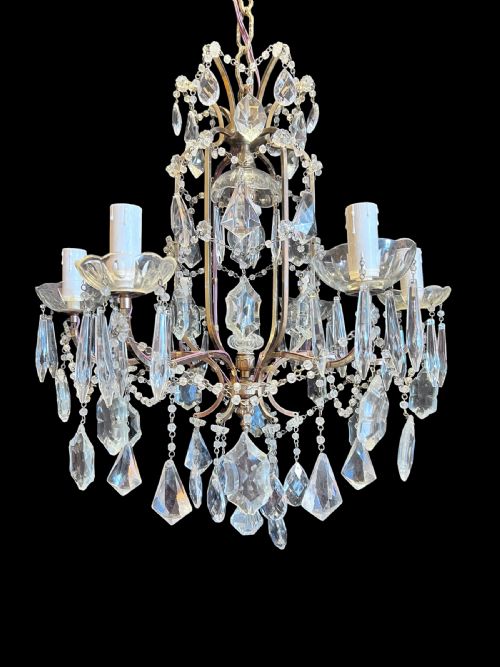
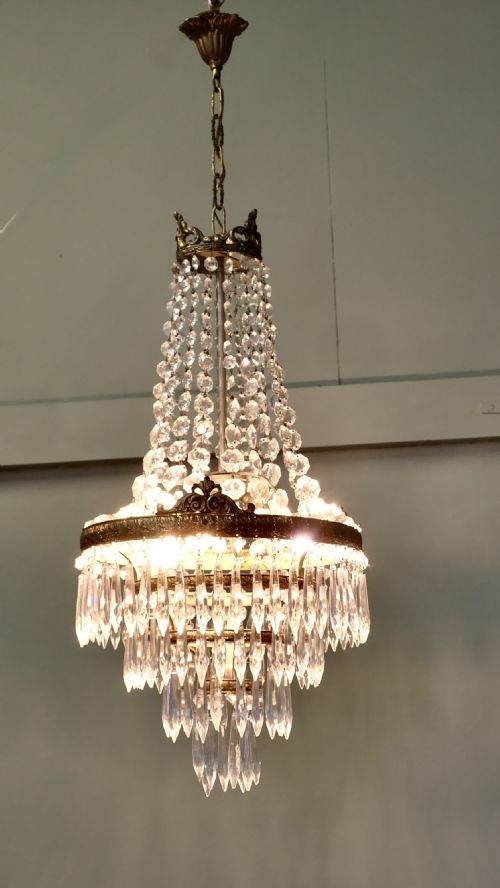
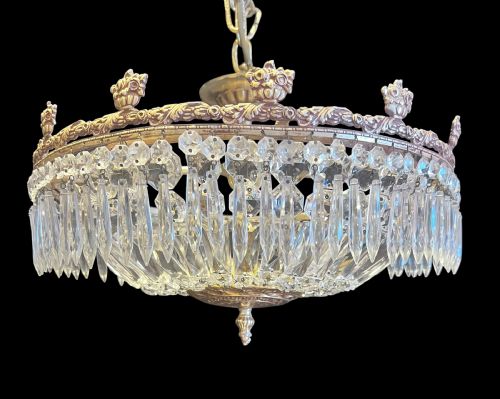
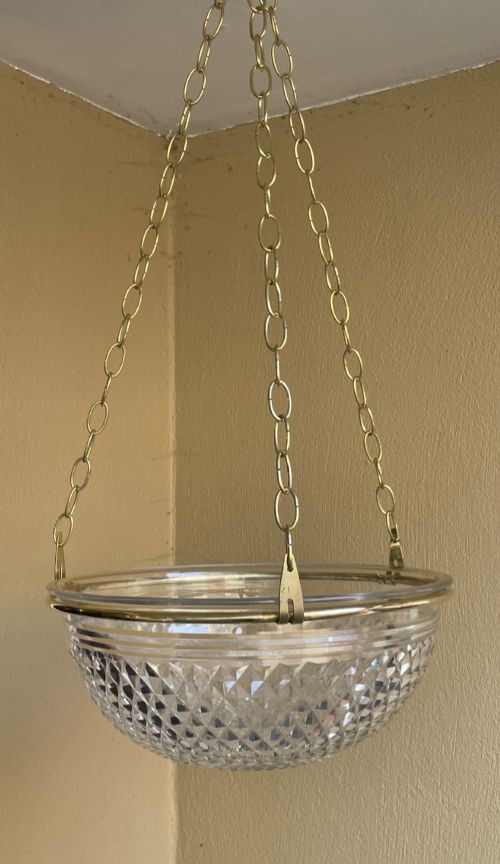
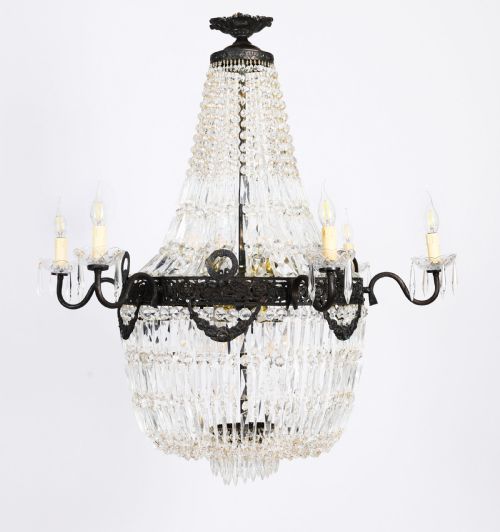
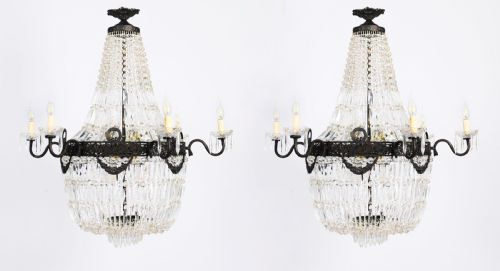
On this page, the most frequent examples date from the Edwardian period and the 1920s, alongside nineteenth-century works and pieces from the 1930s. Forms range from simple glass domes and acorn plafonniers to elaborate French basket and tent-and-bag configurations.
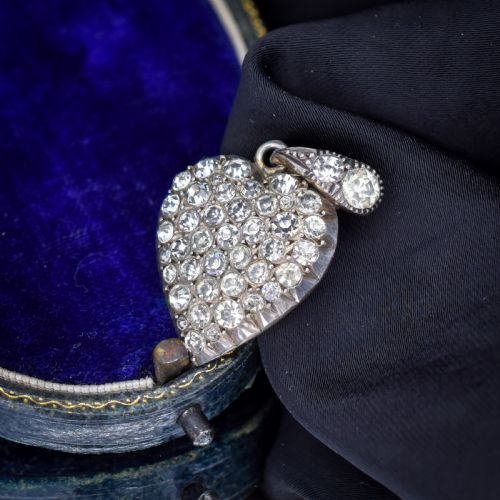
Origins span English, French, and Italian workshops, reflecting diverse stylistic influences such as Louis Revival, Empire, and Art Deco. Buyers also find occasional personal jewellery items bearing paste stones, though the core of the selection remains architectural ceiling lighting.
How they were made
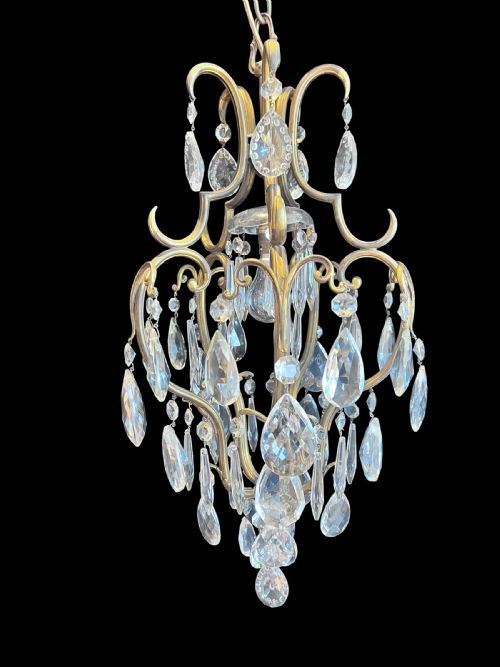
Makers constructed these fixtures using brass, gilt bronze, and sterling silver frames to support heavy glass elements. Metal components were cast, chased, or gilded before securing the individual glass drops.
The optical effects rely upon lead crystal and standard glass shaped by cutting, moulding, and polishing. Faceted prisms, drops, beads, and domes refract light through sharp angles produced by lapidary techniques.
Listings feature Edwardian pieces, 1920s designs, and 19th century items constructed from brass, crystal, glass, and gilt bronze.
What varies in quality
The distinction between ordinary and superior pieces rests upon the depth of the glass cutting and the clarity of the crystal. Sharp, clean facets catch and disperse light far more effectively than soft, moulded surfaces.
Metalwork construction also dictates standard, with heavy cast brass or gilded bronze frames providing secure housing for numerous hanging prisms. Original mountings and matching components elevate the integrity of a fixture.
The Clear Cut Glass Pendant Glossary
- Plafonnier
- A ceiling light fitting that sits flat or close against the ceiling surface. These fixtures often feature glass domes or brass frames enclosing the bulbs.
- Tent and bag chandelier
- A lighting style featuring an upper conical tent of strung crystals cascading down into a gathered bag of drops below. This construction creates a layered silhouette popular in French designs.
- Paste
- Hand-cut lead glass used to simulate gemstones in jewellery and decorative items. It is mounted in silver or gold settings.
- Prism
- A geometric piece of cut glass or crystal designed to refract light into spectral colours. These elements hang from chandeliers and pendants to enhance illumination.
Clear Cut Glass Pendant: Frequently Asked Questions
How do I hang a heavy crystal pendant?
These fixtures require secure anchoring into ceiling joists using appropriate metal hooks and load-bearing fixings. Because many pieces incorporate heavy brass frames and dense crystal, professional electrical installation ensures safe suspension.
Adjusting the hanging height depends on ceiling clearance and the room's function. Pendants placed over tables or in hallways hang lower than those positioned in standard traffic pathways.
What periods do these pendants come from?
The selection spans from the nineteenth century through the Edwardian era, the 1920s, and into the 1930s. Edwardian and 1920s examples appear most frequently among the current listings.
Design characteristics shift across these decades, moving from ornate nineteenth-century gilt bronze mounts toward streamlined Edwardian domes and 1920s basket forms.
How do I clean cut glass pendants?
Regular dusting with a soft cloth maintains the clarity of the glass and prevents film accumulation. For deeper cleaning, remove detachable drops and wash them in warm soapy water before drying thoroughly.
Avoid submerging fixed brass frames or antique electrical components in liquid. Wiping metal parts with a dry cloth preserves original finishes without causing damage.
Are these lights electrified or for candles?
Most surviving examples have been adapted for electricity to suit modern homes. Some nineteenth-century pieces retain candle-holder configurations or early wiring that may require updating.
Checking the wiring condition upon acquisition ensures the fixture meets current safety standards. Rewiring preserves the antique metal frame while providing reliable modern illumination.