


Clear Crystal Wine Jug
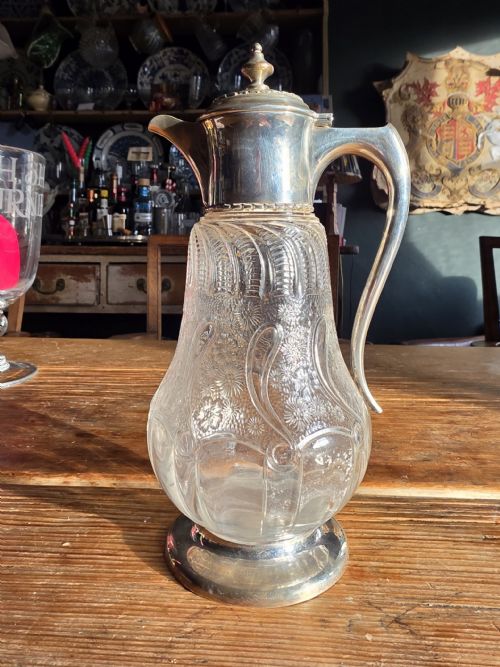
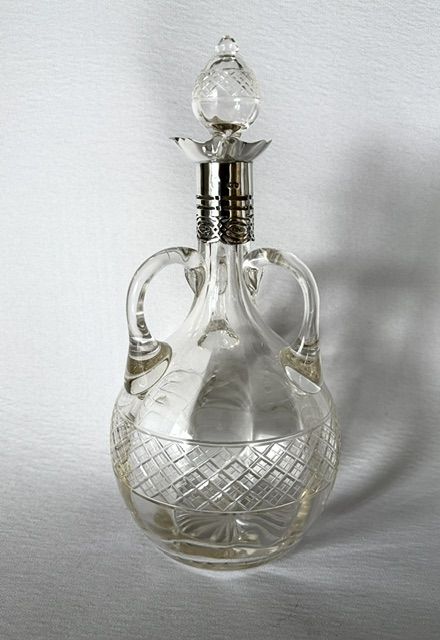
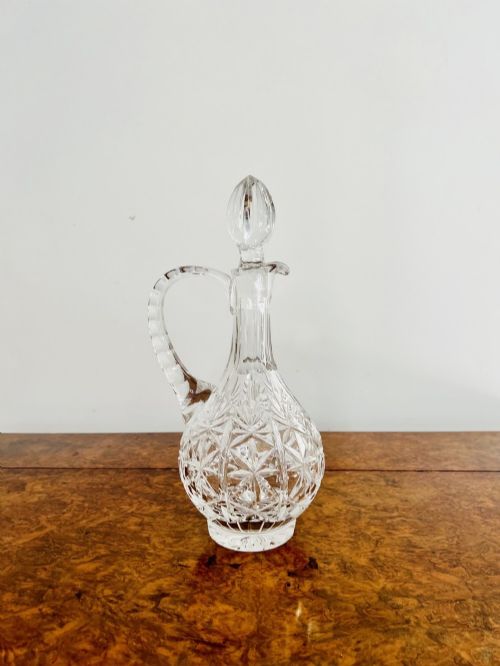
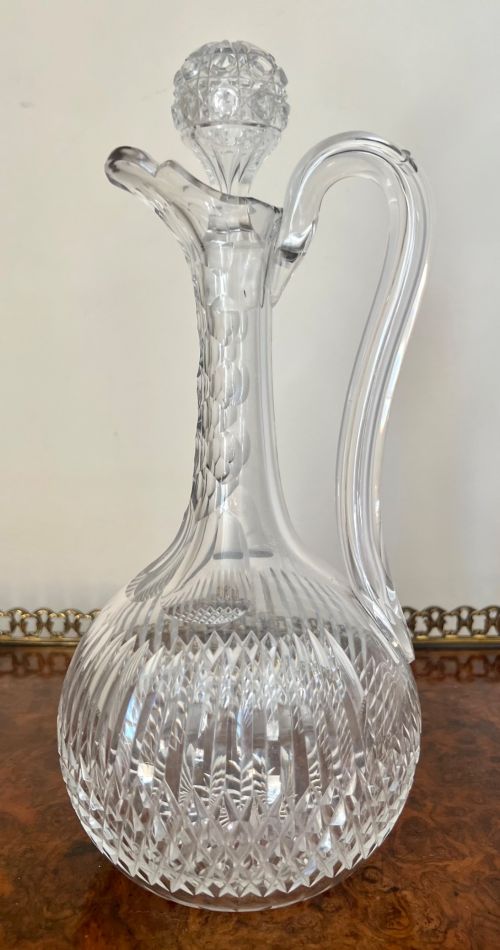
A clear crystal wine jug brings table service to life, combining weighty glass bodies with silver mounts for pouring claret or water.
Clear Crystal Wine Jug
A clear crystal wine jug sits on the dining table to hold and serve wine, claret or water during formal meals. When you examine this selection, you encounter pieces designed primarily during the Victorian and Edwardian eras, alongside select continental examples.
The vessels appear under various historical descriptions such as claret jugs, ewers, decanters and pitchers. Many feature tall bodies configured with handles and spouts, whilst others adopt more sculptural novelty forms including ducks.
Makers shaped these items from clear glass, cut crystal and lead crystal, frequently pairing the transparent bodies with metal mounts. The resulting objects served functional roles in nineteenth and early twentieth century hospitality before transitioning into decorative display pieces.
Materials and construction
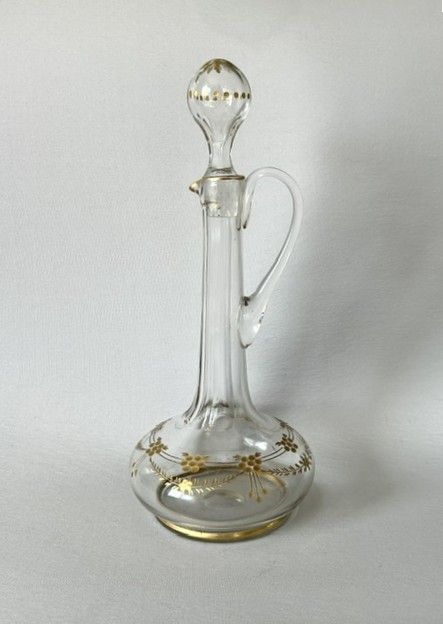
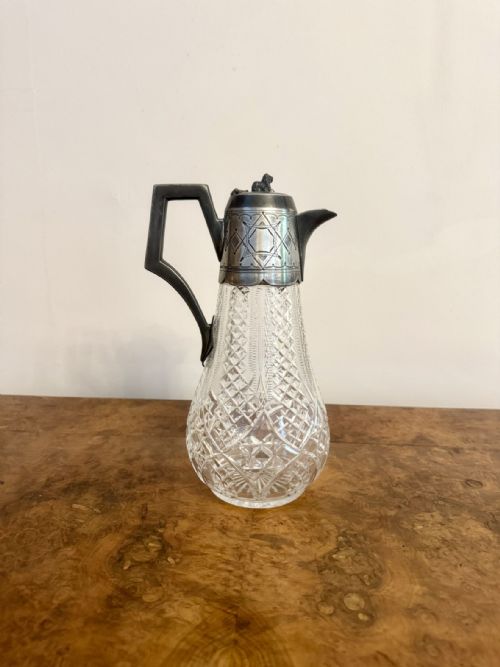
Makers fashioned the vessels from heavy clear glass and lead crystal, applying techniques like pillar and prism cutting, hobnail cutting and surface etching. These incisions catch the light and accentuate the thickness of the material.
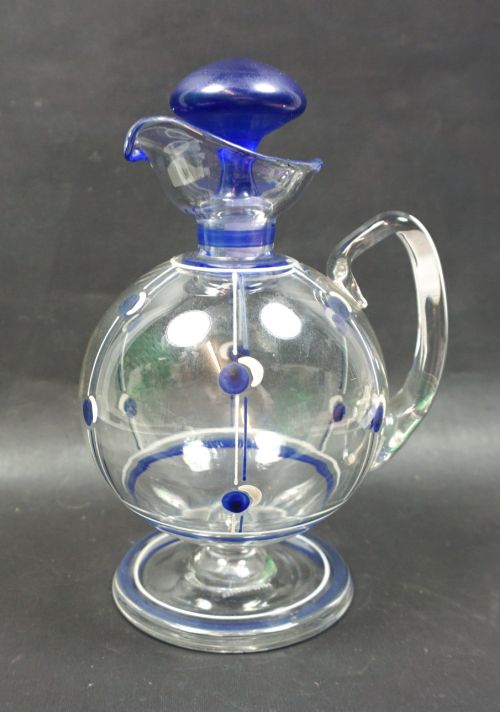
Artisans combined the glass bodies with sterling silver or silver plated mounts, hinged covers and handles secured around the necks of the pieces. Additional decorative methods include blue enamel, gilding and white glass latticinio decoration.
Object forms recorded include claret jugs, ewers, decanters, pitchers and specialised novelty pieces shaped like ducks.
Assessing craftsmanship and execution
Superior examples display crisp, deep cutting across the crystal body that remains sharp to the touch and uniform in pattern. Lesser pieces show softer facets and simpler moulded decoration without hand-finished detailing.
The calibre of the silver or silver-plated mountings distinguishes standard production from finer work, particularly where hallmarked sterling silver frames heavy crystal with precise hinged lids. Novelty forms and specialised engraving, such as royal ciphers or intricate grape motifs, indicate higher workshop ambition.
Webb Corbett·Baccarat·Hukin & Heath
The Clear Crystal Wine Jug Glossary
- Claret jug
- A specialised vessel designed specifically for serving red claret wine at the table. These typically incorporate a pouring spout and a hinged metal lid.
- Ewer
- A large jug featuring a wide-scrolled handle and an open or spout-shaped lip. The form derives from classical water pitchers adapted for dining use.
- Hobnail cut
- A distinct geometric facet pattern resembling the heavy nails once used on boot soles. This texture covers the crystal body in raised square points.
- Latticinio
- A decorative glass technique incorporating fine white or coloured glass threads twisted within the clear body. It creates delicate linear patterns inside the walls of the vessel.
- Pillar and prism cut
- Linear cutting methods that slice wide vertical channels and sharp angled facets into heavy glass. The technique maximises light refraction through the material.
Clear Crystal Wine Jug: Frequently Asked Questions
What is a clear crystal wine jug?
A clear crystal wine jug is a pouring vessel made from transparent glass or lead crystal, often fitted with a silver or silver-plated mount. These pieces were produced in various forms during the Victorian and Edwardian periods to serve beverages at the dining table.
Such vessels combine utilitarian function with decorative craftsmanship, utilising cut glass patterns, etched motifs or metal hinged lids to elevate table service.
How were these jugs used?
These jugs functioned primarily as vessels for holding and pouring claret, dessert wine or water during formal meals. The attached handles and spouts allowed hosts to serve guests directly from the bottle or decanter.
In addition to practical dining use, they served as decorative centerpieces on sideboards and tables, reflecting light through their cut crystal facets.
How do I tell Victorian from Edwardian pieces?
Victorian jugs frequently display heavy Rococo Revival influences, deep hobnail cutting or elaborate grape and vine etchings associated with the nineteenth century. Hallmarks on the silver mounts provide exact date letters for London or other assay offices.
Edwardian examples often lean towards lighter, refined Georgian revivals or cleaner forms, though both eras utilised similar cut crystal materials and silver-plated mounts.
How do I live with antique glass?
Living with antique glass involves displaying the vessels where natural light can pass through the cut crystal facets. They sit comfortably on wooden sideboards, dining tables or within display cabinets.
Maintenance requires gentle hand washing in lukewarm water without abrasive cleaners to protect both the crystal surface and any antique silver mounts.