




Claw and Ball Feet Desk
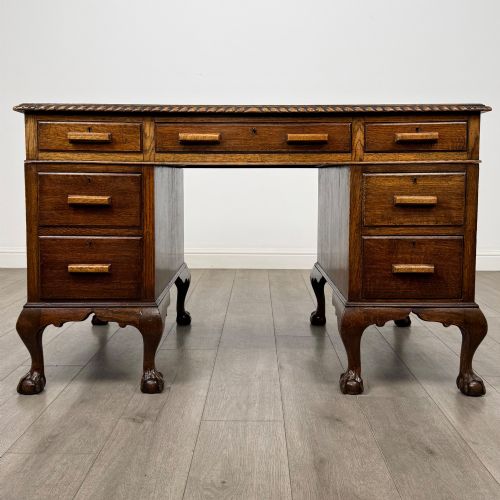
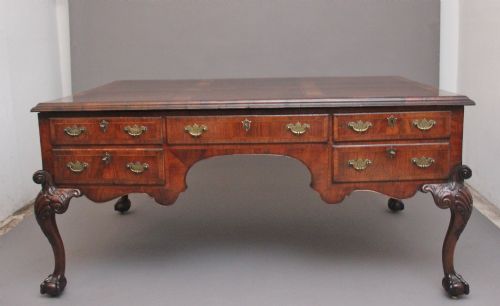
These claw and ball feet desk pieces combine substantial timber with distinct carved supports, offering a commanding presence for a study.
Claw and Ball Feet Desk
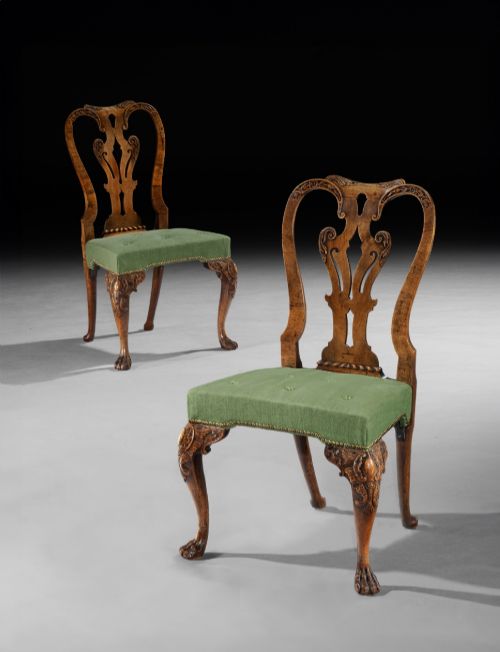
When you search for a claw and ball feet desk, you encounter writing furniture and related seating dating from the eighteenth century to the early twentieth century. The selection spans George II, George III, and Victorian periods alongside later revival styles.
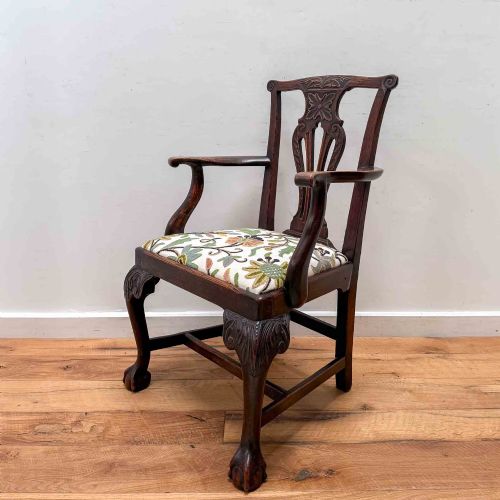
Desks and bureaux dominate the forms, frequently accompanied by chairs sharing the same carved foot design. Mahogany and walnut serve as the primary timbers across these listings.
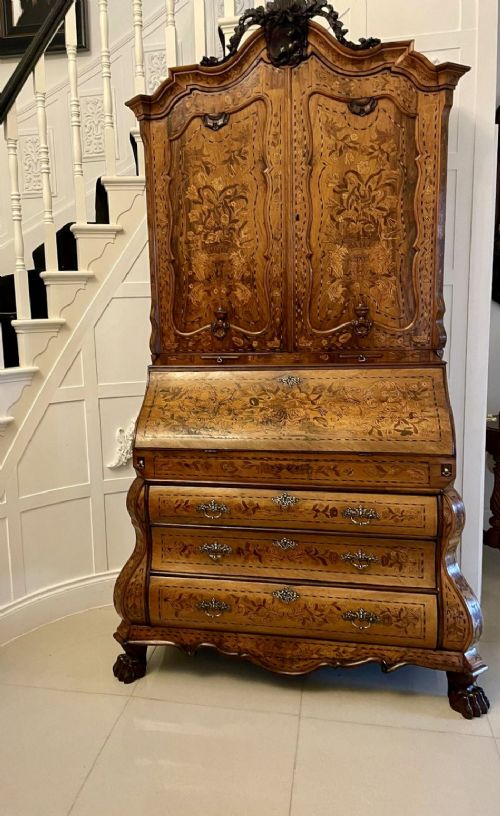
Origins trace across English and Irish workshops, reflecting both period craftsmanship and later revivals. Buyers find pedestal desks, bureau bookcases, and writing tables bearing the characteristic talon grasp.
How they were made
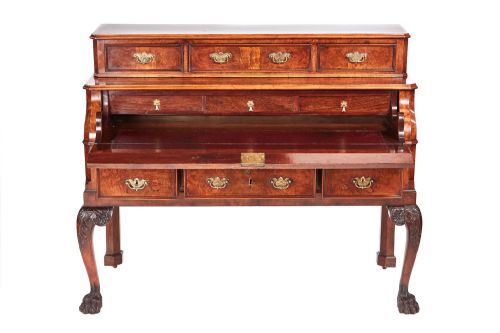
Cabinetmakers utilised solid mahogany and walnut, frequently applying flame mahogany veneer to primary surfaces for visual depth. Brass hardware secures drawers and interior fittings.
Carving defines the feet and structural details, requiring skilled handwork on dense hardwoods. Leather inserts provide writing surfaces on specific desk forms.
Materials across these listings include mahogany, walnut, burr walnut, oak, and brass, spanning the eighteenth to twentieth centuries.
What varies in quality
The refinement of the foot carving dictates the grade of the piece, separating crisp talon details from softer or simpler forms. Timber selection also matters, particularly the choice between plain boards and figured burr walnut or flame mahogany.
Proportion and structural integrity separate standard revival items from superior period examples. The integration of original brasses and fitted desk interiors further elevates the standing of individual pieces.
The Claw and Ball Feet Desk Glossary
- Claw and ball foot
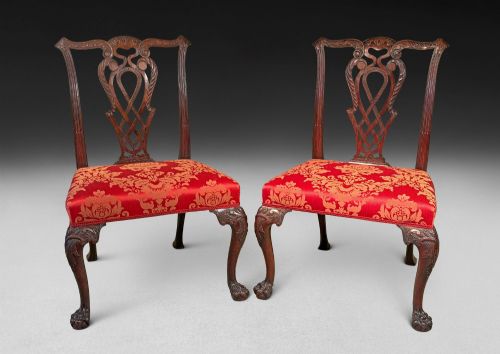
- A furniture foot carved to represent a bird's talon clutching a sphere, popular in eighteenth-century design. This motif appears frequently on chairs and desk supports.
- Bureau
- A sloping desk with a hinged writing flap that conceals small drawers and pigeonholes. These often sit atop a chest of drawers.
- Flame mahogany veneer
- A thin slice of mahogany timber cut from the fork of the tree to create a distinctive flickering flame pattern. Cabinetmakers applied this to prominent surfaces for decoration.
- Partners desk
- A large double-sided pedestal desk designed for two people to work opposite one another. Drawers and cupboards are duplicated on both sides.
Claw and Ball Feet Desk: Frequently Asked Questions
What is a claw and ball foot?
A claw and ball foot is a carved furniture terminal depicting a bird's talon gripping a spherical object. It became a hallmark of eighteenth-century cabinet making.
This motif frequently appears on the legs of desks, tables, and seating from the period and later revivals.
How do I date a desk?
Dating relies on examining the timber species, construction methods, hardware, and secondary woods used inside drawers. Stylistic cues also link pieces to specific reigns like George II or later Victorian revivals.
Comparing the drawer joints and overall proportions helps distinguish original eighteenth-century work from twentieth-century interpretations.
Are these desks practical for daily use?
Many period and revival desks offer spacious writing surfaces and functional drawer storage suitable for modern offices. Leather inserts provide durable writing areas.
Care must be taken with antique veneers and polished finishes when placing them in active work spaces.
What is a partners desk?
A partners desk is a large pedestal desk featuring drawers and cupboards on both sides, allowing two people to work face-to-face. These were traditionally used in offices and libraries.
They offer substantial proportions and finished panelling on all four sides.