

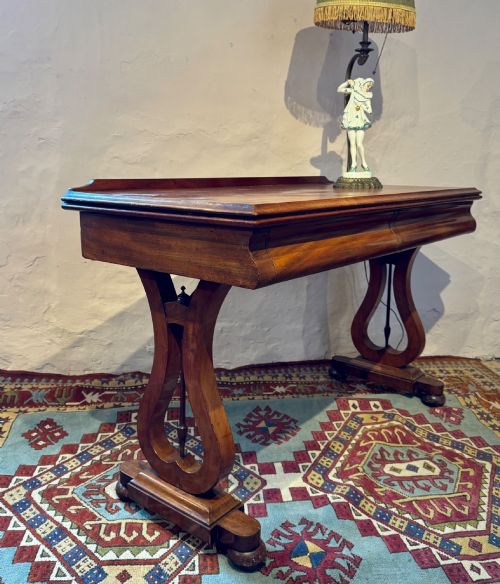

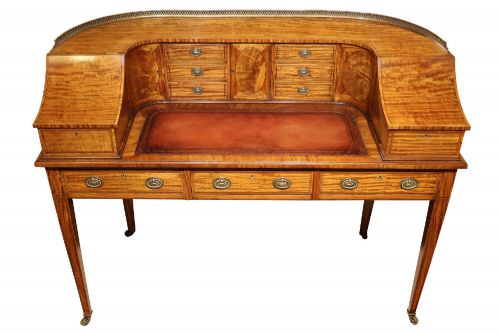


Classical Writing Desk
A classical writing desk brings together rich mahogany, satinwood, and bronze mounts to anchor a study with enduring form.
Classical Writing Desk
A classical writing desk spans substantial bureau bookcases, cylinder desks, and refined Carlton House variants designed for purposeful correspondence. These forms emerge across the nineteenth century, drawing on French Empire, Regency, and Edwardian aesthetic traditions.
Buyers encounter walnut and flame mahogany carcases alongside painted satinwood writing tables fitted with delicate brass or ormolu mounts. The selection ranges from compact writing desks to architectural bureau bookcases intended for formal libraries.
Originating predominantly from English and French workshops, these pieces incorporate traditional fitted interiors with pigeonholes, small drawers, and dedicated inkwell compartments. Each surviving example records the specific domestic requirements of nineteenth-century writers and administrators.
Materials and Construction
Cabinetmakers built the foundational carcases using solid mahogany, satinwood, and walnut, frequently applying figured veneers to large flat surfaces and cylinder fronts. Marquetry inlay, brass stringing, and hand-painted floral motifs decorate the primary exteriors.
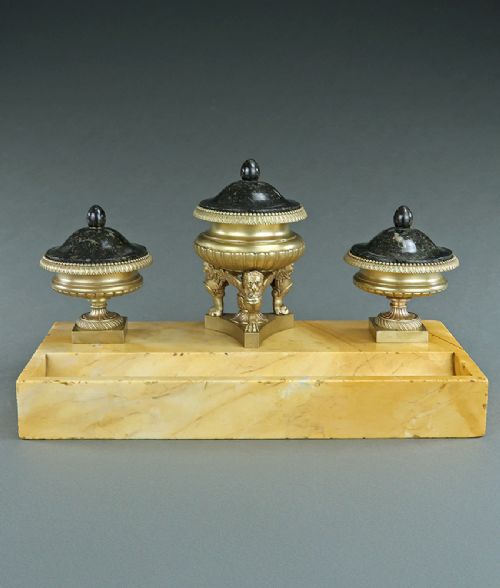
Metal elements involve cast bronze and gilt ormolu mounts, paired with inset leather writing surfaces and polished marble bases for desk accessories. Joinery relies on traditional dovetailing for drawers and secure framing for fall-front writing panels.
Classical Writing Desk Retail Price Guide 2026
Typical asking prices for classical writing desk among the pieces listed under this phrase on Sellingantiques today, from the lower quarter to the upper quarter. They describe what is for sale here now, not the wider market.
Several desks include hidden compartments originally designed to keep private correspondence safe from prying household staff.
Assessing Quality and Execution
Quality rests on the depth of figure in the mahogany veneer and the precision of marquetry or hand-painted satinwood details. Superior pieces display crisp, well-defined ormolu castings rather than soft or smoothed bronze enrichment.
Internal engineering distinguishes standard production from finer workshop outputs, particularly in the smooth mechanical movement of cylinder lids and balanced fall-front writing desks. Original hardware, intact leather skivers, and well-fitted internal stationery compartments elevate a piece significantly.
Edwards & Roberts·Lefebvre of Belgium
The Classical Writing Desk Glossary
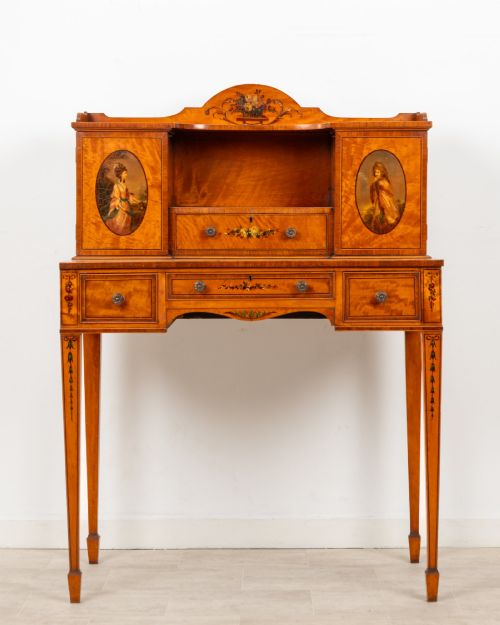
- Carlton House desk
- A form of writing desk characterised by a stepped superstructure of small drawers and compartments curving around the back and sides of the writing surface.
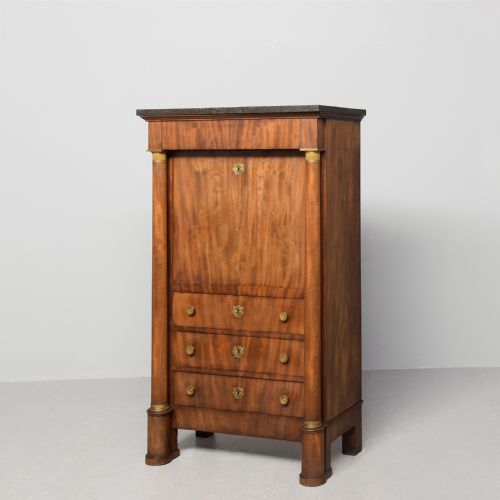
- Secretaire abattant
- A tall upright cabinet featuring a fall-front writing flap that conceals an interior arrangement of small drawers and pigeonholes when closed.
- Ormolu
- Gilt bronze mounted or applied to furniture as decorative feet, handles, and gallery rails, created through a mercury gilding process.
- Marquetry
- Decorative veneer work formed by fitting together contrasting pieces of wood, shell, or ivory to create pictorial or geometric patterns on the furniture surface.
- Bureau-plat
- A flat-topped writing table fitted with one or more rows of drawers beneath the main surface, standing on four legs rather than a solid pedestal base.
Classical Writing Desk: Frequently Asked Questions
How do cylinder desks operate?
A cylinder desk uses a quarter-circle wooden shutter that rolls back into the body of the desk when opened. This action simultaneously pulls out the internal writing slide for immediate use.
This mechanism conceals the interior pigeonholes and drawers while protecting the writing surface from dust when closed. Nineteenth-century examples often combine flame mahogany veneers with counterweighted internal actions.
Where were these desks used?
These desks served primarily in private libraries, formal studies, and drawing rooms of nineteenth-century residences. Larger bureau bookcases housed extensive family archives and professional papers.
Smaller satinwood writing tables and bonheur du jours functioned in private sitting rooms for writing letters and managing personal accounts. Their placement reflected the social routines of domestic administration.
How do I maintain leather writing surfaces?
Leather writing surfaces require gentle dusting and occasional treatment with appropriate conservation balms to prevent drying and cracking. Avoid using modern chemical solvents or excessive water during cleaning.
Many antique desks retain original or early replacement leather inserts framed by gilt tooling. Preserving these surfaces involves careful daily use and stable room humidity.