



Classical Style Sofa
A classical style sofa brings architectural lines and historic seating forms directly into a room.
Classical Style Sofa
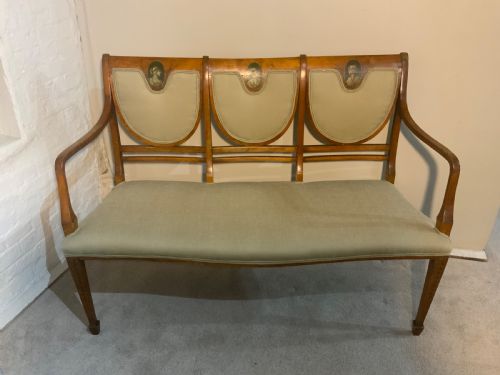
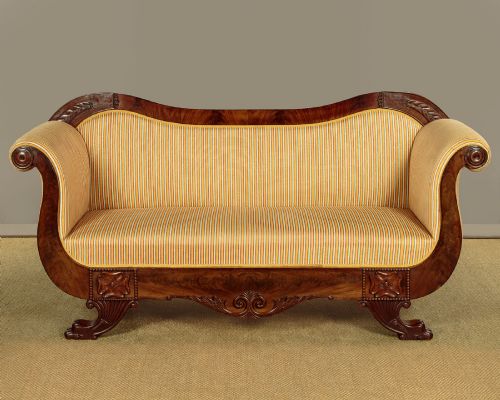
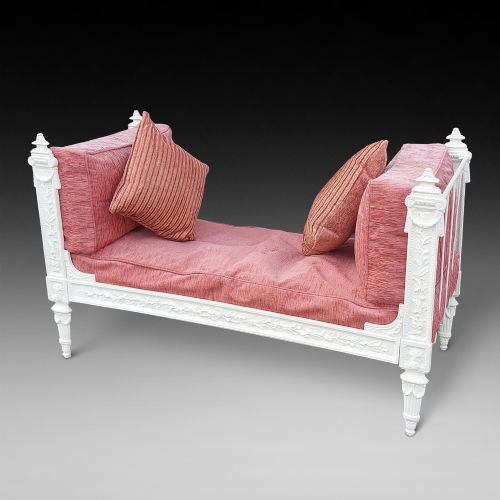
When you search for a classical style sofa, you encounter seating forms that draw upon historical design idioms from the Regency and Victorian eras. These pieces include chair back settees, daybeds, scroll end couches, and three-seater sofas.
You are most likely to meet mahogany or satinwood framed settees featuring painted finishes, cane panels, or traditional upholstery. The origins span the early nineteenth century through to the early twentieth century.
The selection encompasses Regency scroll end sofas and Sheraton Revival interpretations alongside Biedermeier examples. Each piece displays distinct periods and styles recorded in the inventory.
How they were made
These items are constructed from solid timbers such as mahogany and satinwood, often enhanced with painted decoration or cane work. Artisans shaped the wood into scroll ends and chair back profiles.
Metal components like brass and cast iron appear in structural or decorative elements, particularly on daybeds. Upholstery and fabric complete the seating surfaces on the various settees and couches.
Classical Style Sofa Retail Price Guide 2026
Typical asking prices for classical style sofa among the pieces listed under this phrase on Sellingantiques today, from the lower quarter to the upper quarter. They describe what is for sale here now, not the wider market.
Current listings feature mahogany, satinwood, paint, brass, and cast iron across Regency, Victorian, and Biedermeier periods.
What varies in quality
The standard of a classical style sofa rests upon the crispness of its timber framing and the execution of painted decoration or wood grain. Finer examples display meticulous attention to the scroll ends and structural joinery.
The integration of materials such as cane and upholstery dictates the overall finish. Superior pieces maintain harmonious proportions across the mahogany or satinwood framework.
The Classical Style Sofa Glossary
- Regency
- A British architectural and decorative period dating from the early nineteenth century. It is characterised by classical restraint and scroll end furniture forms.
- Satinwood
- A durable tropical timber with a lustrous yellowish grain used extensively for fine cabinet work. It often forms the visible surface of decorated settees.
- Scroll end
- A sweeping, curved arm or terminal found on couches and daybeds. This architectural motif echoes ancient Greek and Roman furniture.
- Caning
- A woven plant material used for seat panels and backs. It provides a lightweight and decorative alternative to solid upholstery.
Classical Style Sofa: Frequently Asked Questions
How do I identify a Biedermeier sofa?
A Biedermeier sofa displays clean architectural lines with an emphasis on utilitarian comfort and timber grain. This Central European style dates from the nineteenth century.
Such pieces contrast with more ornate British Regency and Victorian equivalents through their restrained ornamentation.
Where do painted satinwood settees fit?
Painted satinwood settees belong to revival periods such as the Sheraton Revival and early twentieth-century decorative movements. They combine light timbers with hand-painted surface enrichment.
These items suit drawing rooms where lighter colour palettes and neoclassical motifs prevail.
Can I use a daybed for sleeping?
Late Victorian cast iron daybeds and Regency scroll end couches provide firm surfaces designed primarily for reclining and daytime rest. Their dimensions mirror those of historic seating rather than modern beds.
They serve well in studies, dressing rooms, or sunrooms as occasional lounging furniture.