



Classical Scene Porcelain
Classical scene porcelain pieces bring mythological narratives and historical figures into domestic spaces through hand-painted table items and decorative vessels.
Classical Scene Porcelain
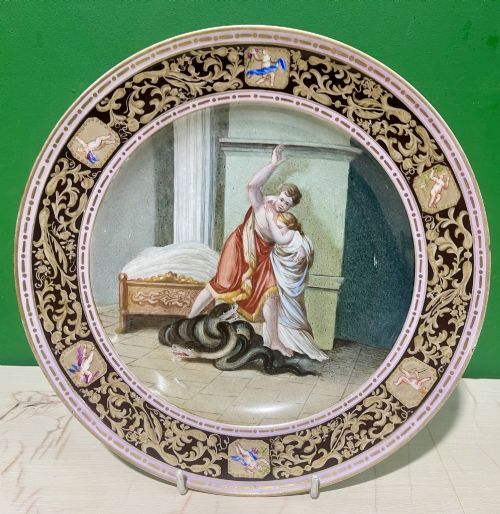
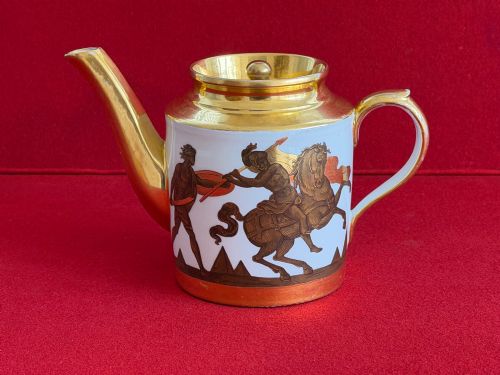
When you search for classical scene porcelain, you find items painted with figures from antiquity, such as Caesar or mythological figures like Aurora and Adonis. These objects include cabinet plates, chargers, large lidded vases, urns, ewers, and mantel clock garnitures.
The versions you meet most frequently on this page originate from the nineteenth century, including pieces produced by Vienna and Dresden factories. Makers applied historicist styles such as Neoclassical, Rococo Revival, and Victorian Classical Revival to everyday decorative forms.
Forms range from small ribbon dishes and rectangular caskets to large commemorative chargers measuring sixty centimetres across. Many incorporate cobalt blue grounds alongside extensive gilding to frame the central pictorial panels.
Materials and Construction
Potters shaped fine ceramic clay into rigid forms such as vases, plaques, and plates before firing the body. Artisans then applied enamel paints by hand to render intricate figurative narratives across curved and flat surfaces.
Gilding and gold leaf highlight rims, handles, and borders, framing the central painted panels. Mounts in brass, gilt, and gilt bronze appear on caskets, clocks, and garniture sets to structure the composition.
Classical Scene Porcelain Retail Price Guide 2026
Typical asking prices for classical scene porcelain among the pieces listed under this phrase on Sellingantiques today, from the lower quarter to the upper quarter. They describe what is for sale here now, not the wider market.
Listings feature nineteenth-century porcelain incorporating materials such as enamel, gilding, gold leaf, and gilt bronze mounts.
Assessing Quality and Execution
The finesse of the hand-painted figures determines the distinction between ordinary production and superior work. Signed compositions indicate individual artistry, whereas standard transfer prints or hasty brushwork lower the visual standard.
The application of rich cobalt blue grounds and heavy, burnished gilding marks higher grades of manufacture. Heavier bronze mounts and complete matching garniture sets also separate elaborate display pieces from single utility items.
Vienna Porcelain·Royal Vienna·Dresden porcelain·Berlin KPM
The Classical Scene Porcelain Glossary
- Charger
- A large decorative plate intended for display rather than dining. These items frequently feature detailed narrative scenes across a wide central surface.
- Garniture
- A set of matching decorative vessels designed to sit together on a mantelpiece or sideboard. They typically consist of a central clock or urn flanked by matching vases or ewers.
- Gilding
- A thin layer of gold applied to the ceramic surface to decorate edges and frame panels. This technique adds reflective contrast to deep cobalt blue grounds.
- Plaque
- A flat panel of fired porcelain used solely for pictorial display. These items often sit within brass or gilt frames or rest upon dedicated stands.
- Ewer
- A large jug with a decorated spout and handle, used historically for pouring water. In nineteenth-century porcelain, they served purely as ornamental vessels with classical motifs.
Classical Scene Porcelain: Frequently Asked Questions
What subjects appear on classical scene porcelain?
Painted subjects draw directly from ancient history and classical mythology. Common depictions include figures such as Caesar at the grave of Alexander the Great or mythological scenes involving Aurora and Cephalus.
Artists also rendered narrative titles directly onto the ceramic body or base. These compositions reflect nineteenth-century taste for historicism and antique revival.
How do I identify Vienna porcelain?
Vienna porcelain pieces often feature underglaze blue shield marks, sometimes called beehive marks, along with impressed numbers and painted titles in script. The painting quality is typically very fine, accompanied by rich cobalt blue and raised gilding.
Objects span cabinet plates, chargers, large urns, and ewers dated across the nineteenth century. Many pieces incorporate classical narrative scenes executed with high precision.
Were these pieces used or displayed?
Most items served a purely decorative function within nineteenth-century drawing rooms and parlours. Large chargers, cabinet plates, and plaques were meant for visual admiration rather than practical dining use.
Clock garnitures and lidded urns occupied prominent positions on mantelpieces and tables. Their elaborate gilding and painted narratives were intended to demonstrate cultural refinement.
What is a clock garniture set?
A clock garniture set consists of a central mantel clock accompanied by matching decorative vessels such as vases or urns. These pieces share identical materials, colour palettes, and decorative motifs to create a unified display across a mantelpiece.
Nineteenth-century examples combine porcelain bodies with gilt bronze mounts and classical painted scenes. The matched items balance the visual weight of the central clock.