






Classical Revival Furniture
Classical revival furniture draws directly on ancient Greco-Roman forms to bring proportion, symmetry, and architectural dignity into domestic rooms.
Classical Revival Furniture
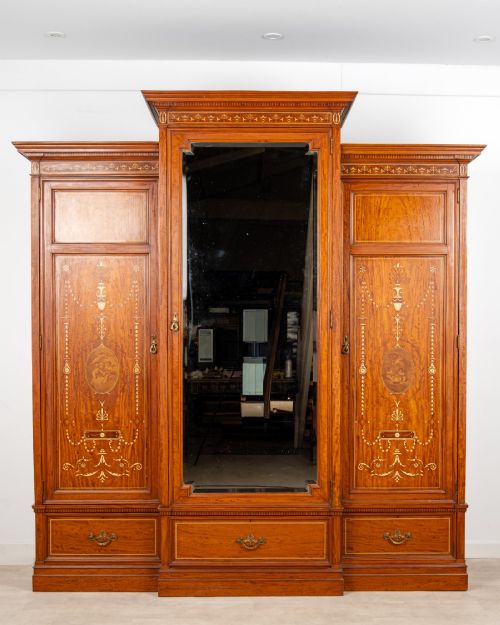
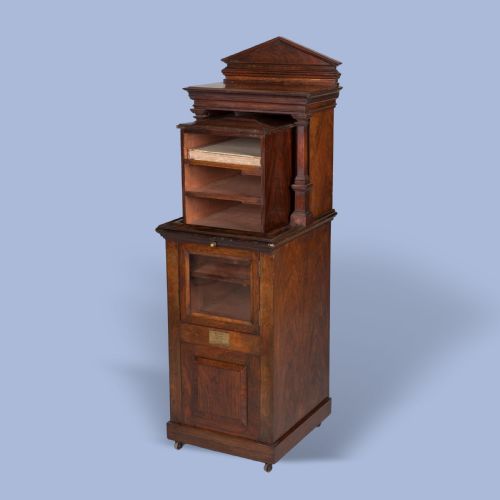
Classical revival furniture encompasses pieces influenced by ancient architectural motifs, including writing desks, side cabinets, occasional tables, and wardrobes dating from the nineteenth and early twentieth centuries.
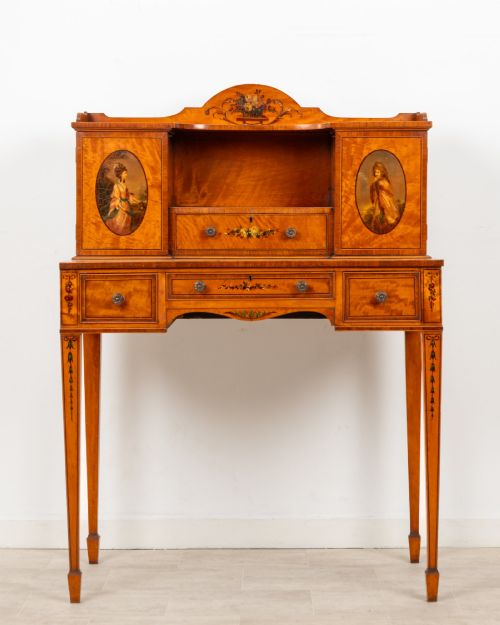
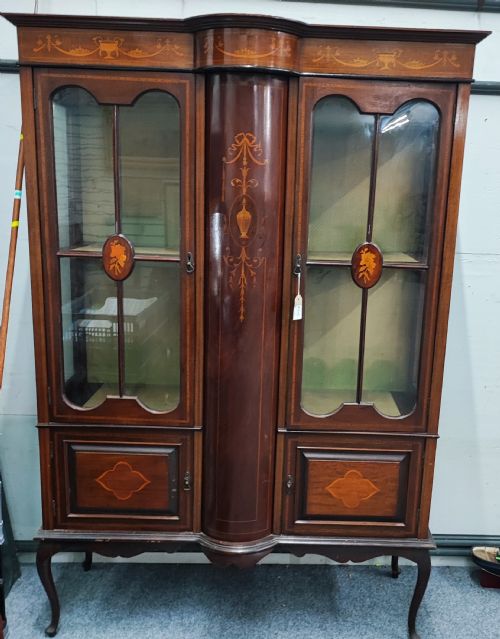
The version most commonly met on this page is the Edwardian satinwood cabinet or writing desk, frequently embellished with hand-painted details, marquetry, and classical inlay.
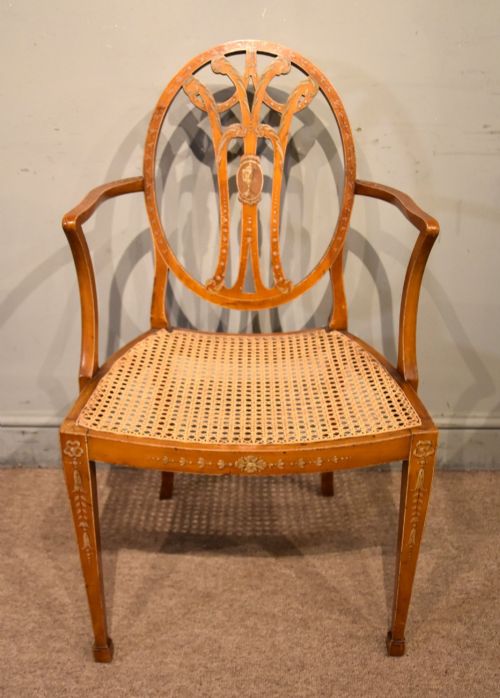
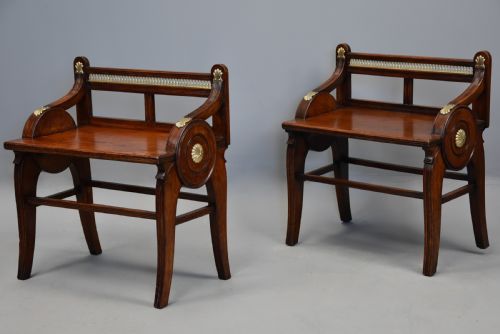
Makers drew on Georgian, Neo-Classical, and Sheraton Revival idioms to construct seating, display cabinets, and console tables using mahogany, walnut, satinwood, and pine.
Materials and Construction
Cabinet makers utilised dense primary timbers such as mahogany, walnut, and satinwood, often pairing them with contrasting inlay, marquetry, and delicate hand-painted decoration.
Metal components included cast bronze for hardware, alongside brass handles and push plates, while larger architectural forms incorporated marble tops and mirrored glass panels.
Classical Revival Furniture Retail Price Guide 2026
Typical asking prices for classical revival furniture among the pieces listed under this phrase on Sellingantiques today, from the lower quarter to the upper quarter. They describe what is for sale here now, not the wider market.
Even a simple doorway receives classical treatment here, represented by a solid cast bronze handle and matching push plate.
Evaluating Quality
The standard of a piece depends heavily on the precision of the cabinet work, the clarity of the painted panels, and the intricacy of the marquetry and inlay.
Distinction lies in the selection of figured timbers, the integration of classical proportions, and the attribution of the piece to established cabinet-making firms.
James Shoolbred and Co·Edwards and Roberts·Lamb of Manchester
The Classical Revival Furniture Glossary
- Satinwood
- A pale, lustrous timber prized for its smooth grain and frequently used as a primary veneer in cabinet making. It provided an ideal surface for painted classical scenes and fine marquetry.
- Marquetry
- The art of applying pieces of veneer to a structure to form decorative patterns and pictorial designs. Craftsmen utilised various coloured woods to achieve detailed architectural motifs.
- Demi-Lune
- A half-moon shape characteristic of side cabinets and console tables designed to stand flat against a wall. This profile allowed formal proportions to occupy modest hallway spaces.
- Neo-Classical
- A style inspired by the classical art and architecture of ancient Greece and Rome, prioritising symmetry, straight lines, and restrained ornamentation. It strongly influenced late nineteenth and early twentieth-century design.
Classical Revival Furniture: Frequently Asked Questions
What defines classical revival furniture?
These pieces draw inspiration from ancient Greek and Roman design, incorporating architectural elements like columns, symmetry, and classical motifs into domestic forms.
They span the nineteenth and early twentieth centuries, merging historical styles with contemporary Victorian and Edwardian cabinet-making techniques.
Where should I place a side cabinet?
Side cabinets and console tables function well in hallways, drawing rooms, or dining spaces where their surfaces can display decorative objects.
Demi-lune and bow-front variants suit narrower passages because their curved profiles reduce the physical footprint against the wall.
How do I care for satinwood surfaces?
Satinwood requires gentle dusting with a dry, soft cloth and protection from direct sunlight to preserve the pale timber and delicate hand-painted details.
Avoiding excessive moisture and wax build-up maintains the natural lustre of the veneer without damaging historical finishes.
How can I tell the period of a piece?
Dating relies on identifying the underlying timber, construction methods, and stylistic cues such as Edwardian painted motifs or Victorian proportions.
Signatures, stamps, or labels from known firms like Edwards and Roberts also help establish the exact era of manufacture.