


Classical Relief Casts
Classical relief casts translate antique sculpture into portable compositions that bring classical subjects onto domestic walls.
Classical Relief Casts
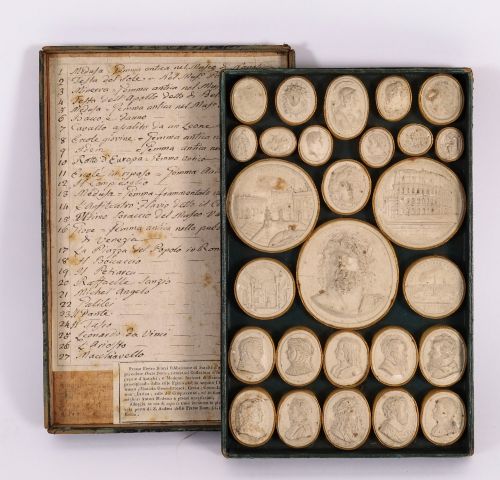
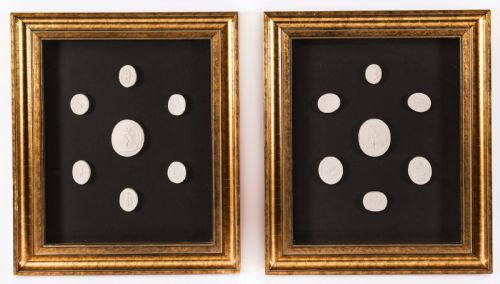
Classical relief casts represent antique sculpture, mythic scenes, and historical portraits captured in miniature form. When searching for classical relief casts, buyers encounter framed collections of intaglios, wall plaques, and medallions created during the eighteenth and nineteenth centuries. These pieces reflect the Grand Tour tradition where travellers collected miniature copies of classical monuments.
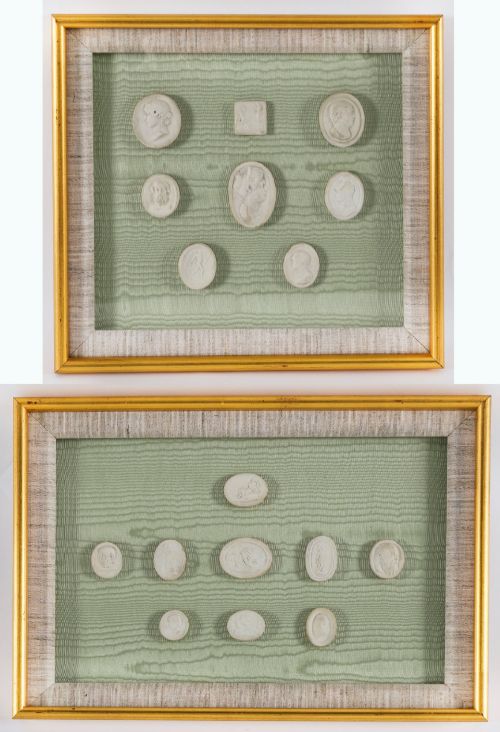
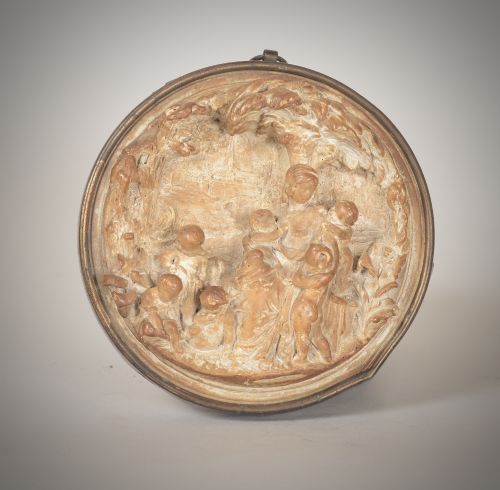
The objects on this page span the eighteenth, nineteenth, and early twentieth centuries, with a strong presence of nineteenth-century examples. Forms range from single framed wall plaques and bronze plates to sets of plaster intaglios arranged behind glass in wooden or giltwood frames. French and Italian workshops dominate the origin of these cabinet pieces and wall art.
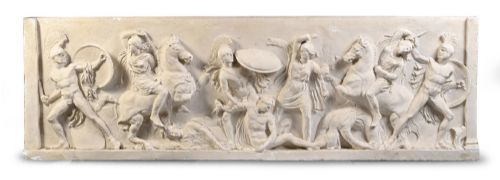
Makers and studios such as Giovanni Liberotti, Pietro Bracci, Barbedienne, and Carlhian & Corbiere appear in the listings, alongside foundry work by Coalbrookdale. Subjects draw heavily from classical mythology, including representations of Vesta, Amazonmachy scenes, and winged cherubs. Buyers select these works for their decorative impact within studies, libraries, and drawing rooms.
Materials and Technique
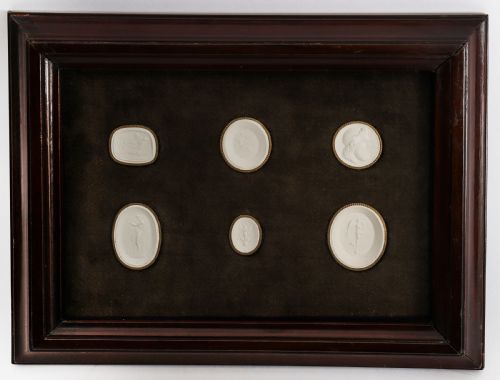
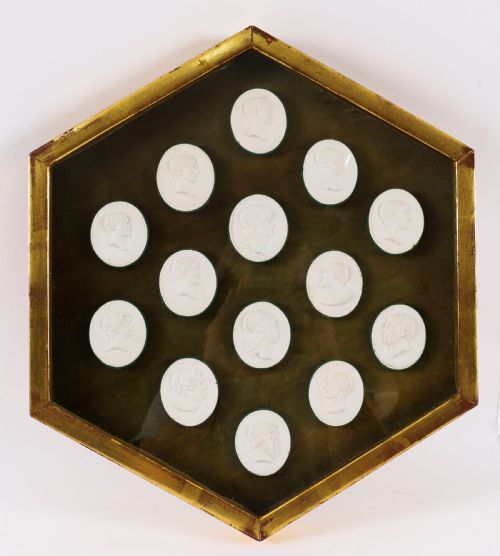
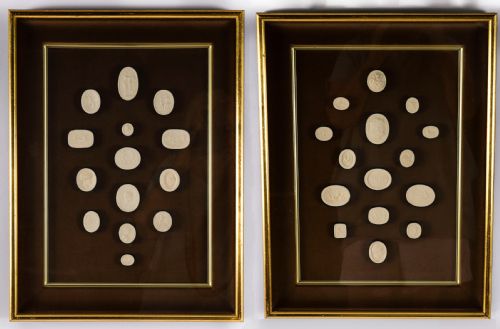
Plaster and cast bronze serve as the primary media for these works, capturing fine details from original marbles and metalwork. Plaster casts are often set against velvet or fabric grounds inside shadow boxes and giltwood frames to protect the delicate surfaces. Bronze pieces utilise casting techniques that replicate ancient patination, sometimes enhanced by silver plating or ebonising.
Wood and glass complete the construction of framed sets, utilising giltwood, mahogany, and velvet mounts to frame the plaster medallions. Cast iron and marble dust appear in related fireplace accessories and heavy wall friezes. The combination of cast elements with textile backdrops demonstrates the standard framing practices of the nineteenth-century collector.
Object forms include wall plaques, framed intaglios, firebacks, ewers, and campana-shaped vases reflecting neoclassical revival tastes.
Quality Variations
Quality rests upon the crispness of the cast and the depth of detail preserved in the plaster or metal. Finer pieces retain the subtle facial expressions and drapery folds of the original sculptures without blurring or softening at the edges. Maker attribution, such as signed labels from established Roman or Parisian workshops, distinguishes standard souvenirs from exceptional studio productions.
The presentation influences the overall standard, noting the condition of the giltwood frame, the neatness of the velvet mount, and the survival of original labels. Sets containing numerous distinct intaglios require careful arrangement and uniform plaster colour to maintain visual cohesion. Superior examples display rigorous adherence to classical proportions and clean casting seams.
Giovanni Liberotti·Pietro Bracci·Carlhian and Corbiere·Barbedienne Paris·Coalbrookdale
The Classical Relief Casts Glossary
- Intaglio
- A gem or medallion carved in incuse so that the design dips below the surface. These are often cast in plaster for framing.
- Grand Tour
- An eighteenth and nineteenth-century educational journey through Europe undertaken by wealthy individuals. Travellers collected art and plaster casts as mementos.
- Plaster Cast
- A copy of a sculpture produced by pouring liquid plaster into a mould. This technique allows exact replication of antique marble reliefs.
- Giltwood
- Wood that has been coated with gold leaf or gold paint. It frequently frames nineteenth-century wall art and intaglio collections.
- Tazza
- A shallow saucer-like dish set on a stem and foot, often cast in bronze with classical relief decoration.
Classical Relief Casts: Frequently Asked Questions
What are classical relief casts?
Classical relief casts are three-dimensional reproductions of antique sculptures, coins, and architectural friezes made from plaster, bronze, or marble dust. They capture classical motifs for display as wall art or cabinet pieces.
These works gained popularity during the nineteenth century through the tradition of the Grand Tour. Collectors gathered them to demonstrate an appreciation of classical art and history.
How were intaglios displayed?
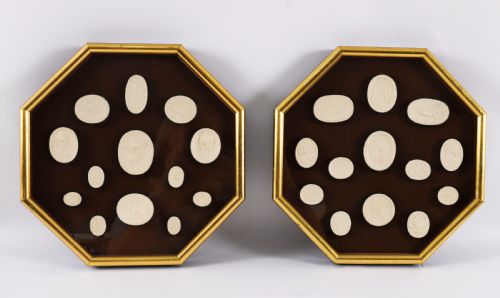
Intaglios and plaster casts were typically arranged in custom wooden frames against velvet or fabric backdrops. This protected the delicate material while allowing multiple subjects to be viewed together.
Larger individual reliefs were mounted directly onto walls as decorative plaques or incorporated into fireplace accessories and metal vessels.
How do I identify nineteenth-century pieces?
Nineteenth-century pieces often feature specific framing styles, such as deep giltwood shadow boxes, ebonised wood, or octagonal wooden surrounds. Maker marks, handwritten paper labels on the reverse, and patination on the bronze offer clues to the date.
The choice of materials, such as early nineteenth-century plaster formulations and traditional fabric mounts, also helps confirm the period of production.
Where should I hang these pieces?
Framed intaglios and plaster plaques suit studies, libraries, and hallways where their detailed subjects can be observed at close range. They pair well with traditional interiors and book-lined walls.
Larger bronze vessels and fireplace panels function as focal points in reception rooms, echoing classical revival interior schemes.