






Classical Profile Carving
These classical profile carving examples capture miniature portraits and grand bas-reliefs in shell, marble, and hardstone from Georgian and Victorian workshops.
Classical Profile Carving
A classical profile carving presents the side likeness of a historical figure, deity, or emperor fashioned from materials suited to minute detail or bold relief.
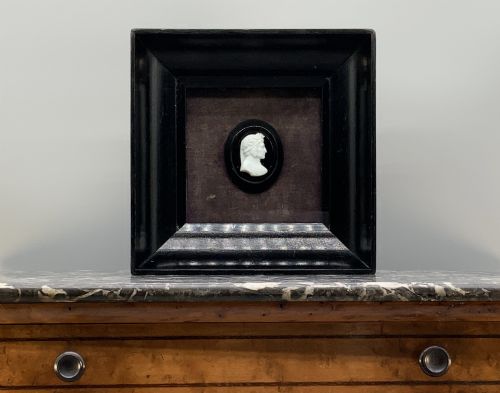
Buyers meet small personal adornments like rings, brooches, earrings, and bracelets alongside larger wall plaques intended for display.
The objects span Georgian, Victorian, and Edwardian periods, often originating from Italian workshops during the Grand Tour era.
Materials and techniques
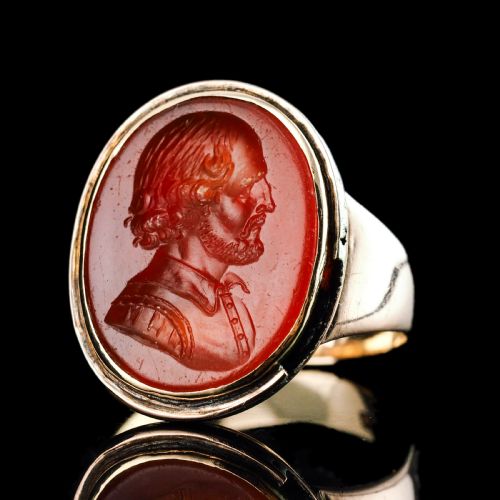
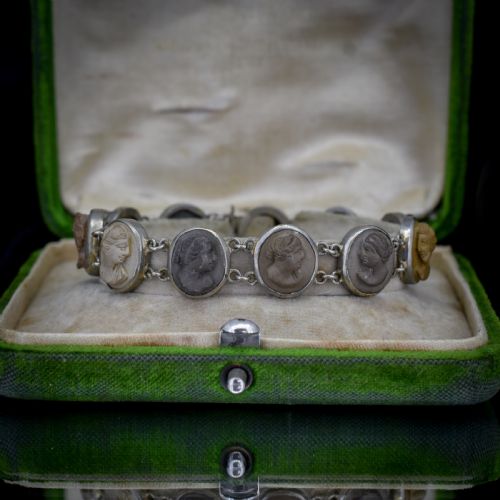
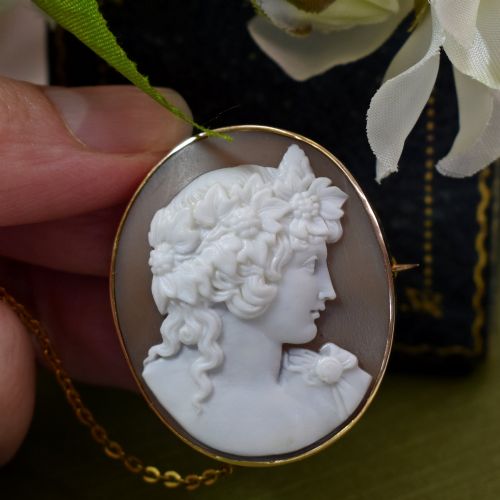
Carvers shaped shell, lava, and hardstones such as carnelian and agate by exploiting the natural colour layers within the material to make the profile stand out against a contrasting background.
Sculptors carved marble and mahogany into wall plaques and relief heads, employing chisels to capture the sharp lines of Roman noses and laurel wreaths.
Goldsmiths set these carvings into mounts of nine-carat, fifteen-carat, and eighteen-carat gold, silver, or pinchbeck, securing them as rings, seals, and brooches.
Classical Profile Carving Retail Price Guide 2026
Typical asking prices for classical profile carving among the pieces listed under this phrase on Sellingantiques today, from the lower quarter to the upper quarter. They describe what is for sale here now, not the wider market.
Some nineteenth-century travellers carried home solidified volcanic ash carved into the likeness of Roman deities.
Judging the quality
The choice and natural colour banding of the shell, carnelian, or hardstone determine how well the subject detaches from the background without cloudiness.
The weight and craftsmanship of the gold or silver mount, from simple bezels to elaborate frames with multiple carved links, indicate the original status of the piece.
Thorvalsen Workshop
The Classical Profile Carving Glossary
- Cameo
- A method of carving where the subject is raised in relief above the background. This technique relies on contrasting strata in shell, stone, or layered glass.
- Intaglio
- A design incised into the surface of a gemstone or metal so that it produces a raised impression when pressed into wax. Rings and seals utilise this method.
- Hardstone
- A semi-precious stone of considerable hardness, such as carnelian, agate, or jasper. Artisans cut these stones for intaglios and cameos.
- Grand Tour
- A cultural journey undertaken by wealthy young Europeans in the eighteenth and nineteenth centuries. Souvenirs included carved marble plaques and lava cameos.
- Pinchbeck
- An alloy of copper and zinc developed to imitate gold. Makers used this metal for jewellery mounts.
Classical Profile Carving: Frequently Asked Questions
What is a classical profile carving?
A classical profile carving depicts a historical figure, deity, or emperor seen from the side, rendered in materials like shell, stone, or marble.
These pieces range from tiny intaglio rings and cameo brooches to larger wall plaques carved from mahogany or marble.
How do I date a lava cameo?
Lava cameos often date from the nineteenth century, tied closely to the popularity of Italian travel souvenirs during the Victorian era. The style of the mount and the type of metal, such as silver or gold, provide further chronological clues.
Carvings depicting classical figures like Demeter or mythological scenes point directly to this period of interest in antiquity.
Where should I display wall plaques?
Carved marble and mahogany wall plaques suit spaces with adequate lighting to highlight the depth of the relief profile. Secure wall fixings are essential due to the weight of stone and dense timber.
Pairing smaller plaques together echoes the nineteenth-century manner of arranging Grand Tour collections.