




Classical Portrait Plaques
Classical portrait plaques bring profile likenesses of historical figures and classical heroes into interior spaces.
Classical Portrait Plaques
Classical portrait plaques present profile likenesses of historical figures, literary icons, and emperors mounted on walls or set within frames. When you search for classical portrait plaques, you encounter relief sculptures and cameo bas-reliefs created during the eighteenth and nineteenth centuries.
The pieces on this page draw upon neoclassical, Victorian classical revival, and French Empire styles. You meet Italian grand tour souvenirs alongside works produced by English and European makers.
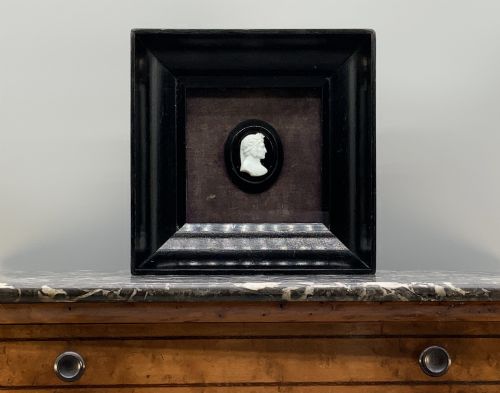
Forms range from individual carved ivory and marble roundels to framed sets of jasperware cameos and ceramic tiles. The subjects include Roman emperors, poets such as Virgil and Dante, and nineteenth-century composers.
Materials and construction
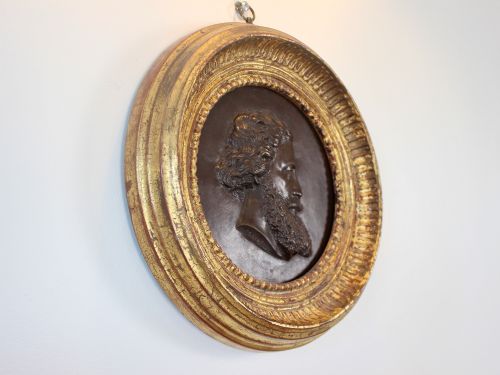
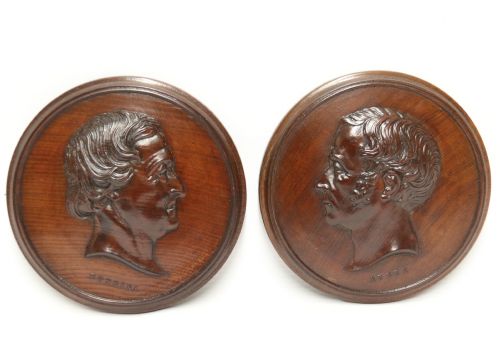
Carving in white marble and mahogany provides the primary medium for many relief sculptures and profile plaques. Artisans also utilised ivory, cast lead bronzed materials, and ceramic compositions such as Wedgwood jasperware.
Frames play a structural role, utilising turned mahogany and giltwood to enclose and support the wall decor. Signatures and workshop attributions appear carved directly into the marble or cast into the bronze surfaces.
Materials across these listings include marble, wood, mahogany, glass, ivory, bronze, and giltwood.
Assessing quality in relief carvings
The integration of the plaque with its original turned mahogany or giltwood frame contributes to the integrity of the piece. Attribution to known workshops or signed makers adds documented provenance to the physical object.
Sherwin and Cotton·Thorvalsen Workshop·Kasper Hendrik Roskam
The Classical Portrait Plaques Glossary
- Bas-relief
- A sculptural technique where the figures project slightly from the background plane, commonly seen in marble and ivory profile plaques.
- Jasperware
- A fine-grained, unglazed stoneware developed by Wedgwood, typically featuring white classical reliefs against a coloured background.
- Grand Tour
- A traditional trip through Europe undertaken by upper-class scholars and collectors during the eighteenth and nineteenth centuries, yielding souvenirs like marble portrait reliefs.
- Roundel
- A circular panel or plaque used for decorative wall art and relief sculptures.
- Ewer
- A large jug with a wide spout, depicted in ceramic tile designs from the Victorian period.
Classical Portrait Plaques: Frequently Asked Questions
What periods do these plaques come from?
The listings encompass eighteenth-century souvenirs and nineteenth-century classical revival works. These pieces span neoclassical and Victorian movements.
Dates range from late eighteenth-century Italian grand tour carvings to Victorian ceramic tiles and framed cameos.
How were these wall plaques displayed?
Many examples are set within turned mahogany or giltwood frames designed for wall hanging. Others function as architectural reliefs or framed cameo sets.
Pairs often feature complementary historical or literary figures such as poets and emperors.
Which materials were used for portraits?
Carved white marble and mahogany provide solid mediums for high-relief profile portraits. Ivory, cast bronze, and ceramic compositions are also utilised.
Frames incorporate turned wood and gilt finishes to complement the central plaque.
Are these plaques signed by artists?
Certain pieces bear signatures from sculptors and workshops cast into bronze or carved into marble. Maker attributions connect specific works to documented European studios.
Unsigned pieces remain attributed to regional traditions such as nineteenth-century Italian or French Empire workshops.