
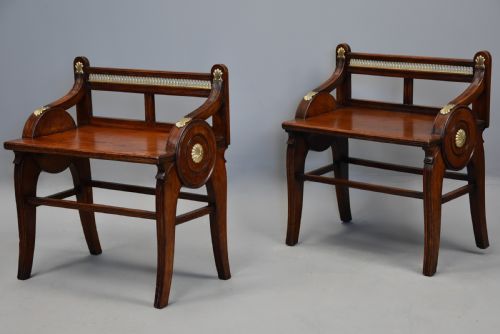


Classical Revival Wooden Carving
These classical revival wooden carving pieces bring sculptural form and architectural dignity into a room, offering an enduring connection to ancient motifs.
Classical Revival Wooden Carving
A classical revival wooden carving draws upon the architectural vocabulary of antiquity, translating ancient forms into functional or decorative household furnishings. When exploring classical revival wooden carving, you encounter pieces that range from substantial architectural elements to refined seating and display cabinets.
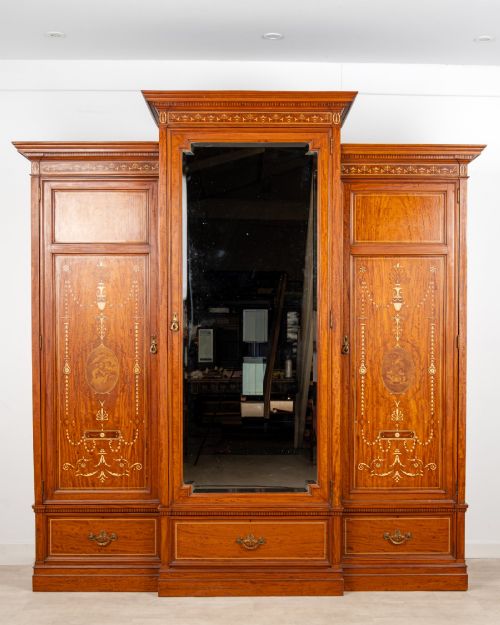
The selection here encompasses various nineteenth-century items alongside early twentieth-century examples, spanning periods from around eighteen hundred through the Edwardian era. Forms include oak hall benches, mahogany plaques, walnut tazzas, painted wardrobes, and architectural columns.
Origins represented in these listings point toward English, Italian, and federal revival traditions, blending classical proportion with the cabinetmaker's craft. Each object utilises timber as a canvas for sculptural relief, Corinthian capitals, or painted neoclassical decoration.
Materials and construction
Timbers such as oak, mahogany, walnut, and satinwood form the structural foundation of these pieces, selected for their grain and stability. Carvers shaped these hardwoods by hand, executing intricate relief work, sphinx figures, and architectural detailing directly into the solid wood.
Secondary techniques involve inlay, painted decoration, and the integration of brass or fabric elements to complement the carved surfaces. Joinery methods of the nineteenth and early twentieth centuries ensure structural integrity beneath the classical ornament.
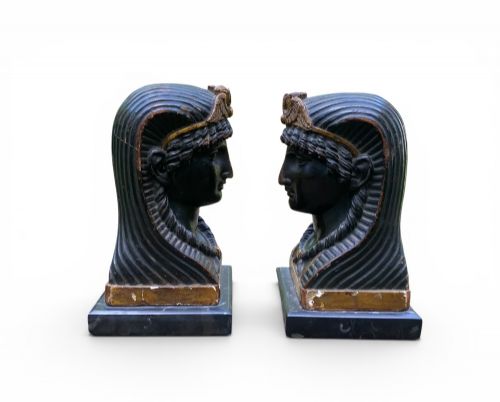
Wooden sphinxes keep watch from eighteen ten, proving that classical revival carvers enjoyed introducing mythological beasts into domestic spaces.
Assessing quality and execution
The standard of carving dictates the visual success of the piece, separating crisp, deep relief from softer, more mechanically rendered decoration. Master carvers achieved precise anatomical proportions on figural elements and sharp fluting on columns and capitals.
Proportion and timber selection further define the hierarchy, as well-figured walnut, oak, or satinwood enhances the architectural silhouette. The harmony between the classical design vocabulary and the underlying cabinetwork determines the piece's overall presence.
Thomas Hope·James Shoolbred and Co
The Classical Revival Wooden Carving Glossary
- Tazza
- A shallow cup or bowl mounted on a stem and foot, often carved from solid wood in classical designs. This form emulates ancient metalwork vessels.
- Corinthian
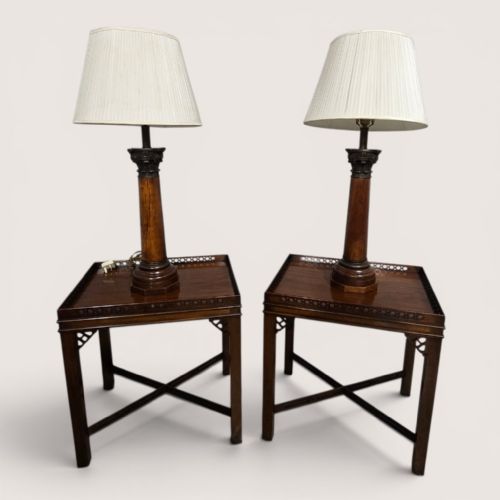
- An architectural order characterised by ornate capitals decorated with acanthus leaves. It frequently appears on carved wooden columns and lamps in this group.
- Sphinx
- A mythical creature with a human head and a lion's body, used as a decorative motif in neoclassical and regency design. Pairs of these figures served as sculptural ornaments.
- Inlay
- A technique where contrasting woods or materials are inserted into depressions within the primary timber surface to create decorative patterns. Edwardian examples often employ this method on wardrobes and settees.
Classical Revival Wooden Carving: Frequently Asked Questions
What is classical revival style?
Classical revival refers to artistic movements that draw inspiration from the art and architecture of ancient Greece and Rome. Makers adapted these enduring proportions and motifs for nineteenth- and twentieth-century interiors.
In wooden carving, this translates into columns, swags, acanthus leaves, and figural sculptures integrated into furniture and architectural elements.
Where should I place a wooden column?
Large architectural columns and wood-and-stone elements work well as freestanding sculptural focal points within a spacious interior. They can anchor a corner or frame a transition between rooms.
Smaller elements like carved plaques or tazzas suit side tables, mantels, or dedicated display surfaces where the detail remains visible.
How do I care for carved wood?
Maintain carved wooden items by dusting them gently with a soft brush to reach into the recesses of the relief work. Avoid harsh chemical cleaners and keep the timber away from direct heat sources.
Applying a traditional beeswax polish occasionally helps nourish the grain and protects the historic surface without building up excessive residue.
How do I date a carved armchair?
Dating relies on examining the timber species, joinery construction methods, and the specific interpretation of revival styles used by the maker. Nineteenth-century examples often feature heavier oak or walnut with hand-chiselled depth.
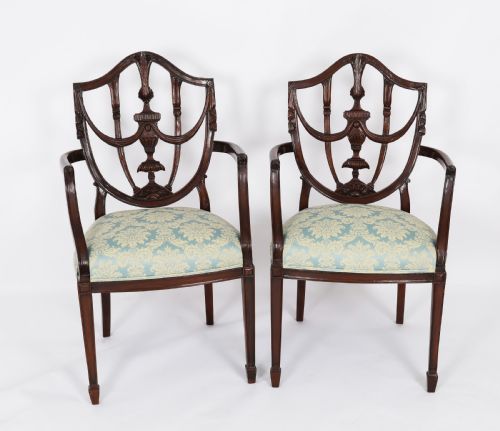
Later pieces from the Edwardian period or the nineteen-twenties may incorporate satinwood, lighter frames, or painted neoclassical decoration alongside the carving.