




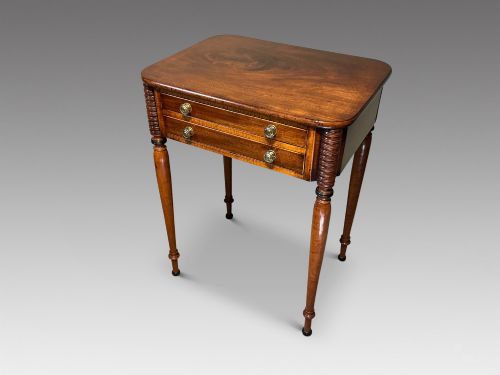


Classical Nightstand
A classical nightstand brings architectural proportion and rich timber grain to the bedside.
Classical Nightstand
A classical nightstand takes various forms, most frequently appearing as bedside cabinets, lamp tables, and pedestal cupboards across this selection. These pieces originate from periods spanning the nineteenth century through to the early twentieth century.
Makers drew on established design languages such as Regency, French Empire, Victorian, and Neo-Classical Revival styles. The forms often utilise pedestal shapes or enclosed cabinetry designed to sit neatly beside a bed.
How they were made
Construction relies heavily on solid mahogany and flame mahogany veneer, often enhanced by satinwood or maple details and marquetry. These timbers provide the structural carcase and decorative surfaces characteristic of the period.
Many cabinets incorporate inset marble or alabaster tops, alongside cast brass mounts and hand-painted detailing for visual contrast. Cabinetmakers combined dense hardwoods with precise decorative veneers to achieve refined finishes.
Classical Nightstand Retail Price Guide 2026
Typical asking prices for classical nightstand among the pieces listed under this phrase on Sellingantiques today, from the lower quarter to the upper quarter. They describe what is for sale here now, not the wider market.
Listings span the nineteenth century to the early twentieth century, incorporating mahogany, marble, brass, and flame mahogany veneer.
What varies in quality
Quality reveals itself in the selection and matching of wood veneers, particularly on flame mahogany and satinwood surfaces where grain continuity matters. Superior examples display crisply carved mouldings and well-integrated brass or marble elements.
The precision of joinery in the drawer construction and door hanging distinguishes finer pieces from simpler utilitarian items. Balanced proportions and authentic period hardware elevate the status of an individual nightstand.
The Classical Nightstand Glossary
- Flame mahogany
- A veneer cut from the fork of the mahogany tree that produces a distinctive flickering, flame-like pattern across the surface.
- Marquetry
- The art of applying pieces of veneer to a structure to form decorative patterns, frequently seen in floral or geometric motifs.
- Pedestal cupboard
- A freestanding enclosed piece of furniture built on a vertical column or plinth, providing concealed storage beside a bed.
- Satinwood
- A durable, yellowish timber prized for its smooth sheen and used extensively for contrasting stringing and banding.
- Alabaster
- A fine-grained stone used for lamp bases and decorative surfaces, valued for its translucent quality.
Classical Nightstand: Frequently Asked Questions
What defines a classical nightstand?
A classical nightstand is a small bedside table or cabinet drawing on historical architectural motifs, such as those from the Regency or Neo-Classical Revival styles.
These pieces typically feature formal symmetry, timber veneers, and occasionally marble or brass additions.
Are these tables sold in pairs?
Many listings feature matched pairs of bedside cabinets and lamp tables, though single pieces also appear.
Pairs are particularly sought after for balancing bedroom layouts symmetrically.
What materials are most common?
Mahogany is the predominant timber, appearing as solid wood and flame mahogany veneer alongside satinwood and maple.
Marble, alabaster, and brass frequently provide contrasting tops and decorative mounts.
How do I date a piece?
Dating relies on identifying stylistic markers from periods like the Regency era, Victorian times, or early twentieth-century revivals.
Construction methods and timber choices further clarify the manufacturing era.