








Classical Metal Urn Lamps
Classical metal urn lamps bring architectural symmetry and heavy bronze or brass presence to a room, turning ancient vessel forms into practical lighting.
Classical Metal Urn Lamps
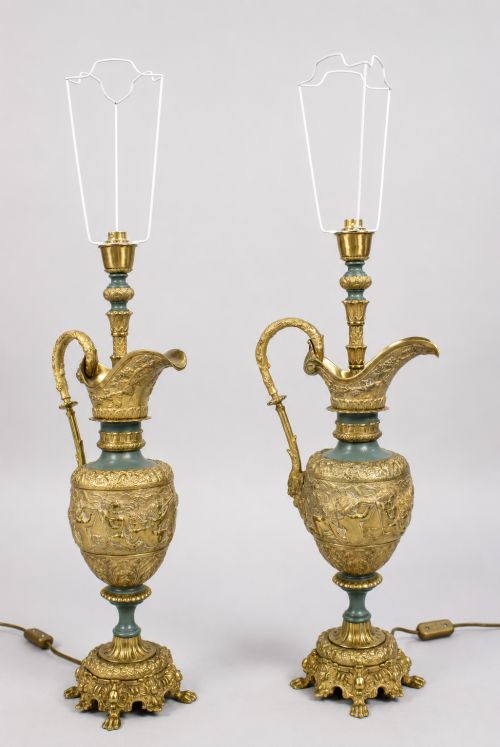
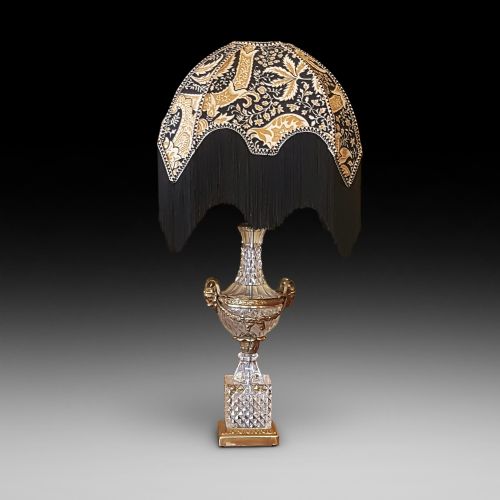
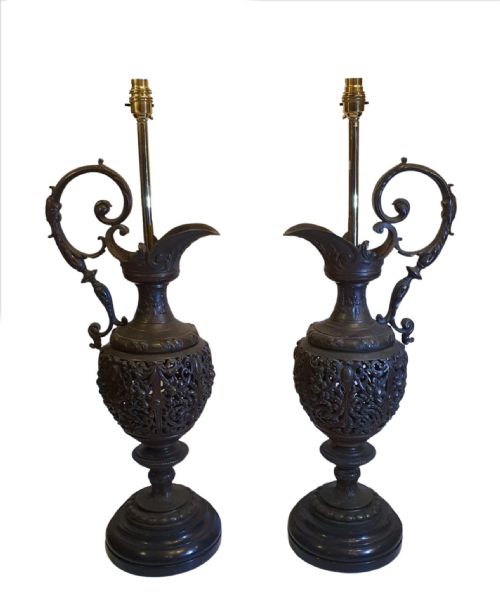
When you search for classical metal urn lamps, you encounter table lamps and oil lamps that transform antique ewers, amphorae, and vases into wired fixtures. These objects draw heavily on Neoclassical, French Empire, and Victorian Neoclassical design vocabularies.
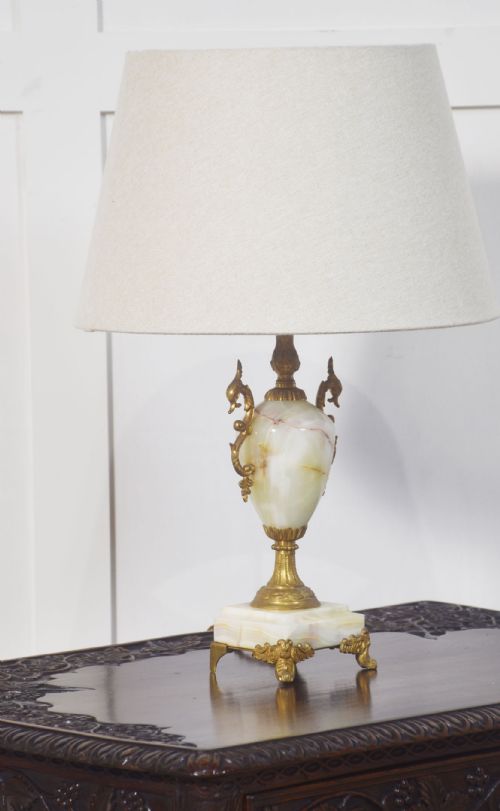
You are most likely to meet 19th-century and early 20th-century examples fashioned from gilt metal, bronze, and brass, frequently mounted on marble or onyx bases. Many began life as oil lamps or decorative ewers before later conversion to electricity.
How they were made
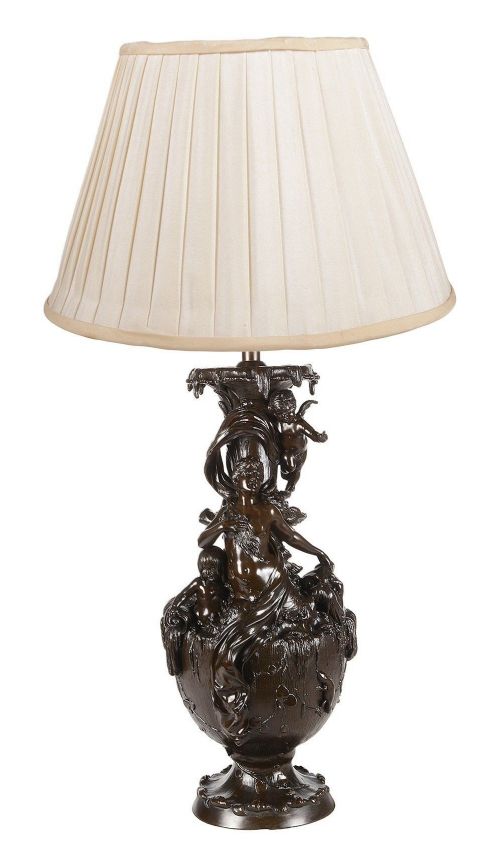
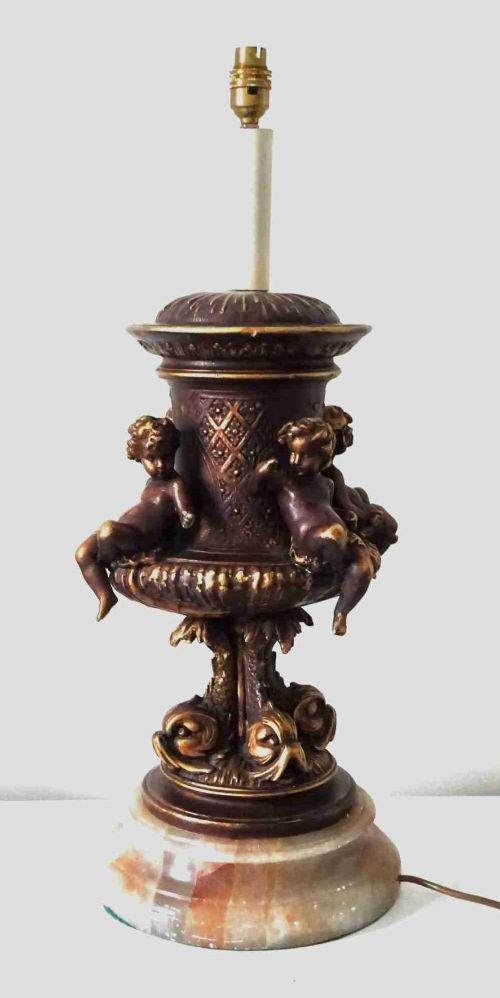
Maker's workshops cast metal bodies in bronze, brass, or gilt metal, applying ormolu highlights and detailed mounts such as paw feet, cherubs, and classical handles. Porcelain and toleware bodies also appear, combined with metal mountings and hand-painted decoration.
Stone elements like marble and onyx provide heavy, stable footings for the metal vessels, while fabric shades complete the conversion from oil reservoir or decorative vase to functional table lamp.
Neoclassical and French Empire styles dominate the design vocabulary, appearing alongside Victorian interpretations and Edwardian cut glass mountings.
What varies in quality
Quality rests in the crispness of the metal casting and the depth of the gilding, bronze patination, or ormolu finish. Finer pieces display sharply rendered figural details, such as dolphins or mythological figures, rather than soft or smoothed ornamentation.
The choice of subsidiary materials also dictates the tier of the piece, with solid marble or onyx bases and hand-painted porcelain bodies marking out superior manufacture compared to simpler metal mountings.
The Classical Metal Urn Lamps Glossary
- Ormolu
- Gilded bronze applied to ornamental mounts and decorative fittings. This technique was widely utilised in French classical furniture and lighting during the eighteenth and nineteenth centuries.
- Ewer
- A large jug with a wide spout traditionally used for water, often adapted centuries later into a tall table lamp.
- Amphora
- A two-handled ancient Greek or Roman jar used for storing oil or wine, whose symmetrical shape inspired nineteenth-century metal lamp bodies.
- Grand Tour
- A cultural journey undertaken by wealthy young Europeans through France and Italy, bringing home classical bronzes and antiquities that later found new life as lamps.
- Toleware
- Painted and lacquered sheet metal items produced in various European centres during the eighteenth and nineteenth centuries.
Classical Metal Urn Lamps: Frequently Asked Questions
Are these lamps originally electric?
Most of these pieces started life as oil lamps, decorative ewers, or bronze vases before being converted to electricity during the twentieth century. The original vessels date primarily from the nineteenth and early twentieth centuries.
Conversion methods vary, with some retaining older burner mechanisms while others utilise modern internal wiring threaded through the ancient body.
How do I identify French Empire style?
French Empire pieces display heavy classical influences drawn from ancient Rome and Greece, featuring dark patinated bronze, gilt metal mounts, and martial or mythological motifs.
Look for symmetrical urn forms, paw feet, and detailed cast ornaments depicting figures like goddesses or cherubs.
What is the difference between bronze and gilt metal?
Bronze is a heavy alloy of copper and tin that develops a deep natural patina over time, or receives an artificial dark bronzed finish. It forms a solid, durable base for sculptural lamp bodies.
Gilt metal involves a base metal coated with a layer of gold or gold-coloured finish, offering a bright reflective surface that contrasts with darker patinas.
Where should I place an urn lamp?
These tall, architectural lamps suit substantial pieces of furniture such as sideboards, heavy timber desks, or large entrance hall consoles. Their weight and symmetrical profile demand a stable surface with adequate space around them.
Pair them with neutral fabric shades to let the metal urn and stone base remain the primary visual focus of the room.