


Classical Marble Column Light
A classical marble column light brings architectural dignity and warm illumination into a room through time-honoured materials.
Classical Marble Column Light
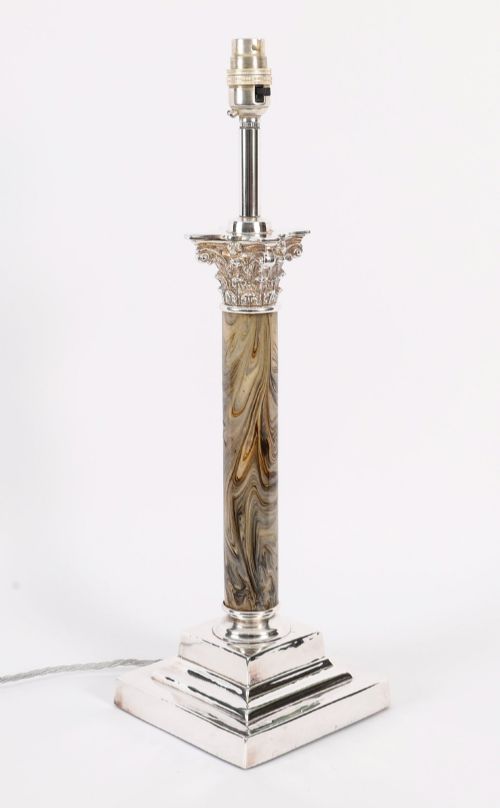
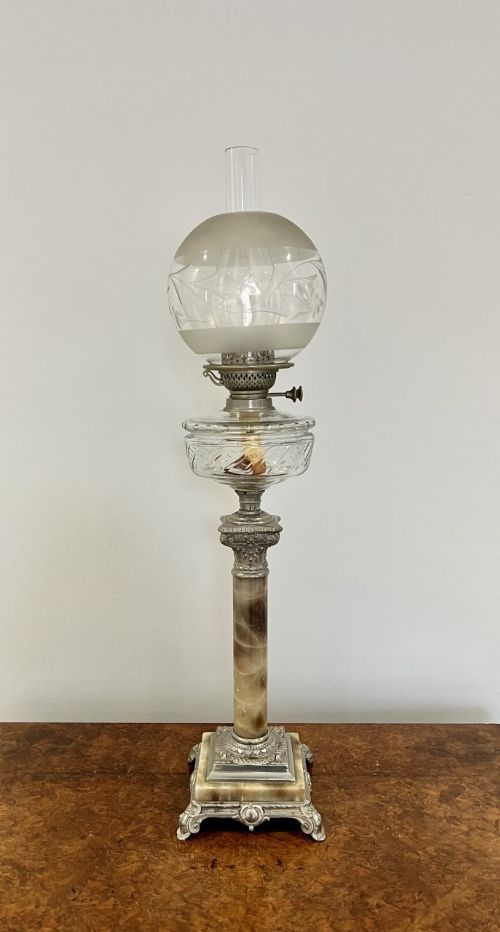
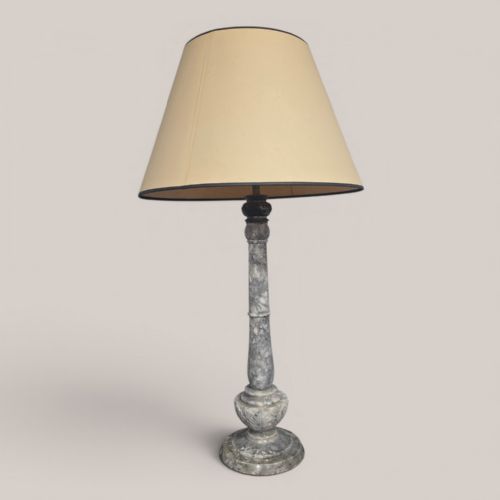
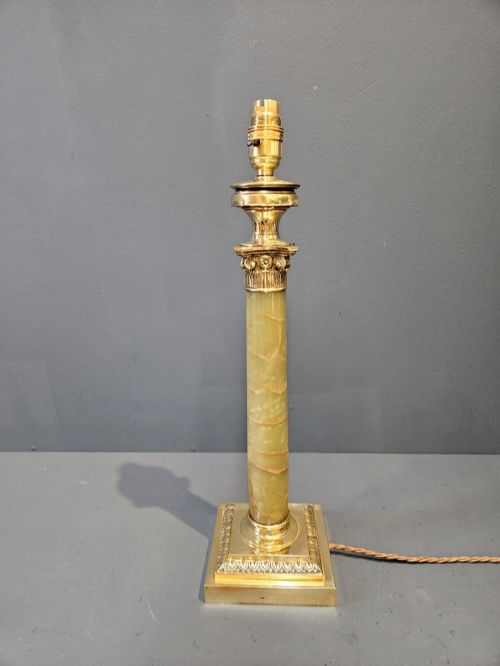
A classical marble column light combines carved stone shafts with metal fittings, emerging in forms such as table lamps, floor lamps, and converted oil lamps. These pieces draw upon historical architectural orders, frequently featuring Corinthian capitals or straightforward cylindrical pillars.
The selections available here span from the nineteenth century through the early twentieth century, encompassing Victorian, Edwardian, and French Empire styles. Neoclassical revival designs dominate the selection, reflecting a sustained European fascination with antiquity.
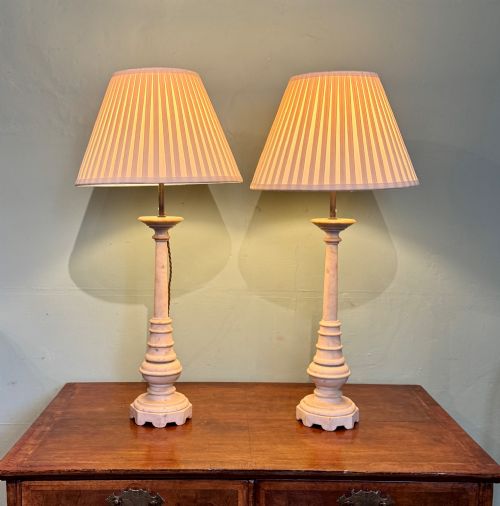
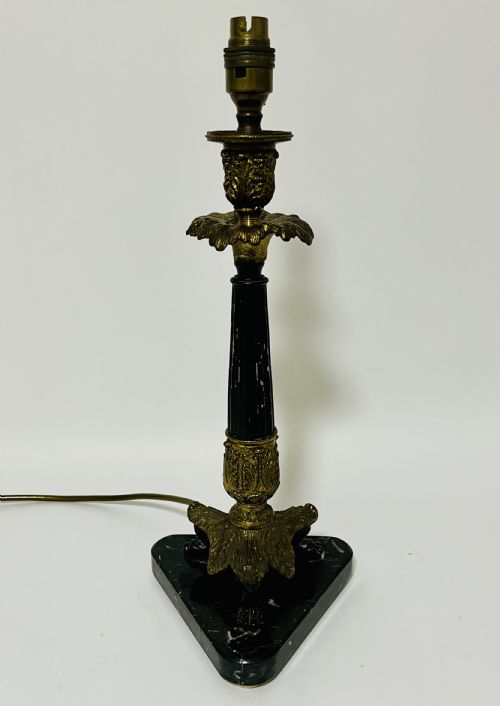
Buyers will encounter single statement pieces alongside matched pairs, rendered in white marble, onyx, or alabaster. Many incorporate classical motifs through brass, ormolu, silver plate, or gilt bronze mounts.
Materials and construction
The structural core relies on turned or carved natural stone, predominantly white marble, onyx, or alabaster, paired with turned metal components. Artisans shaped these heavy minerals on lathes and hand-finished the fluted or smooth columns.
Decorative mounts, capitals, and bases utilise cast brass, ormolu, silver plate, patinated bronze, and gilt bronze. These metal elements are secured to the stone shafts via threaded rods or internal fixings.
Many examples began life as oil lamps or candlesticks before undergoing conversion to electrical table lamps during subsequent decades. Fabric shades frequently complete the presentation.
Several heavy stone columns began their working lives lighting Victorian drawing rooms before finding new purpose as bedside reading lamps.
Markers of quality
Quality rests upon the crispness of the stone carving and the weight of the underlying materials. Finely turned marble columns exhibit sharp fluting and consistent polish across the entire stone surface.
The refinement of the metalwork separates standard examples from superior ones. Hand-chased ormolu, detailed Corinthian capitals, and heavy cast brass mounts indicate attentive craftsmanship during the period of manufacture.
The Classical Marble Column Light Glossary
- Corinthian column
- An architectural support characterised by an ornate capital decorated with acanthus leaves. This motif appears frequently on nineteenth-century lamp standards.
- Ormolu
- Gilded bronze produced by applying a mercury and gold amalgam to cast bronze. This technique creates a rich golden finish found on French Empire examples.
- Alabaster
- A fine-grained translucent stone used for carved lamp bases. It allows light to pass through the material when illuminated.
- Toleware
- Painted or lacquered metalware used for lamp bases and shades. It provides a contrasting dark finish against polished stone and gilt mounts.
- Neoclassical revival
- A design movement inspired by the art and architecture of ancient Greece and Rome. This style influences the proportions and ornamentation of these lamps.
Classical Marble Column Light: Frequently Asked Questions
How do I date a marble column lamp?
Dating relies upon examining the wiring methods, the composition of the metal mounts, and the turning style of the stone. Victorian and Edwardian examples often display distinct patination on the brass and specific construction techniques within the base.
Comparison with documented pieces from the nineteenth and early twentieth centuries helps narrow the decade of manufacture. Hallmarks on metal components or the presence of original oil-burning mechanisms also provide clear chronological markers.
Are these lamps safe for modern electrical use?
Most antique lamps require rewiring by a qualified professional to meet current safety standards. Older brass and metal components should be checked for stability and earthing where appropriate.
Modern wiring can be threaded through the internal channels of the column without altering the historic fabric of the stone. Professional testing ensures the lamp functions safely with contemporary bulbs and shades.
How should I clean marble and ormolu?
Dust marble and alabaster regularly with a soft, dry cloth to prevent grime accumulation. Avoid harsh chemical cleaners or abrasive materials that can etch the polished surface of the stone.
Ormolu and gilt bronze require gentle dusting without commercial metal polishes, which can strip the remaining gold leaf. Professional conservation advice is recommended for deeper cleaning.
Can I find matching pairs of lamps?
Matched pairs appear frequently among listings, often originating from grand drawing rooms where symmetrical lighting was favoured. These pairs share identical stone types, metal mounts, and overall height.
Verifying matching dimensions and stone veining helps confirm that the pair was manufactured together. Such sets suit placement on sideboards or large mantlepieces.