



Carved Marble Lamp Base
A carved marble lamp base brings solid weight and classic stone grain into a room, offering a sturdy foundation for lighting.
Carved Marble Lamp Base
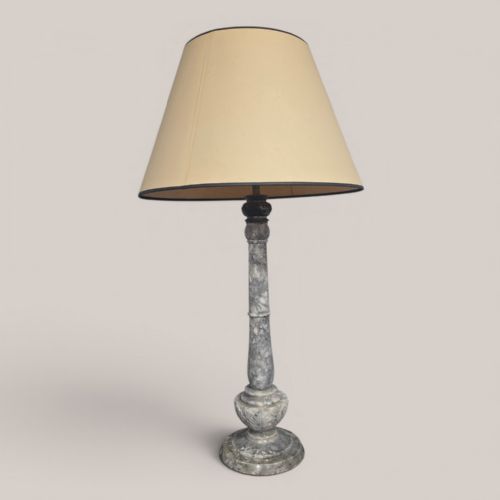
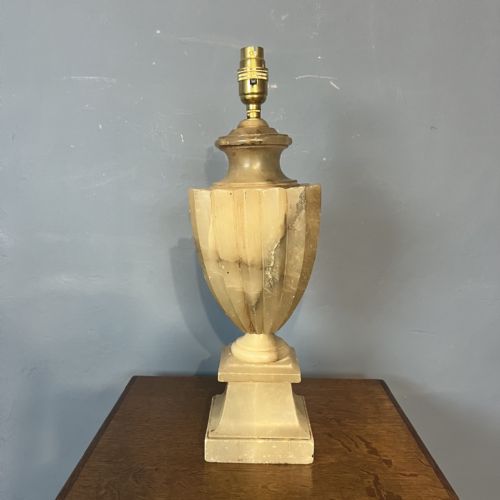
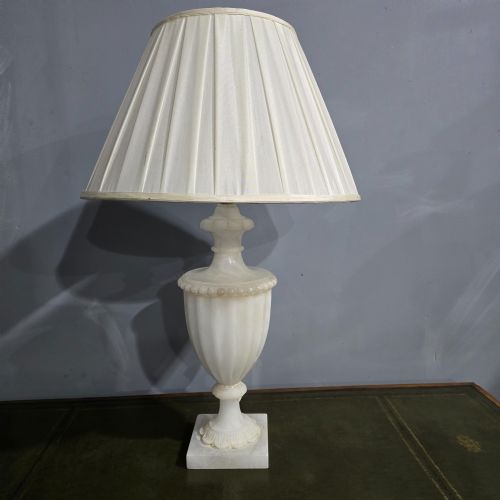
When you search for a carved marble lamp base, you are looking at solid stone supports shaped into classic urns, columns, and figural mounts. These pieces emerge from periods spanning the nineteenth century through the nineteen-twenties, incorporating styles such as French Neoclassical, Art Deco, and Edwardian. You are most likely to meet alabaster and marble table lamps or standard lamps on this page, often paired with brass or giltwood elements.
The forms range from compact table models to tall standard lamps, sometimes incorporating grey marble or onyx. Alongside standard table lamps, you will find related stone-topped furniture like gueridons and side tables that share the same material palette. Each piece reflects the decorative tastes of its decade, from nineteenth-century classical revivals to early twentieth-century designs.
Materials and construction
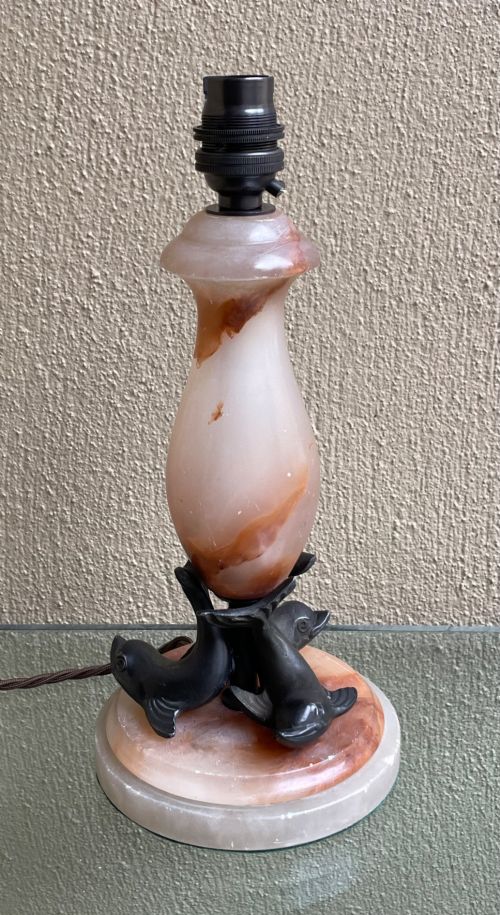
Makers shaped these items from natural quarried stone, utilising marble, alabaster, and onyx for the main bodies. Skilled hands turned and carved the stone into smooth columns, campana urns, and figural subjects such as dolphins or eagles.
Metal components in brass, giltwood, and patinated metal frequently secure the stone sections or provide decorative mounts. Fabric elements appear on the completed light fittings, while glass components sometimes accompany the stone urn bases.
Listings feature materials including marble, alabaster, onyx, brass, giltwood, and patinated metal across the nineteenth and early twentieth centuries.
Assessing quality and execution
The distinction between tiers of work lies in the crispness of the stone carving and the quality of the raw material. Uniformity of the marble grain and the depth of relief work on figural or floral motifs dictate the refinement of the object.
Integration between the stone body and metal mounts also separates standard production from finer examples. Heavier gauge brass and precise fitting of giltwood or patinated metal indicate a higher grade of manufacture.
The Carved Marble Lamp Base Glossary
- Alabaster
- A fine-grained translucent stone often used for carved lamp bases and urns. It allows light to diffuse softly when near a bulb.
- Campana Urn
- A bell-shaped vessel form derived from classical antiquity. Makers frequently adapted this shape for stone lamp bases.
- Gueridon
- A small French table, often featuring a circular marble top. These pieces share materials with related lighting fixtures.
- Regency Revival
- A decorative style echoing the early nineteenth-century British Regency period. It appears in furniture and lamp designs from the early twentieth century.
- Patinated Metal
- Metal surfaces showing a darkened or aged finish acquired through age or chemical treatment. This finish complements polished stone bodies.
Carved Marble Lamp Base: Frequently Asked Questions
What periods do these lamp bases come from?
The pieces span from the nineteenth century through the early twentieth century, including Edwardian and Art Deco eras.
Specific dates mentioned in the listings cover the eighteen-fifties up to the nineteen-twenties.
Are these lamps purely marble?
Many combine carved stone with other materials such as brass, giltwood, and patinated metal. Fabric elements and glass components also appear alongside the stone.
Metal mounts often secure the stone sections and provide structural support.
What styles are common among these items?
French Neoclassical, Art Deco, Edwardian, and Regency Revival dominate the design vocabulary. These styles draw on classical antiquity and early twentieth-century modernism.
Urns, columns, and animal figures are typical motifs within these design frameworks.