
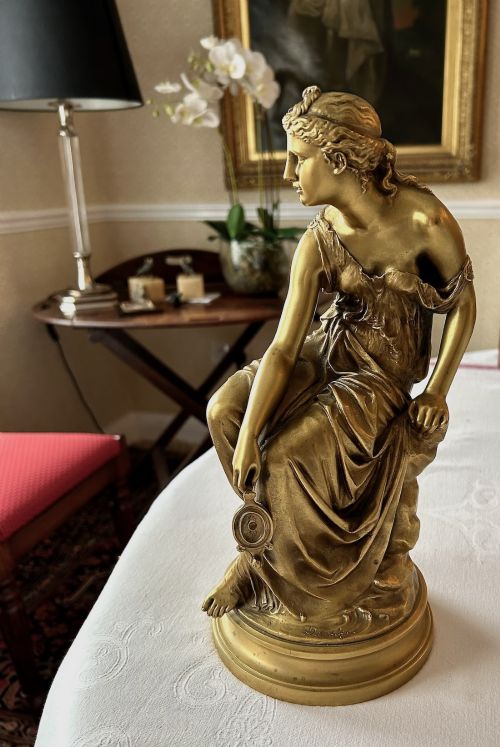
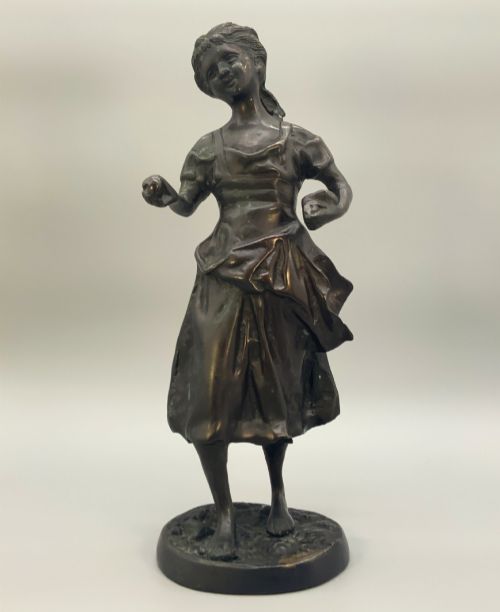
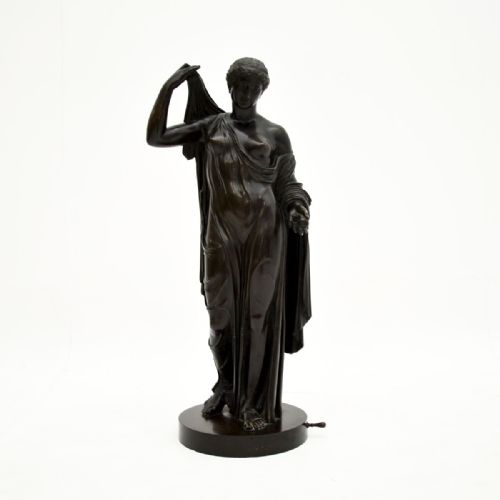
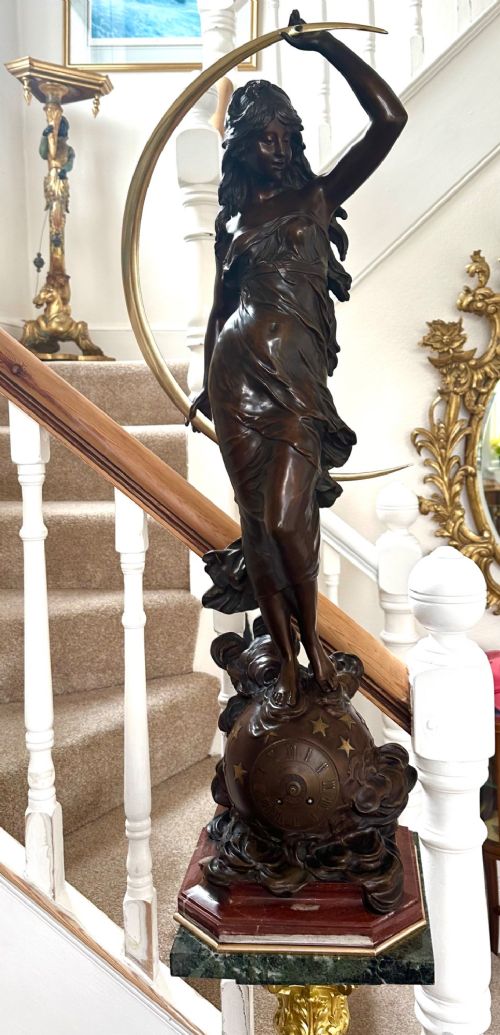
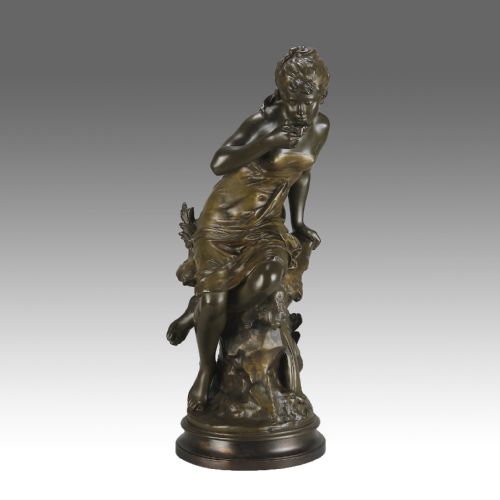
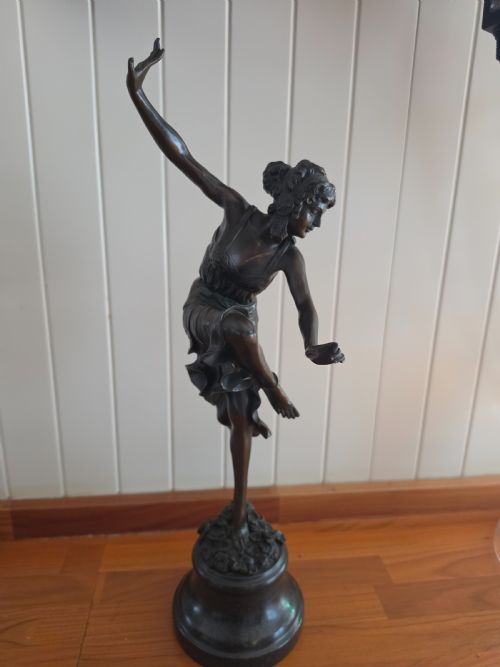
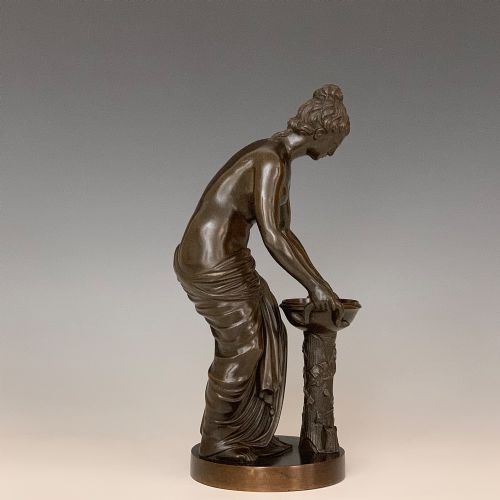


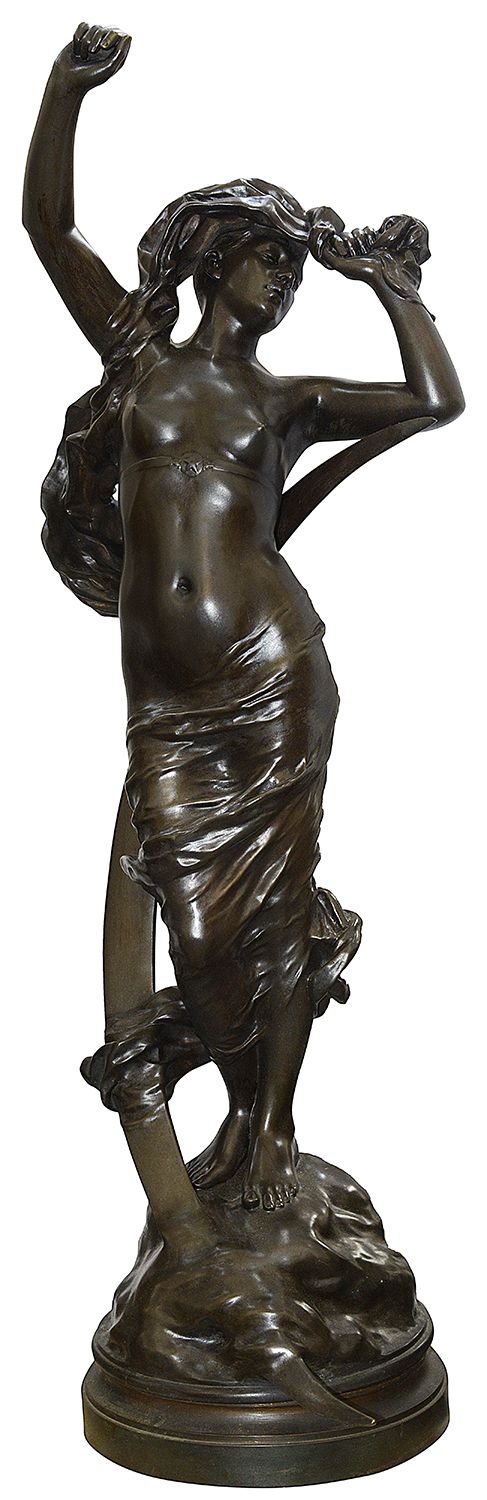
Classical Maiden Bronze Figure
A classical maiden bronze figure brings mythological poise and academic grace directly into your interior, shaped by nineteenth-century foundry traditions.
Classical Maiden Bronze Figure
A classical maiden bronze figure represents female forms drawn from antiquity, mythology and allegorical subjects, produced primarily across nineteenth-century France. You will most frequently encounter standing or dancing robed ladies, water carriers and mythological subjects cast in patinated or gilt bronze.
These works range from cabinet bronzes to large architectural sculptures, alongside functional objects such as figural lamps and candlesticks. The aesthetic spans Neoclassical revival, academic realism and flowing Art Nouveau contours.
How they were made
Foundries utilised the lost-wax method or sand casting to achieve intricate detail in bronze, brass and gilt bronze. Metalwork was frequently paired with marble bases, earthenware, biscuit porcelain or opaline glass.
Patination was applied chemically to achieve varied brown, black or greenish surface tones, whilst gilding brought reflective warmth to ornamental details.
Listings include works from the Victorian era through the Art Deco period, incorporating marble, earthenware and biscuit porcelain alongside bronze.
What varies in quality
The choice of base materials, such as heavy variegated marble or precise multi-part bronze assembly, indicates the standard of the original workshop.
Etienne-Henri Dumaige·Moreau Family·Mathurin Moreau·C J R Colinet·S. Kinsburger·Clodion·Maurice Bouval·Houdebine·Jean Jacques Pradier·Victor Paillard·Devaulx·Hans Schork·A.Gaudez·Henri Plé·Leon Pilet
The Classical Maiden Bronze Figure Glossary
- Patinated bronze
- Bronze treated with chemical solutions to produce a specific surface colour and tone. This skin protects the metal and defines the visual mood of the sculpture.
- Grand Tour
- Souvenirs and miniature bronzes collected by travellers on educational tours of Italy during the nineteenth century. These pieces replicate classical antiquities.
- Caryatid
- A sculpted female figure serving as an architectural support or pillar. They frequently appear on candlesticks and lamp standards.
- Lost-wax casting
- A process where a wax model is melted from a mould and replaced with molten bronze. This technique allows for exceptional undercut detail.
- Gilt bronze
- Metal coated with a thin layer of gold or gold amalgam. Also known asormolu, it provides a bright, durable finish.
Classical Maiden Bronze Figure: Frequently Asked Questions
How do I identify a nineteenth-century casting?
Examine the surface for tool marks, foundry stamps and the depth of the chasing work. Nineteenth-century pieces typically exhibit heavier bronze weight and hand-finished details.
Look closely at the underside and fixing bolts, which often show age-appropriate wear and patination consistent with period manufacturing methods.
What is the difference between bronze and spelter?
Bronze is an alloy of copper and tin, offering high tensile strength and deep patination potential. Spelter is a softer zinc alloy often used for cheaper figures.
Spelter figures are lighter, more brittle, and frequently show grey metal beneath chipped paint or surface finishes.
How should I clean a bronze figure?
Dust gently with a soft, dry brush to prevent particulate buildup. Avoid chemical cleaners, water, or abrasive cloths that can strip the historic patina.
Occasional application of microcrystalline wax can protect the metal surface from atmospheric moisture.
Why do some figures have marble bases?
Foundries mounted bronzes on marble or slate plinths to add visual weight and stability to slender standing figures. This practice was standard for French salon sculptures.
The stone type often helps date the piece, with Portor and black marble being favoured in the nineteenth century.