

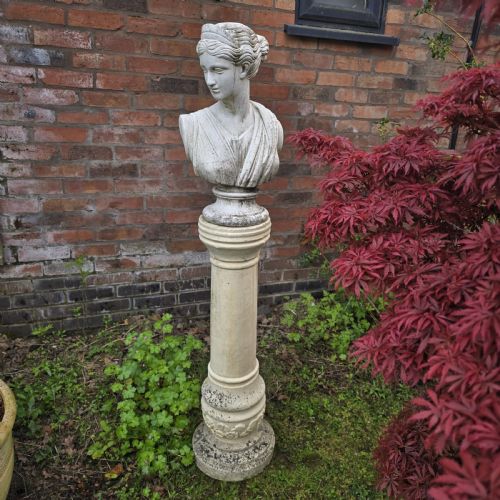


Classical Garden Ornaments
Classical garden ornaments bring architectural grandeur and mythic figures to open lawns, terraces and courtyards.
Classical Garden Ornaments
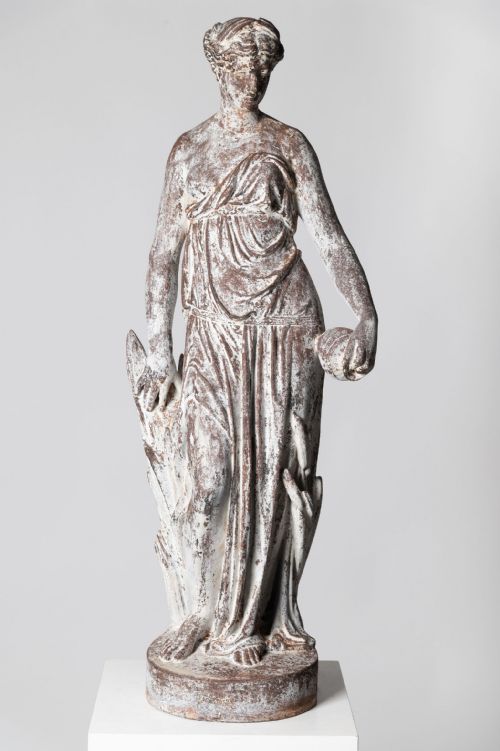
Classical garden ornaments encompass stone, iron and lead figures, urns, and sundials inspired by ancient Greece and Rome. Buyers exploring this selection encounter pieces ranging from nineteenth-century foundry urns to mid-century statuary.
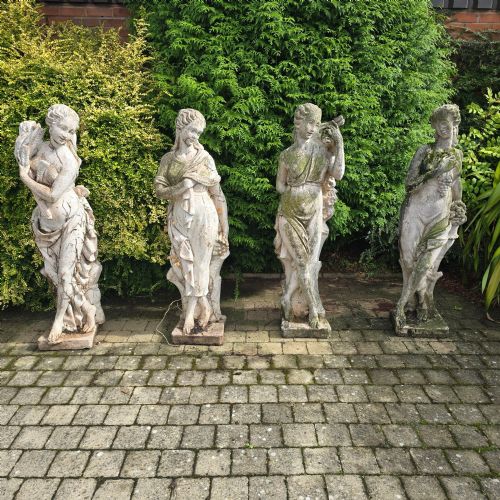
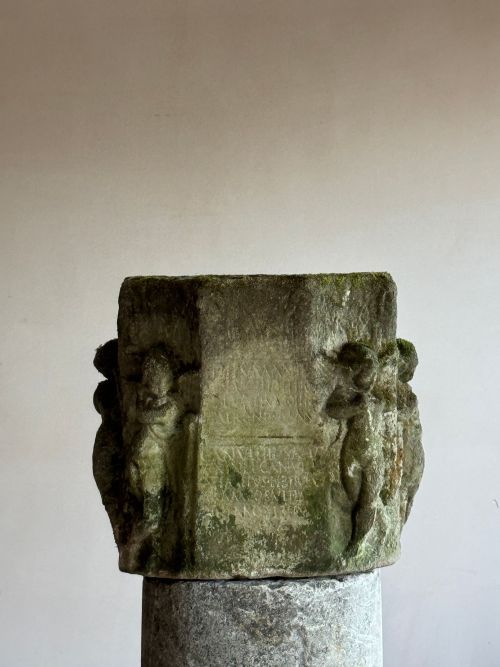
Objects span formal garden statuary on pedestals and architectural elements like funerary altars. Most pieces date from the Victorian era up to nineteen fifty, reflecting enduring tastes for revivalist landscaping.
Manufacturing and Materials
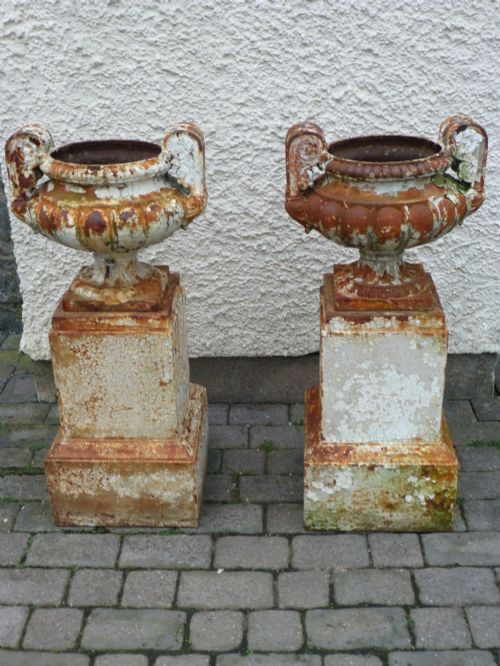
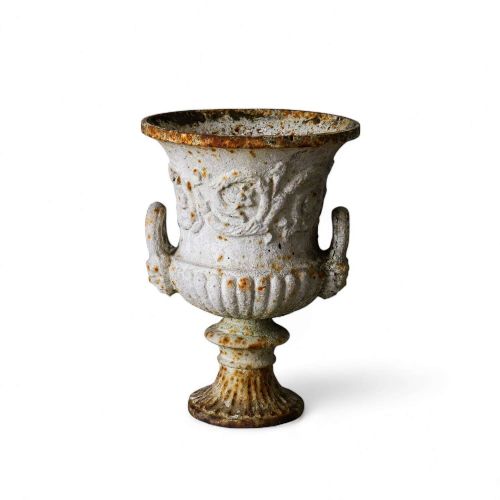
Foundries utilised cast iron for robust campana urns and detailed animal figures, often employing moulds from renowned makers. Hand-carved marble and solid stone accommodated monumental sculptures and baskets requiring durable exterior display.
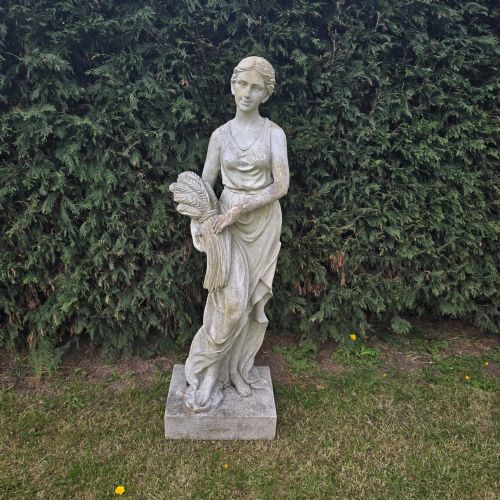
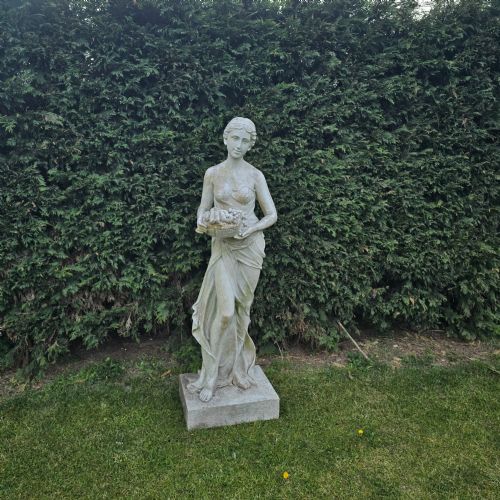
Reconstituted stone and concrete emerged alongside traditional cast stone for figures and plinths during the early twentieth century. Surface finishes relied on natural weathering, paint, and lead work to achieve organic textures over time.
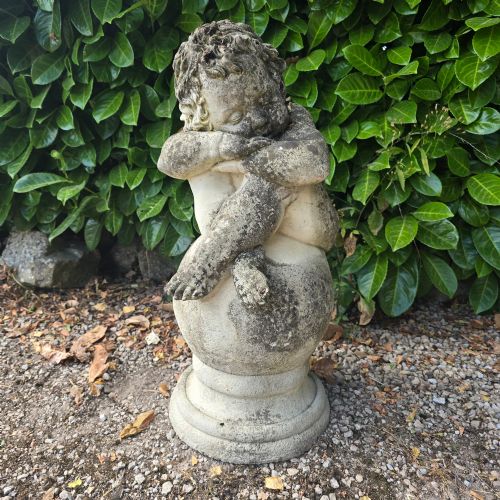
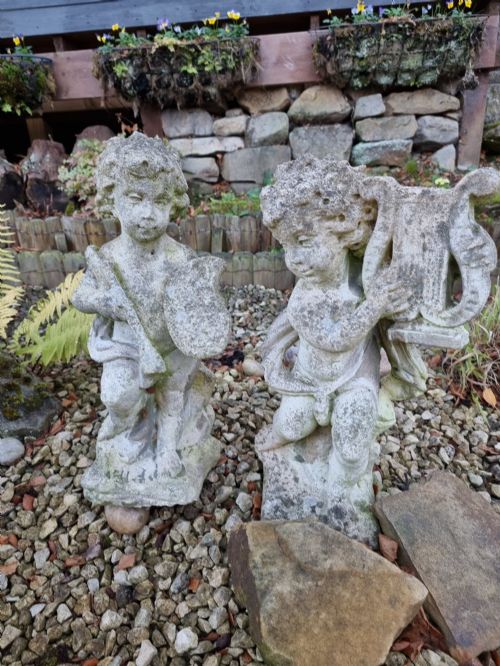
Weathered sleeping cherubs and lead satyr musicians quietly keep watch over garden ponds and ivy-covered pathways.
Assessing Quality
The integrity of the material dictates longevity, with dense cast iron and solid marble outlasting softer composites. Natural weathering enhances quality when surface degradation remains stable rather than structural.
Falkirk Carron foundry·Coalbrookdale·Andrew Handyside·Val d’Osne foundry
The Classical Garden Ornaments Glossary
- Campana urn
- A bell-shaped garden vessel with flared rims and handles, often mounted on a pedestal. These urns originated in classical antiquity and saw extensive revival during the nineteenth century.
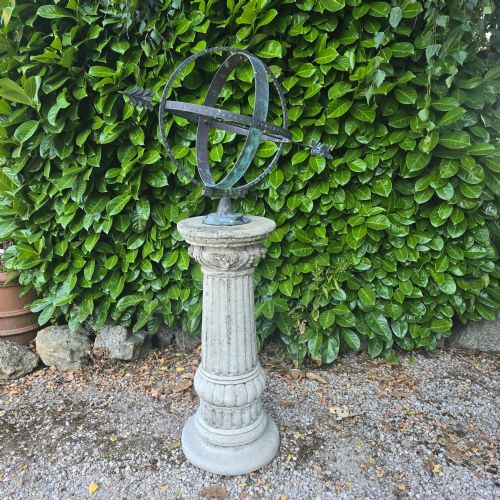
- Armillary sphere
- A model of celestial objects featuring rings centred on the Earth or Sun. Placed on stone plinths, they serve as decorative garden sundials.
- Reconstituted stone
- A composite material made from crushed stone and cement binder moulded into architectural shapes. It provides a durable alternative to quarried stone.
- Medici lion
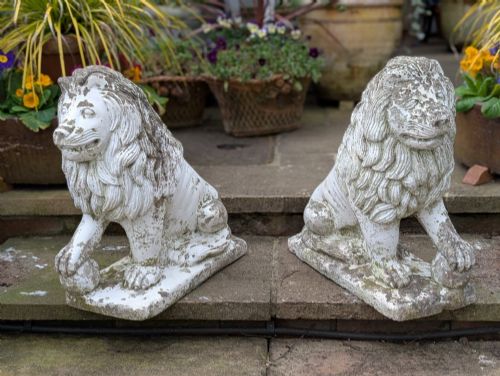
- A sculptural representation of a lion guarding a sphere, modeled after the ancient marble pair in Florence. They frequently stand in pairs at garden entrances.
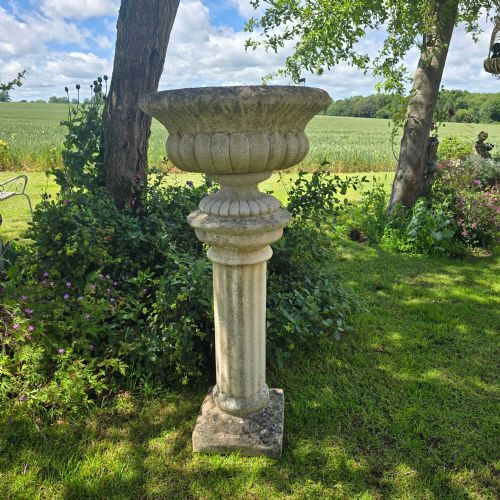
- Plinth
- A heavy stone or iron base supporting a statue, bust, or urn. It elevates the ornament above ground level to command the landscape.
Classical Garden Ornaments: Frequently Asked Questions
How do I care for cast iron urns?
Cast iron ornaments require regular inspection for rust, particularly in damp environments. Applying protective coatings helps preserve the metal surface against winter frost.
Positioning urns on stone plinths prevents standing water from accelerating corrosion at the base.
Are stone statues frost resistant?
Solid marble and high-grade cast stone withstand cold temperatures well if drainage is adequate. Trapped water inside porous material can expand and crack the stone during freezing weather.
Covering vulnerable figures or moving smaller pieces indoors during severe winters extends their lifespan.
How do I date a garden urn?
Dating relies on foundry marks, material composition, and stylistic revival periods. Nineteenth-century pieces often feature heavier cast iron construction and maker stamps from prominent foundries.
Twentieth-century examples frequently utilise reconstituted stone and show simpler mould seams.
Where should I place garden statuary?
Statues and urns create focal points at the end of paths, framing views across lawns or defining terrace corners. Pairing lions or seasonal figures balances formal garden layouts.
Placing busts on pedestals among planting beds adds unexpected height and classical structure.