
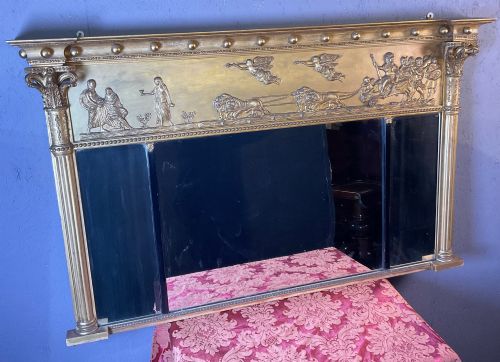
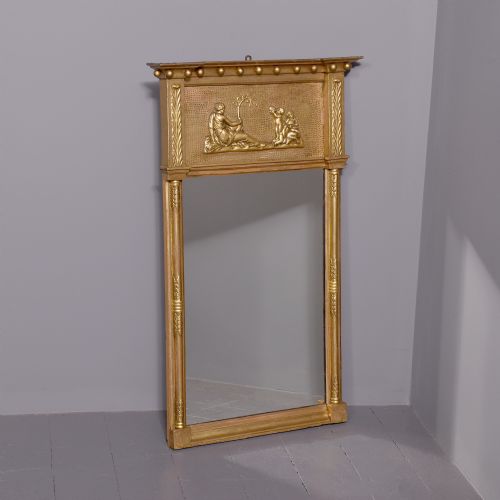

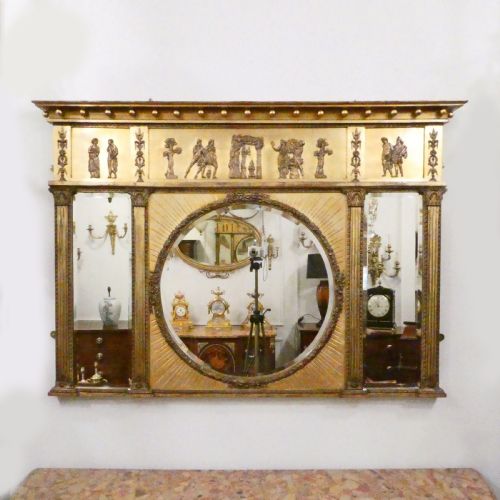


Classical Frieze Wall Mirror
A classical frieze wall mirror brings architectural proportion and gilded light to a room, drawing the eye with crisp classical ornament.
Classical Frieze Wall Mirror
A classical frieze wall mirror brings structured architectural proportion to an interior space through formal decorative bands placed above or around the glass. These pieces serve principally as overmantel mirrors or pier mirrors, designed to hang above a fireplace or between windows to reflect natural light.
You are most likely to meet examples from the nineteenth century, including Regency and Victorian periods, executed in varying revivals of classical taste. The forms range from single-plate pier glasses to grand triple-plate overmantels framed by carved architectural motifs.
The defining characteristic is the decorated frieze itself, which often incorporates classical scenes, acanthus foliage, or moulded ornament. They appear across styles such as Regency Neoclassical, French Neoclassical, and Georgian Revival.
How they were made
Makers constructed the structural frames from wood or veneered timber, applying gesso and composition ornaments to build up low-relief classical friezes and mouldings. Water gilding or gold leaf application followed, providing the metallic brilliance characteristic of the period.
Some pieces utilise painted wood and parcel gilt surfaces alongside traditional water gilding techniques. Plate glass was set into these heavy frames, occasionally divided into triptych configurations or triple-plate layouts.
Materials recorded across the inventory include glass, giltwood, gesso, gold leaf, composition, wood, veneer, and painted wood.
What varies in quality
Quality rests in the crispness of the carved or moulded ornament within the frieze and the depth of the gilding. Hand-carved acanthus leaves and finely chased composition work demonstrate superior craftsmanship compared to softer, less distinct mouldings.
The integrity of the frame construction and the preservation of the original water gilded or gold leaf surface determine the standing of the piece. Intact original mirror plates and well-joined structural timber elevate the overall execution.
The Classical Frieze Wall Mirror Glossary
- Frieze
- A broad horizontal band of sculpted or painted decoration situated just below the cornice of a mirror frame. It often depicts classical figures, mythological scenes, or leaf motifs.
- Giltwood
- Timber that has been coated with gold leaf or gold dust over a prepared ground. It provides a luminous metallic finish on period frames.
- Gesso
- A plaster-like mixture applied to wooden mirror frames to create a smooth surface for gilding. It also accepts detailed low-relief moulding.
- Composition
- A moulded material made from whiting, resin, glue, and oil pressed into ornament shapes. Makers applied it to wooden frames to produce ornate classical details economically.
- Pier glass
- A tall mirror designed specifically to hang on the wall space between two windows. These pieces often feature decorative friezes at the top.
- Overmantel mirror
- A wide horizontal mirror intended to sit directly above a fireplace mantelpiece. They frequently incorporate triple-plate glass and elaborate classical friezes.
Classical Frieze Wall Mirror: Frequently Asked Questions
What is a classical frieze wall mirror?
A classical frieze wall mirror is a decorative looking glass featuring a distinct horizontal decorative band, or frieze, adorned with classical motifs. These pieces typically date from the nineteenth century and reflect Regency or Victorian design tastes.
They function primarily as overmantel or pier mirrors, combining functional reflection with architectural ornamentation derived from classical antiquity.
Where should I hang an overmantel mirror?
An overmantel mirror hangs traditionally on the wall directly above a fireplace mantelpiece. This placement anchors the piece within the room's primary architectural focal point.
The horizontal proportions and wide friezes suit the expanse above a fireplace, where they reflect light and balance the hearth below.
How do I identify a Regency mirror?
Regency mirrors are identified by their adherence to early nineteenth-century neoclassical design principles, featuring clean architectural lines and classical ornamentation. Look for details like water-gilded surfaces, acanthus leaf friezes, and pier glass proportions.
Many examples utilise triple-plate glass configurations within heavy gesso and giltwood frames.
What is the difference between a pier mirror and an overmantel mirror?
A pier mirror is traditionally tall and narrow, designed to fit the wall space between windows. An overmantel mirror is wide and horizontal, built to span the length of a fireplace mantel.
Both forms can feature classical friezes, but their proportions are dictated by their original architectural placement.