
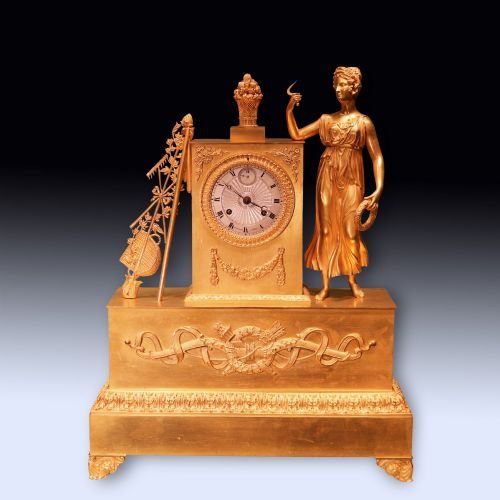


Classical Figural French Clock
A classical figural French clock brings together sculptural bronze figures and fine marble or ormolu to anchor a room.
Classical Figural French Clock
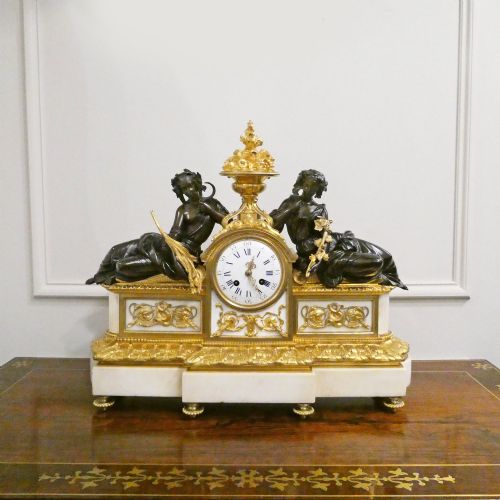
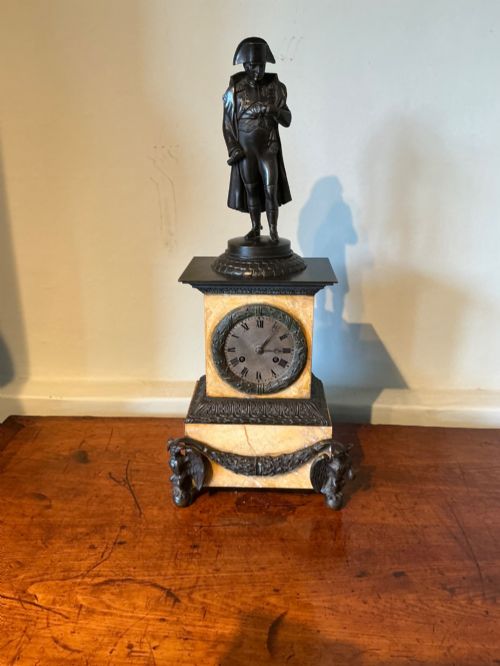
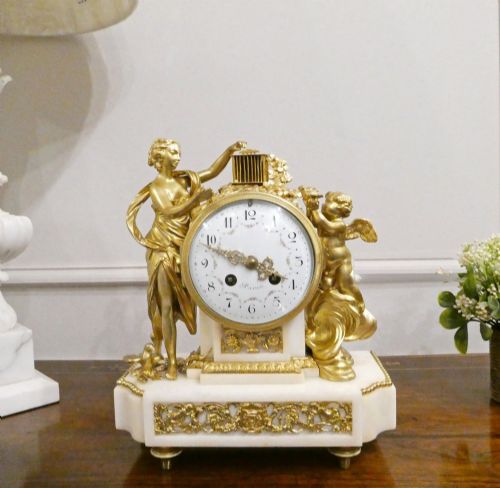
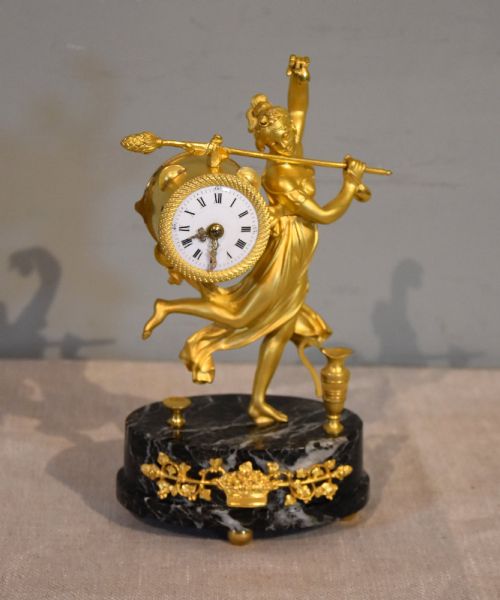
A classical figural French clock unites timekeeping with sculptural subjects drawn from mythology, history, or classical art. Buyers searching for a classical figural French clock encounter mantel clocks and clock garnitures executed in styles such as French Empire, Louis XVI, and French Rococo Revival. These pieces originate predominantly from the nineteenth century, including specific years like 1850, 1860, 1870, 1880, and 1900, alongside earlier nineteenth-century examples.
The sculptural subjects depicted range from historical figures like Napoleon to mythological personages such as Amphitrite and Urania. Many incorporate architectural marble bases in green marble, white marble, or rouge marble, often paired with matching side pieces in clock garniture sets. The aesthetic balances severe neoclassical symmetry with ornate decorative mounts and figural bronze casts.
Materials and construction
Makers constructed these clocks using a combination of cast bronze, gilt bronze, brass, ormolu, and spelter paired with various marbles including onyx and alabaster. Metal components were cast, chased, and frequently gilded to create contrasting textures between polished highlights and matte surfaces. Movements were integrated into these heavy housings, sometimes featuring enamel dials and glass domes.
The sculptural elements were modelled individually, often depicting named figures or subjects after known sculptors like Auguste Moreau. Stonework bases were turned and polished to support the substantial weight of the metalwork and the mechanical movement housed within.
Several bronze figures bravely hold up time itself while posing as ancient astronomers or Napoleonic heroes.
Judging quality and execution
The reputation of the maker or foundry also dictates distinction, with signed works by established Parisian makers commanding greater attention. The integration between the clock movement, the dial enamel, and the surrounding figural bronze work separates standard production pieces from exceptional horological sculpture.
Vincenti·Canaillor of Paris·Japy Freres·Deniere Et Fils·Deniere and Cailleaux·Lemerle Charpentier·Freres Raingo·Perigal and Duterrau·Gillion
The Classical Figural French Clock Glossary
- Ormolu
- Gilded bronze produced by applying a mercury-gilding amalgam to a cast bronze base. This technique creates a durable, warm golden finish characteristic of French luxury objects.
- Clock garniture
- A set consisting of a central clock flanked by matching decorative side pieces such as urns or candelabra. These sets were designed to create a balanced mantel display.
- Spelter
- An alloy of zinc and lead used as a cheaper alternative to bronze for figural castings. It is softer and typically shows a painted or patinated finish.
- Enamel
- A glassy substance fused to a metal dial surface under high heat. It provides a smooth, white ground for painted numerals.
- Fusee
- A conical pulley used in some clocks to maintain equal force on the gear train as the mainspring unwinds. It ensures more accurate timekeeping.
Classical Figural French Clock: Frequently Asked Questions
How do I wind an antique French clock?
Most of these clocks use a key inserted into winding holes on the enamel dial to tension the mainspring behind the movement. Care must be taken not to overwind the spring.
Matching the correct key size is essential to avoid stripping the square winding arbor inside the clock mechanism.
What is a clock garniture set?
A clock garniture is a matching ensemble comprising a central timepiece and two matching side ornaments, such as urns or vases. These sets were placed on mantels to create a symmetrical decorative arrangement.
Materials used in the side pieces typically match the marble and metal of the main clock body.
How do I identify the period of these clocks?
Period identification relies on stylistic cues, sculptural subjects, and the materials popular at different times during the nineteenth century. Empire and Louis XVI styles reflect neoclassical symmetry, while Victorian and Rococo Revival pieces feature more exuberant, asymmetrical scrollwork.
Maker signatures and movement stamps can also narrow down the date of production.
Where should I place a heavy marble clock?
Due to their substantial weight from marble and bronze components, these clocks require a sturdy, level surface such as a heavy mantelpiece or console table. Placing them away from direct heat sources protects the internal oils and delicate enamel dials.
Securing the position prevents accidental tipping given the top-heavy nature of figural bronze sculptures.