




Classical Desk Clock
These pieces are classical desk clocks, bringing formal proportions and polished metalwork to a surface.
Classical Desk Clock
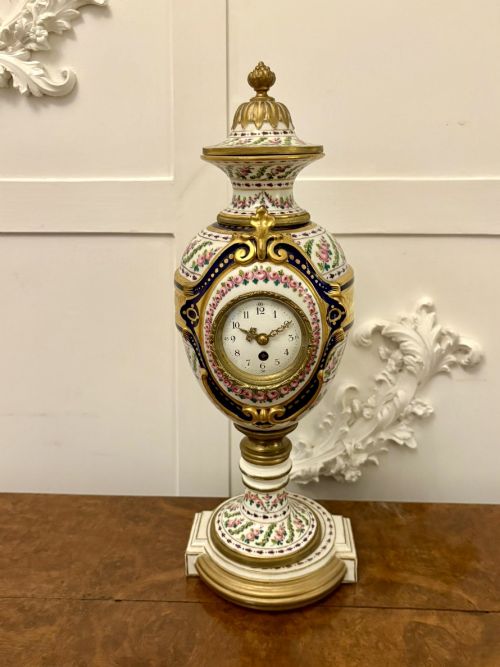
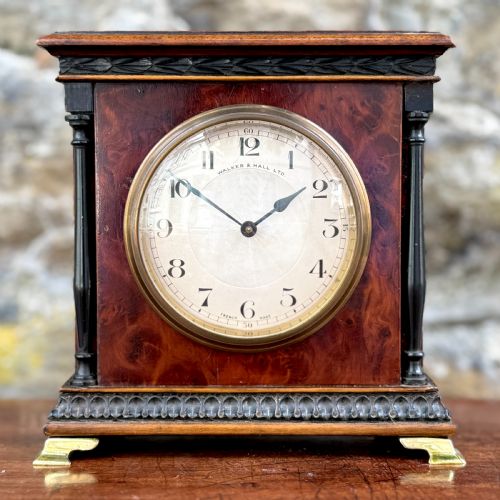
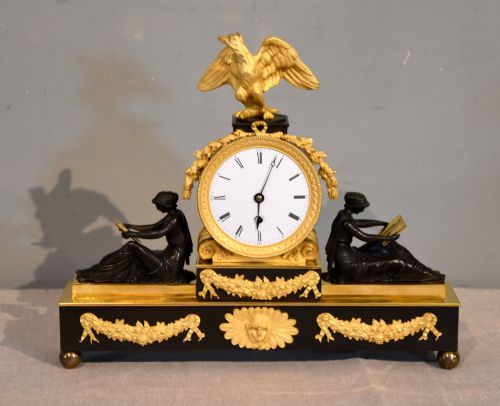
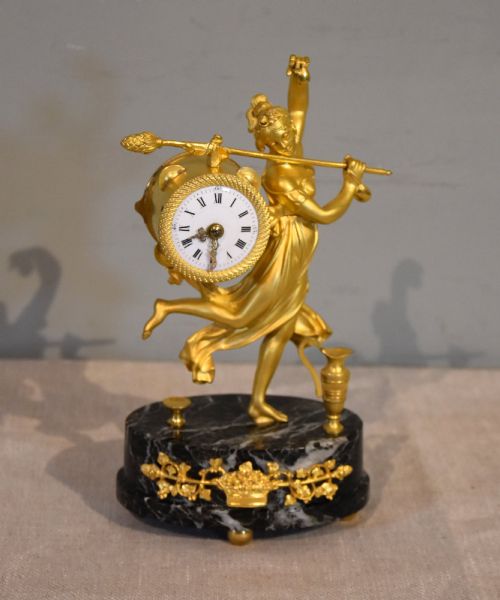
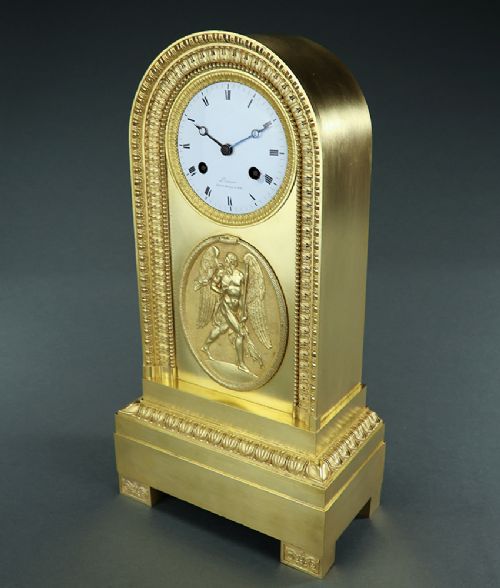
A classical desk clock displays formal symmetry and traditional architectural details. These instruments range from architectural marble cases to figural bronzes.
French workshops produced many of the items on this page during the nineteenth century. Buyers encounter Regency and Victorian interpretations featuring columns, urns, and mythological subjects.
Makers housed movements within materials such as sienna marble, green marble, and rouge marble. Ormolu mounts and gilt bronze details accent the stone bodies.
How they were made
Craftsmen cast bronze and ormolu components before finishing them with fire gilding or patination. Stone cases required skilled cutting and polishing of marble, alabaster, and glass.
Clockmakers fitted brass movements, including single chain fusee mechanisms, into the heavy stone and metal housings. Enamel dials and hand-painted porcelain elements completed the face of the timepiece.
Classical Desk Clock Retail Price Guide 2026
Typical asking prices for classical desk clock among the pieces listed under this phrase on Sellingantiques today, from the lower quarter to the upper quarter. They describe what is for sale here now, not the wider market.
Some nineteenth-century clocks feature two sculpted doves perched atop the marble case as a romantic decorative motif.
What varies in quality
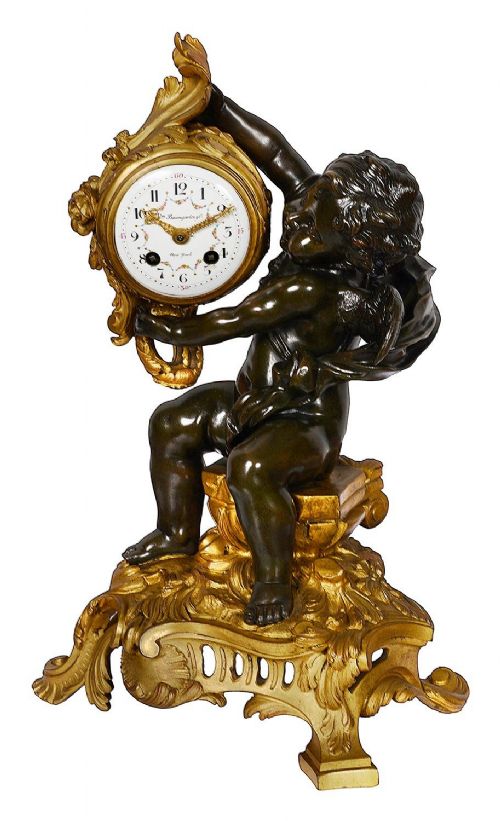
The crispness of the bronze chasing and the weight of the marble case distinguish finer examples from standard production. Artisans who sculpted detailed cherubs, figures, and mounts achieved greater depth in the cast metal.
The precision of the movement and the integration of secondary elements such as porcelain panels or cut crystal columns dictate the standing of a piece. Better makers maintained tighter tolerances in the gear trains and dial markings.
Walker and Hall·Baetens London·Canaillor of Paris·Japy Freres·Baby and Jannings·Lemerle Charpentier·Deniere and Cailleaux
The Classical Desk Clock Glossary
- Ormolu
- Gilded bronze produced by applying an amalgam of gold and mercury to a bronze base. This technique creates a durable golden finish seen on classical mounts.
- Fusee
- A conical pulley used in clock movements to maintain an even pull as the mainspring unwinds. This mechanism improves timekeeping accuracy.
- Portico clock
- A timepiece housed within a classical architectural frame supported by pillars or columns. These structures often feature glass panels and crystal elements.
- Garniture
- A set consisting of a central clock flanked by matching decorative objects such as urns or vases. These sets provide symmetry on a mantel or desk.
- Patinated bronze
- Bronze treated to produce a dark or antique surface finish rather than a bright metallic look. This treatment highlights the underlying sculptural form.
Classical Desk Clock: Frequently Asked Questions
Where should I place a classical desk clock?
These timepieces require a sturdy surface like a mantelpiece, sideboard, or large desk to support their substantial marble and bronze weight.
Keep them away from direct sunlight and damp environments to protect the delicate enamel dials and gilt finishes.
How do I wind an antique clock?
Use the designated key to turn the arbors clockwise until you feel light resistance. Avoid overwinding, which can damage the mainspring.
Check whether the movement uses a single chain fusee or an eight-day mechanism to understand the winding schedule.
How do I identify a French Empire clock?
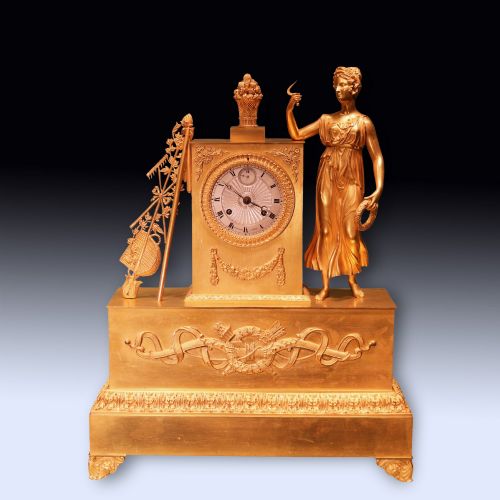
Look for Neoclassical motifs such as military trophies, classical columns, patinated bronze figures, and fire-gilt ormolu mounts.
These pieces often date from the early nineteenth century and reflect the aesthetic of the Napoleonic era.
What maintenance do these clocks need?
Mechanical movements require periodic cleaning and oiling by a professional horologist to ensure reliable timekeeping.
Dust stone cases and metal mounts gently with a soft dry cloth, avoiding harsh chemical cleaners that can strip the gilding.