




Classical Carved Console Tables
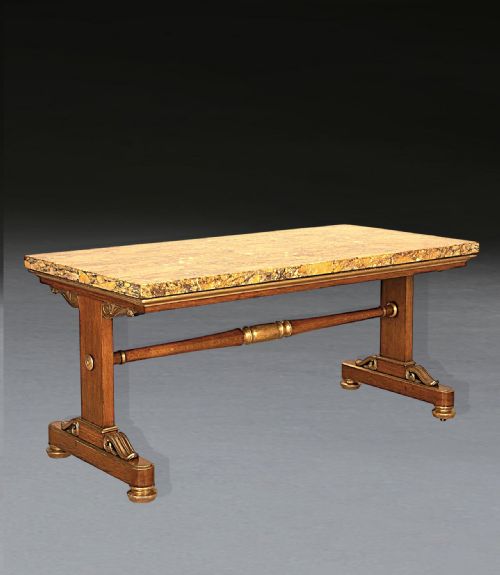
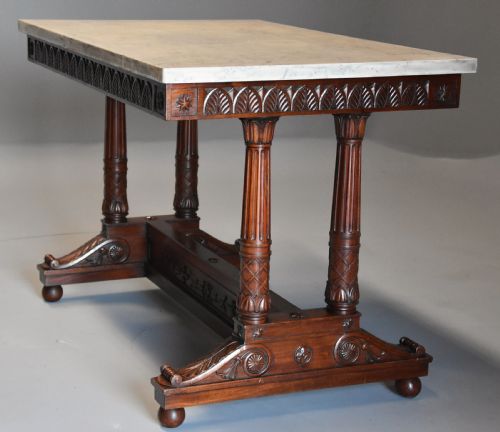
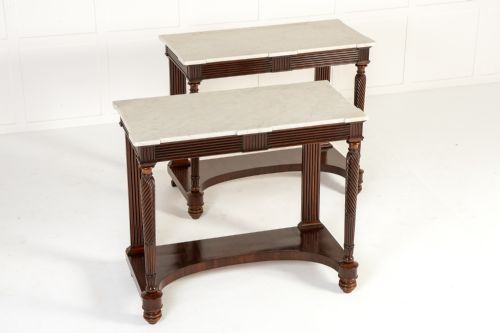
Classical carved console tables bring architectural presence and heavy marble tops to hallways and formal reception rooms.
Classical Carved Console Tables
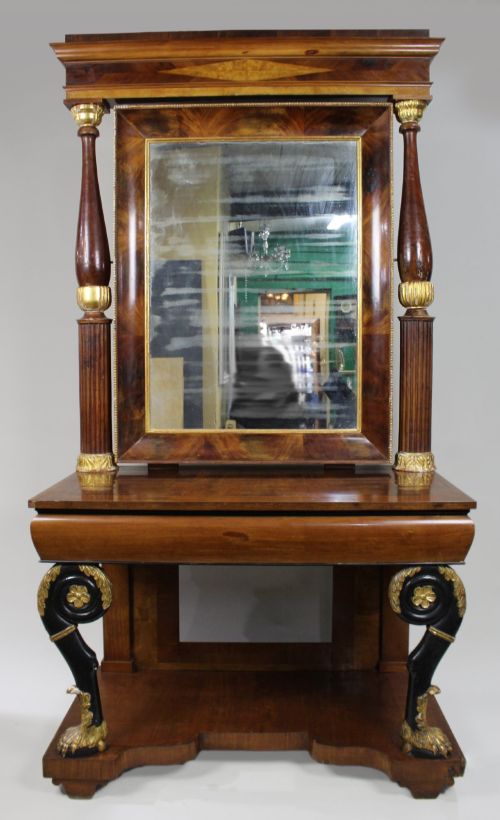
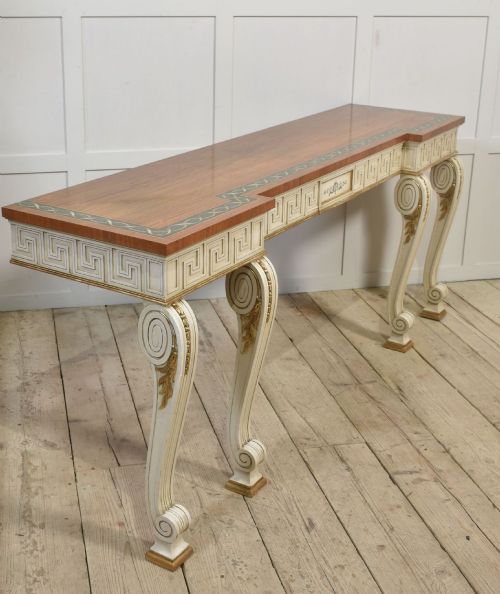
The versions most commonly met on this page span the eighteenth and nineteenth centuries, taking forms such as console tables, serving tables and pier tables. Makers across England, Ireland, Italy, France and Sweden produced these pieces within Neoclassical, Regency, Gustavian and Victorian styles.
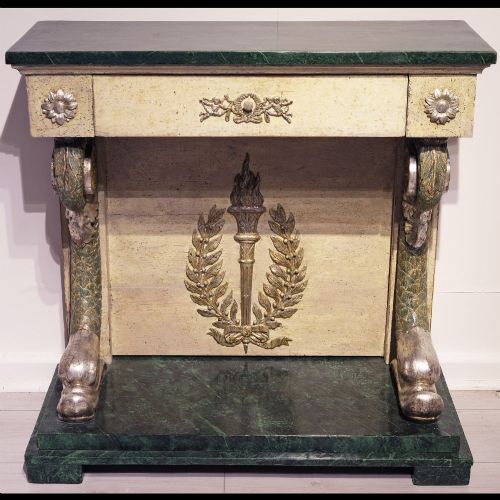
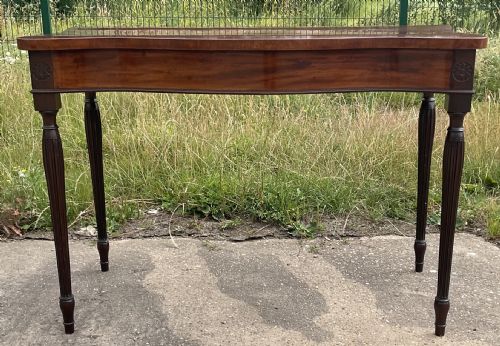
Evidence shows examples ranging from grand Italian faux porphyry and giltwood pieces to simpler English mahogany and painted wood variants. They function primarily as statement furniture designed to anchor a wall and reflect the architectural taste of their period.
Materials and construction methods
Makers utilised dense timbers including mahogany, oak, pine and walnut to form the structural carcasses and legs of these tables. Carved wooden elements frequently received applications of gesso, paint or gold leaf to achieve a gilded or decorated finish.
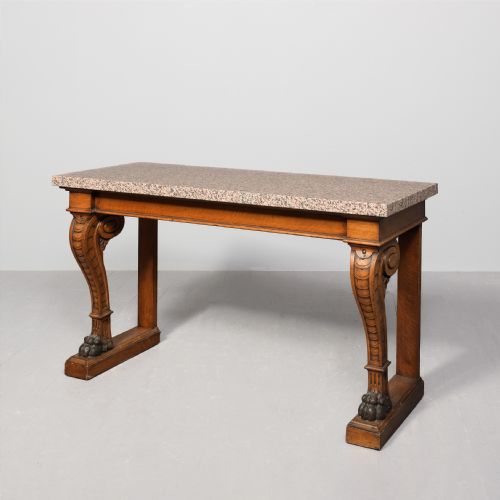
Heavy stone slabs formed the tabletops, featuring materials such as marble, granite and Siena marble fitted directly onto the wooden frames. Surface decoration relied heavily on hand carving, parcel gilding and faux finishes like faux porphyry to mimic costly natural stones.
Listings feature pieces spanning the 18th and 19th centuries, utilising mahogany, marble, giltwood, gesso and paint across various European styles.
Distinctions in quality
Quality rests in the crispness and depth of the hand carving upon the wooden frames and the selection of the tabletop materials. Superior pieces display intricate details such as dolphin supports, centaur designs, rams and maiden heads executed with precision.
The origin and handling of the stone tops dictate much of the upper tier, where thick slabs of figured marble or granite sit flush against structurally sound frames. Workshop attribution or maker stamps elevate certain examples above standard vernacular production.
JACOB·Alexander McKenzie of Glasgow·Mack Williams and Gibton·Freeman
The Classical Carved Console Tables Glossary
- Console table
- A table supported by wall brackets or console legs, designed to stand against a vertical surface. They often feature tall pier mirrors mounted directly above them.
- Giltwood
- Timber that has been coated with a thin layer of gold leaf over a prepared gesso ground. This finish provides a brilliant metallic sheen typical of formal European reception furniture.
- Pier table
- A low table designed specifically to fit against the wall space between two windows, frequently positioned beneath a tall mirror. They share a close functional relationship with standard console tables.
- Serpentine front
- A tabletop or cabinet front shaped with a central convex curve flanked by two concave curves. This contour requires skilled carpentry to shape from solid timber.
Classical Carved Console Tables: Frequently Asked Questions
What is a console table used for?
These tables served as decorative side pieces in formal hallways, dining rooms and drawing rooms where space against a wall was available.
Owners placed ornamental vases, clocks and candelabra upon the stone tops, often pairing the furniture with a matching wall mirror.
How do you style a console table?
Place the table flat against a prominent hallway or living room wall to anchor the surrounding architectural space.
Keep the surface styling balanced by placing lamps or decorative objects that complement the period carving of the wood.
How to tell periods apart?
Eighteenth-century examples often lean towards strict Neoclassical or Gustavian lines with restrained painted surfaces and delicate carving.
Nineteenth-century Victorian and Regency pieces frequently introduce heavier gilding, darker mahogany timbers and robust sculptural supports like dolphins or rams' heads.
Are marble tops original?
Many classical tables were designed specifically to carry heavy stone surfaces made of marble, granite or Siena marble from the outset.
Matching the stone type and thickness to the timber frame helps determine whether the top aligns with the construction period of the base.