





Classical Bronze Horses
Classical bronze horses are sculptural studies and mantel clock figures modelled after ancient monuments, prized by collectors for their Neoclassical dignity.
Classical Bronze Horses
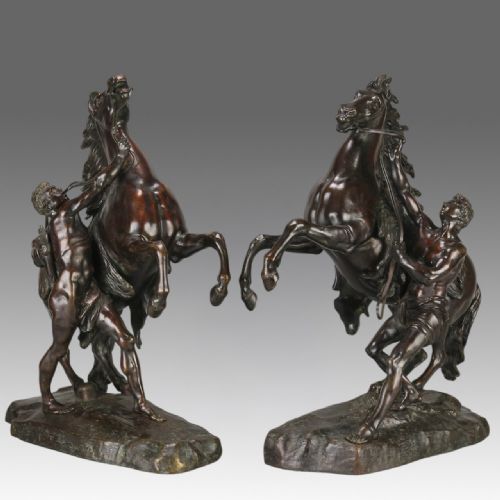
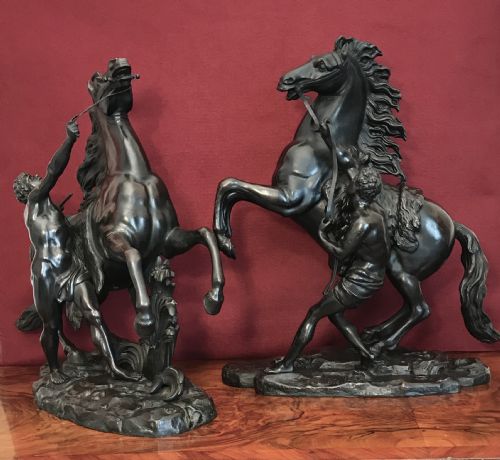
Classical bronze horses capture the enduring appeal of equine sculpture, ranging from Grand Tour souvenirs to French Neoclassical mantel clock ornaments and grand studies after Coustou. These pieces reflect historical periods spanning the Victorian era through the mid-twentieth century, drawing direct inspiration from classical monuments and famous European fountains.
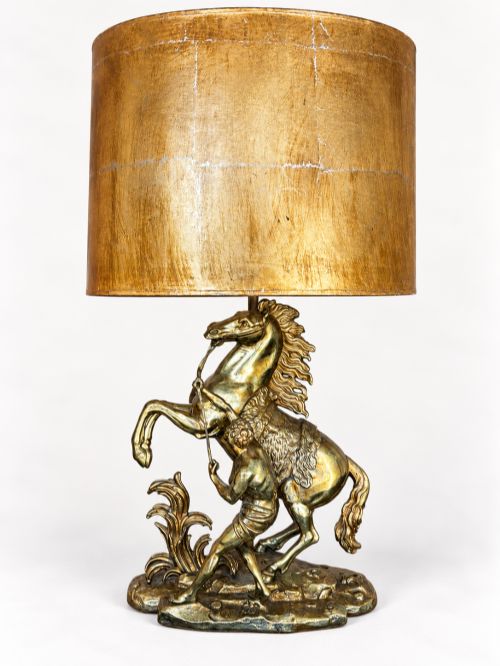
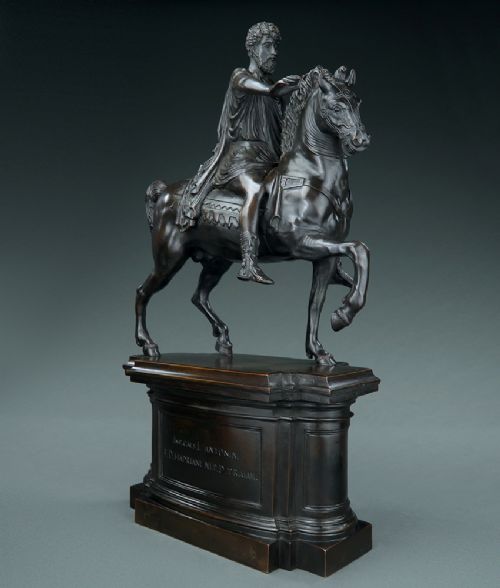
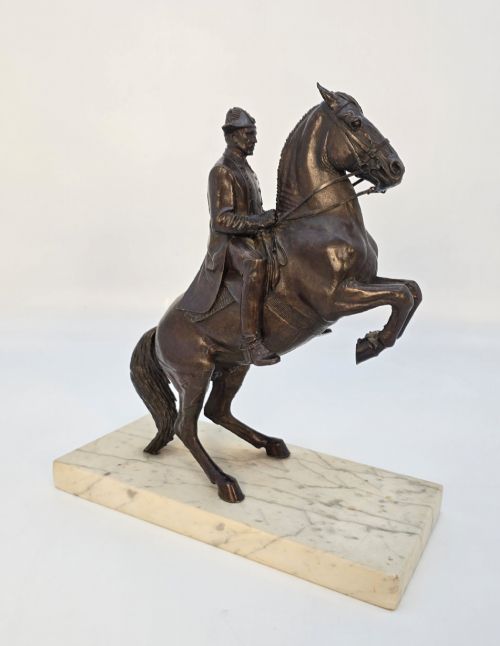
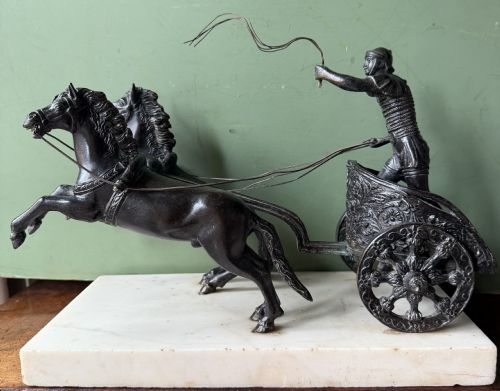
The most frequent examples encountered on this page are Grand Tour souvenirs and reductions of the Marly Horses, often mounted upon marble plinth bases. Figures such as Marcus Aurelius and Colleoni frequently appear alongside studies of riders, charioteers, and individual stallions.
Object types vary from standalone sculptural figures and pairs to functional mantel clocks and sculptural fragments, demonstrating the diverse ways makers interpreted classical equine subjects.
How they were made
Makers utilised bronze, brass, and bronzed metal, frequently employing patinated or gilded surfaces to achieve varied tonal depths. Many figures incorporate contrasting materials such as white marble and Sienna marble for structural bases.
Casting techniques allowed workshops to produce both solid studies and hollow mantel clock housings, capturing musculature and harness detail with precision. The finishing process involved hand-finishing patinas and mounting the metal figures securely onto stone plinths.
Classical Bronze Horses Retail Price Guide 2026
Typical asking prices for classical bronze horses among the pieces listed under this phrase on Sellingantiques today, from the lower quarter to the upper quarter. They describe what is for sale here now, not the wider market.
Even a solitary bronze nostril can have its day in the sculpture gallery.
What varies in quality
Quality rests in the crispness of the casting detail, particularly in the rendering of equine musculature, mane texture, and harness work. Finer examples exhibit subtle patination and careful chasing that retain the vitality of the original models.
The choice and integration of mounting materials, such as Sienna or white marble plinths, distinguish higher-grade decorative pieces from simpler productions. Well-defined provenance or direct association with known foundry hands elevates the standing of an individual study.
Charles Crozatier·Coustou·Verrocchio
The Classical Bronze Horses Glossary
- Grand Tour
- A nineteenth-century educational journey across Europe where travellers acquired bronze souvenirs of classical sculptures and architectural monuments. These reduced-scale figures were prized for their historical associations and academic fidelity.
- Marly Horses
- Iconic monumental sculptures by Guillaume Coustou depicting rearing horses restrained by grooms, originally created for the Château de Marly. Numerous nineteenth-century bronze reductions replicate these dramatic compositions.
- Patination
- The chemical treatment or natural ageing process applied to the surface of bronze to create varied coloration and finish. A controlled patina enhances the visual depth of equine musculature.
- Plinth
- A heavy block of marble or stone serving as the architectural base for a bronze sculpture. White marble and Sienna marble plinths provide stability and visual contrast to patinated metal.
- Neoclassical
- An artistic style drawing inspiration from the classical art and culture of ancient Greece and Rome. This aesthetic prioritises balanced composition, heroic proportions, and restraint.
Classical Bronze Horses: Frequently Asked Questions
What are classical bronze horses?
Classical bronze horses are decorative and sculptural representations of equines modelled after ancient statuary, Renaissance monuments, and famous European public works. They encompass cabinet bronzes, mantel clock figures, and Grand Tour souvenirs.
These pieces typically date from the nineteenth and early twentieth centuries, reflecting the Victorian and Neoclassical enthusiasm for classical antiquity and academic realism.
How were Grand Tour horses used?
Grand Tour horses served as travel souvenirs and tangible reminders of educational journeys through Italy and France, displayed within libraries, studies, and drawing rooms.
Their presence signalled the owner's classical learning and refined taste, functioning as both conversation pieces and sophisticated ornaments.
How do I care for bronze sculptures?
Bronze sculptures require minimal maintenance, needing only gentle dusting with a soft, dry cloth to prevent the accumulation of surface particles. Avoid chemical polishes or abrasive cleaners, which can strip the patinated surface.
Keeping the pieces away from excessive moisture and direct heat sources preserves the stability of both the metal and any associated marble bases.
How do I identify a Marly horse?
Marly horses are identifiable by their dynamic composition showing a rearing horse struggling against a straining groom or handler. They derive directly from Guillaume Coustou's famous eighteenth-century marble groups.
Nineteenth-century bronze reductions of these subjects often feature detailed harness straps and muscular tension, frequently mounted upon rectangular marble plinths.