
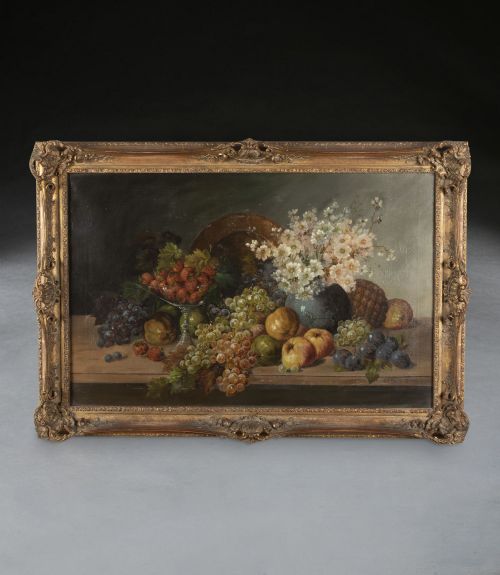


Classical Botanical Oil Art
Classical botanical oil art brings floral and fruit still life painting into interiors through works spanning the seventeenth century to the mid-twentieth century.
Classical Botanical Oil Art
When you search for classical botanical oil art, you find oil paintings and painted panels depicting flowers and fruit in the classical style. These works range from seventeenth-century compositions to twentieth-century revivals.
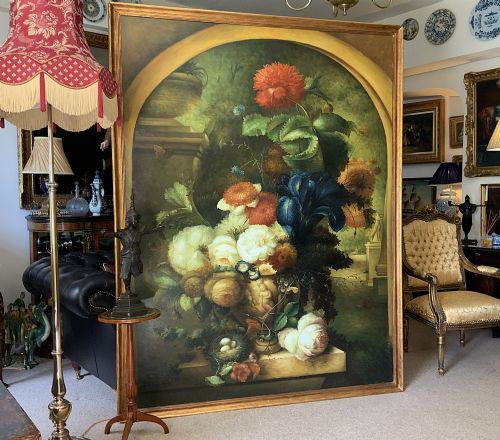
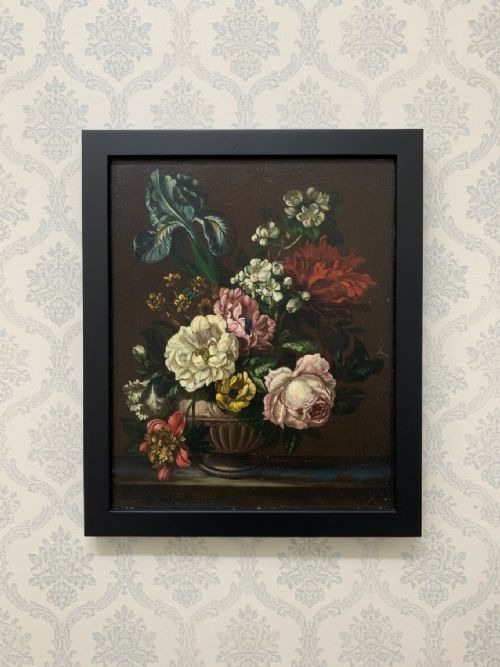
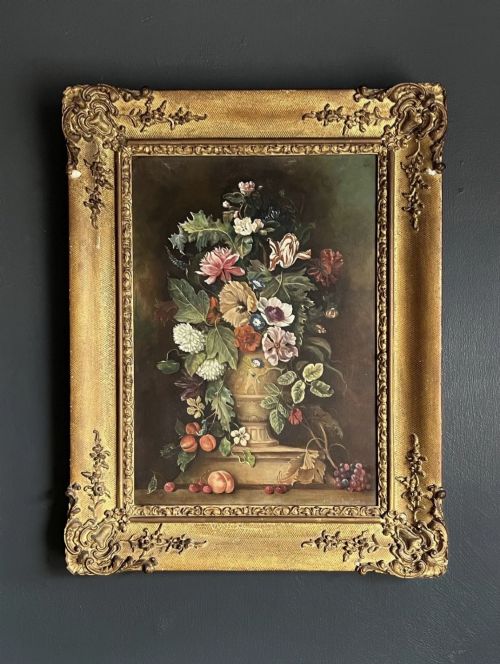
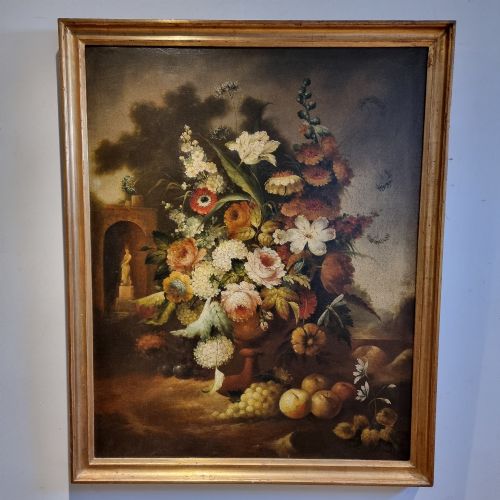
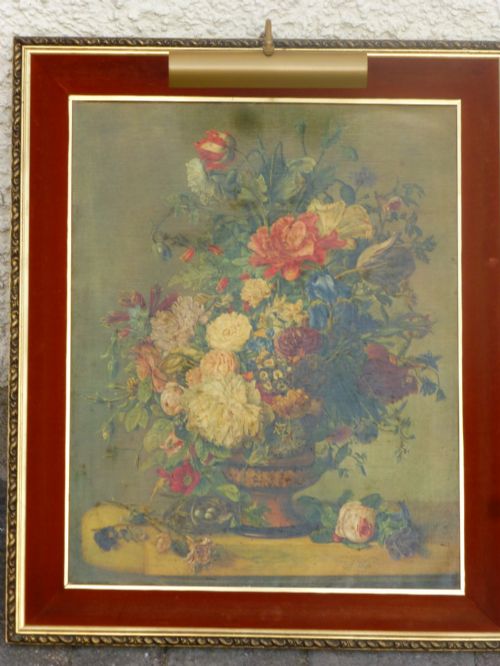
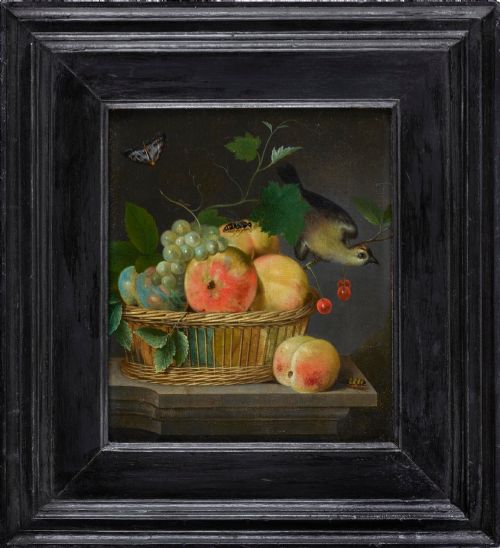
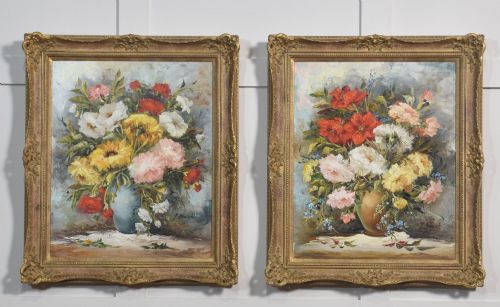
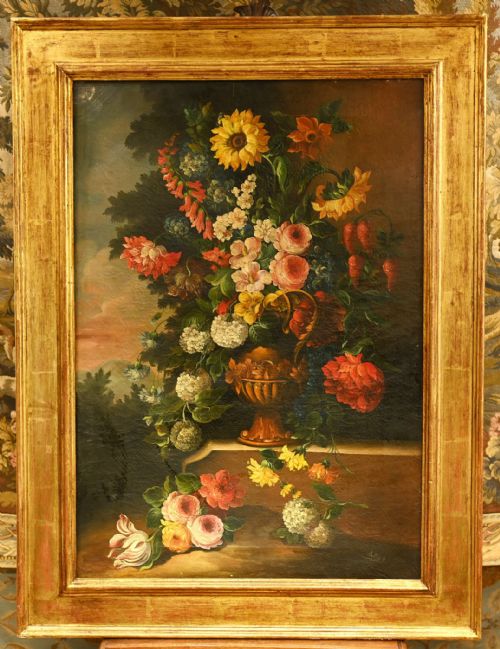
The most common examples on this page are floral still life paintings executed on canvas or panel, often housed in giltwood or gesso frames. They capture traditional arrangements of blooms, baskets of fruit, and botanical studies.
Pieces span several centuries of production, including Dutch Baroque Revival and Flemish Revival styles alongside original period works. Buyers encounter both monumental scale decorative paintings and intimate studies.
How they were made
These works utilise oil paint applied to canvas, wood panels, or boards using traditional brushwork techniques. Pigments build up depth in floral petals and fruit compositions.
Frames play a structural and aesthetic role, frequently formed from wood finished with gesso, gold leaf, or giltwood. Mouldings and carved details support the painted panels.
Among the botanical abundance, a white-fronted Amazon parrot keeps watch over a selection of grapes, melon, and hazelnuts.
What varies in quality
Quality rests in the handling of light, shadow, and botanical detail across the canvas or panel. Superior works demonstrate precise brushwork in floral arrangements and natural textures.
The integrity and period execution of the frame also affect the overall standing of the piece. Hand-gilded gesso frames add substance to the paintings they enclose.
Gaspar Peeter Verbruggen·William Duffield·Henry Schouten·George Lance·Kershaw Schofield
The Classical Botanical Oil Art Glossary
- Oil on canvas
- Pigment suspended in a drying oil medium applied to stretched woven fabric. This serves as the primary support surface for many historical paintings.
- Giltwood
- Wood carved and coated with gold leaf or metallic powder. It provides the ornate framing typical of traditional European picture frames.
- Gesso
- A paint mixture consisting of a binder mixed with chalk, gypsum, or pigment. It creates a smooth surface on wood panels or frames before gilding.
- Trompe l'oeil
- An art technique that uses realistic imagery to create the optical illusion that the depicted objects exist in three dimensions.
- Still life
- A work of art depicting mostly inanimate subject matter, typically commonplace objects such as flowers, fruit, and baskets.
Classical Botanical Oil Art: Frequently Asked Questions
What is classical botanical oil art?
It encompasses oil paintings and painted panels depicting flowers, fruit, and natural subjects in traditional styles.
The genre spans centuries of European painting traditions, including Dutch and Flemish revivals.
How do I date an oil painting?
Dating relies on stylistic evidence, support materials such as canvas or wood panels, and framing techniques.
Signatures, inscriptions, and historical subject matter further help place works within specific centuries.
Where should I hang these paintings?
These works suit dining rooms, libraries, or living spaces where traditional decor benefits from rich floral compositions.
Placing them away from direct sunlight protects the oil pigments and gilt frames.
What frames are typical for these works?
Many pieces feature gilt gesso, gilded wood, or carved wooden frames appropriate to their period.
Frames often complement the subject matter with classical ornamentation and gold leaf finishes.