







Classical Bookcase
A classical bookcase brings architectural symmetry and warm timber into a room, offering both display space and refined proportion.
Classical Bookcase
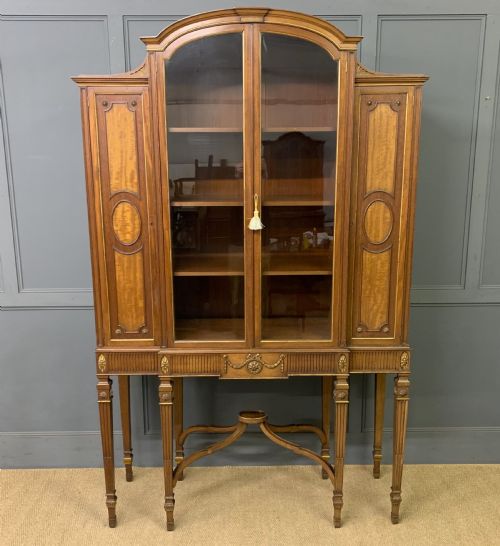
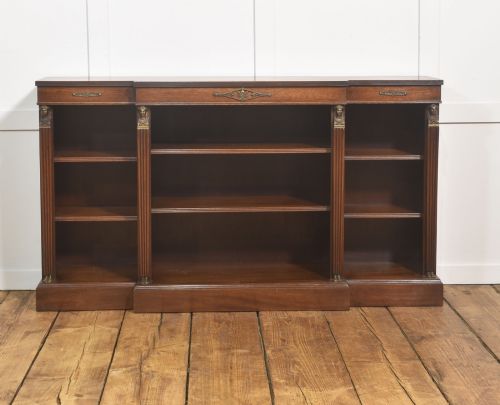
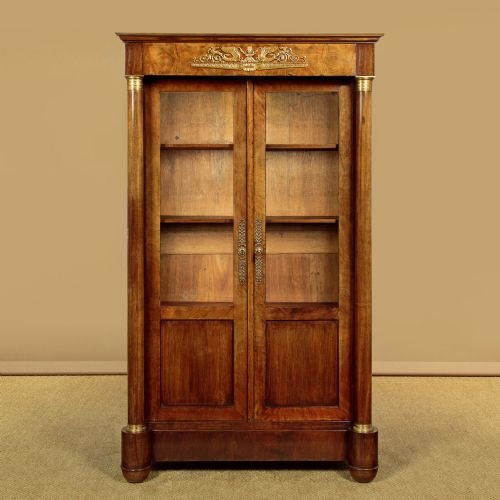
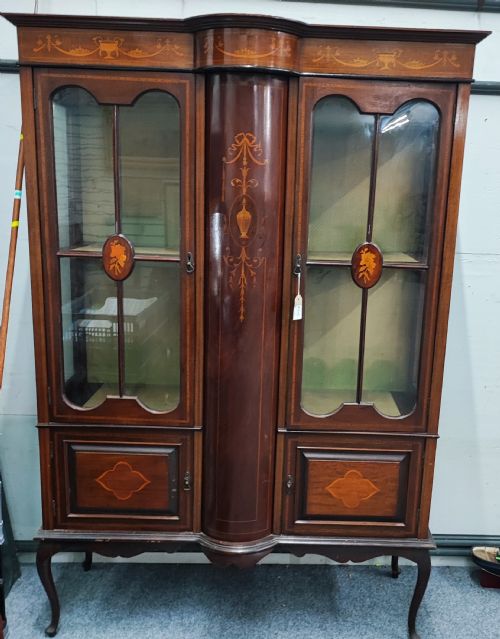
A classical bookcase encompasses timber furniture built with architectural discipline, drawing upon Regency, French Empire, Edwardian, and Victorian aesthetic traditions. These pieces take various forms including breakfront open bookcases, glazed display cabinets, bureau bookcases, and corner cupboards designed to organise and display volumes.
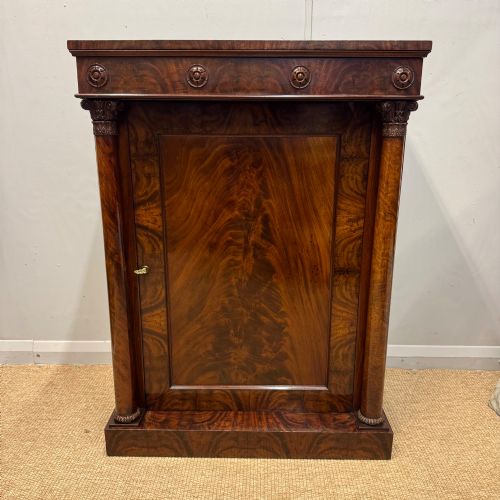
The version most commonly met on this page is the mahogany or rosewood cabinet from the nineteenth century or the Edwardian period, often featuring adjustable shelves, brass mounts, or inlaid satinwood decoration. Makers interpreted classical ideals through open shelving or enclosed glass doors flanked by columns and pilasters.
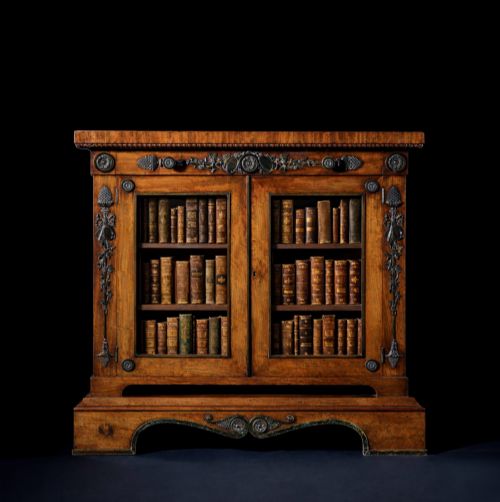
Makers also produced specialised formats such as pier cabinets, side cabinets, and secretaire bookcases equipped with fitted writing drawers and leather dummy books. These variations range from modest corner cupboards to large architectural display furniture designed for substantial libraries.
Materials and construction methods
Cabinet makers utilised dense hardwoods including mahogany, rosewood, coromandel, and burr maple as the primary structural timbers, frequently applying satinwood inlay and marquetry for surface pattern. Ormolu and bronze mounts provide classical enrichment to cornices, doors, and pilasters.
Glass panels are fitted into glazed doors to protect bound volumes, while fabric linings occasionally back display interiors. Brass hardware secures adjustable shelving systems within the main carcasses.
Classical Bookcase Retail Price Guide 2026
Typical asking prices for classical bookcase among the pieces listed under this phrase on Sellingantiques today, from the lower quarter to the upper quarter. They describe what is for sale here now, not the wider market.
Some nineteenth-century bookcases conceal their contents behind clever rows of leather dummy books.
Distinctions in quality and execution
Quality reveals itself in the selection of timber figures, such as the rich grain of flame mahogany or figured rosewood, combined with crispness in the cast ormolu mounts and bronze details. Superior examples exhibit precise marquetry inlay and well-executed architectural mouldings rather than applied surface decoration.
Internal engineering marks the better workshop production, demonstrated by smooth action in secretaire drawers, solid brass fittings, and well-fitted adjustable shelving mechanisms that operate without binding.
Waring and Gillow·Lamb of Manchester
The Classical Bookcase Glossary
- Ormolu
- Gilded bronze mounts applied to furniture for decorative enrichment. These metal details reflect French Empire and Regency tastes.
- Breakfront
- A cabinet design where the central section projects forward from the flanking wings. This format creates architectural depth.
- Secretaire
- A cabinet incorporating a pull-down writing flap concealing small drawers and pigeonholes. It combines storage with a writing surface.
- Marquetry
- Decorative patterns formed by fitting together thin veneers of various coloured woods. Craftsmen used this technique on Edwardian and Sheraton style surfaces.
- Pier cabinet
- A low cabinet designed to fit against the narrow wall space between windows. These pieces often feature glass doors for display.
Classical Bookcase: Frequently Asked Questions
What is a classical bookcase?
A classical bookcase is a piece of furniture built to house books and display objects according to traditional architectural proportions and styles.
These pieces draw on Regency, Empire, and Edwardian design vocabularies, often featuring columns, brass mounts, and fine timber veneers.
How were bureau bookcases used?
Bureau bookcases combined a shelved upper section for reading material with a fold-down writing desk and lower drawer storage.
They served as compact personal workstations in nineteenth-century studies and libraries.
How do I style a classical bookcase?
Integrate these pieces into rooms by balancing heavy leather-bound volumes with decorative ceramics or glassware on the shelves.
Ensure the timber tone complements existing furniture while allowing the architectural details of the cornice and base to remain visible.
How do I identify a Regency bookcase?
Regency bookcases display characteristic architectural restraint, using dark mahogany or rosewood accented with brass or parcel gilt details.
They frequently incorporate brass grilles behind glass doors or take the form of open dwarf bookcases with adjustable shelves.