




Classical Armchairs
These classical armchairs bring enduring neoclassical lines into a room, offering both historic form and commanding presence.
Classical Armchairs
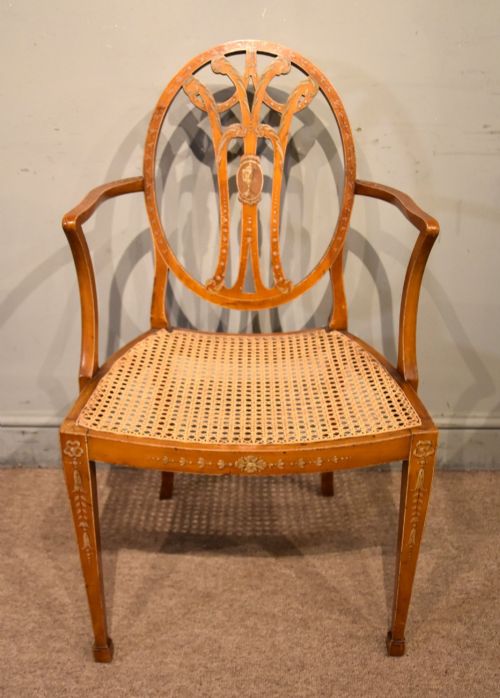
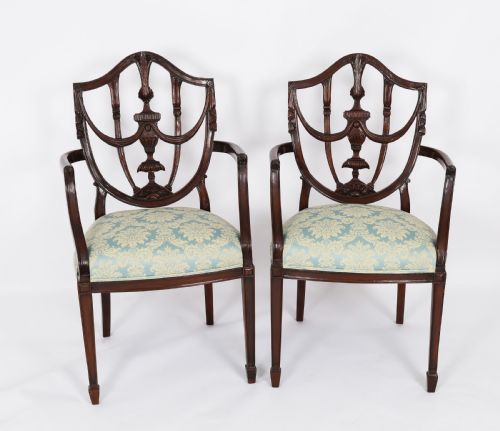
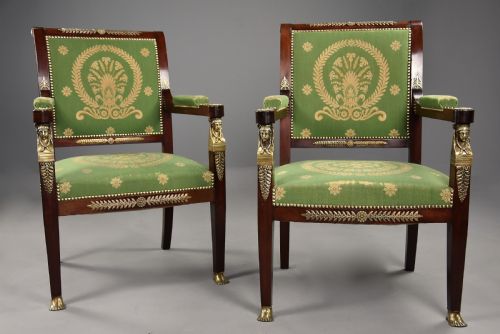
Classical armchairs encompass seating designed under the influence of ancient Greek, Roman, and French imperial aesthetics, spanning periods from the Regency era through to the Edwardian and later revivals. Buyers encounter pieces ranging from mahogany library chairs to giltwood French Empire fauteuils and cane-seated revival models.
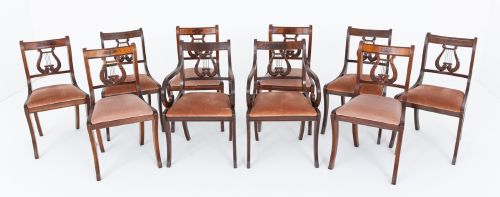
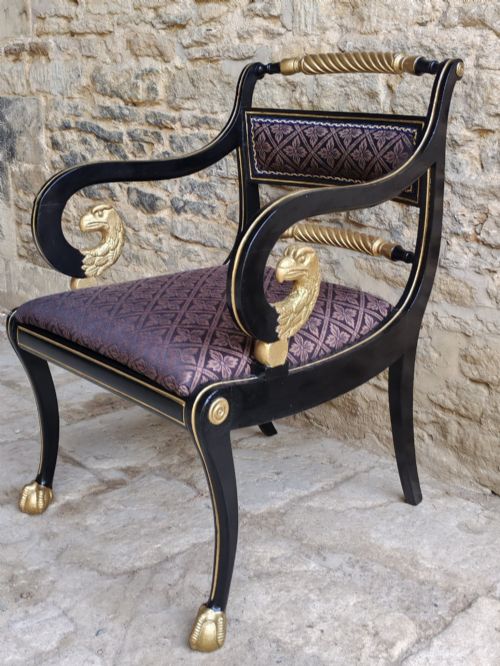
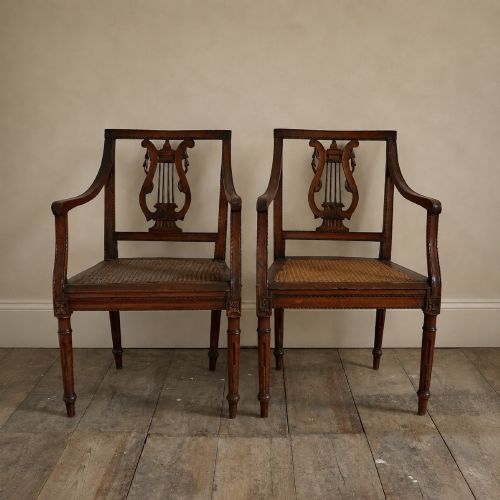
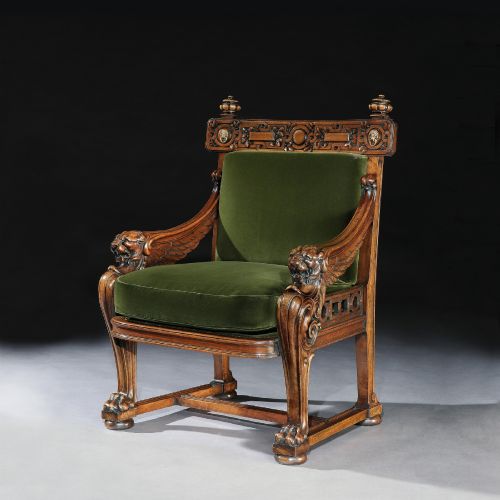
The selection here includes diverse iterations such as shield-back chairs, lyre-back designs, and lion monopodia armchairs after Thomas Hope. Makers and designers historically drew upon archaeological discoveries to shape these distinct silhouettes.
How They Were Made
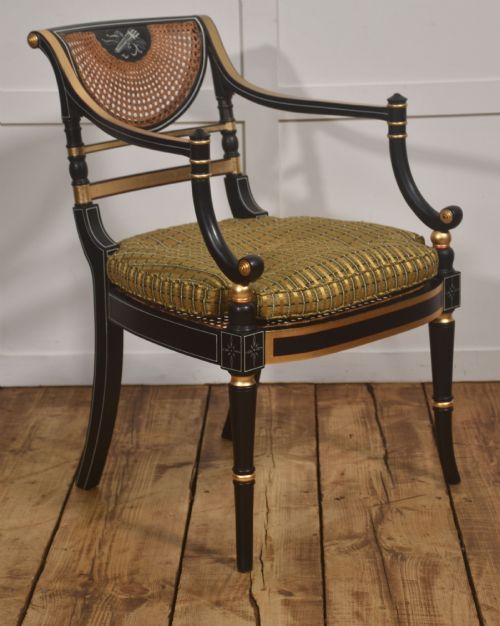
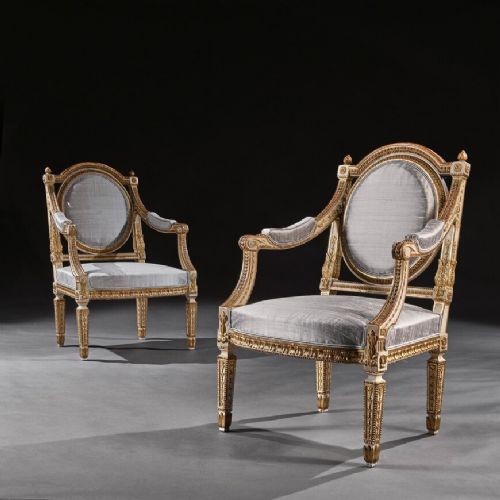
Cabinetmakers utilised dense timbers such as mahogany, birch, and satinwood, frequently employing inlay, marquetry, and ebonisation to define the structural forms. Carved wooden frames often received gilded finishes or parcel-gilt highlights to emphasise classical motifs.
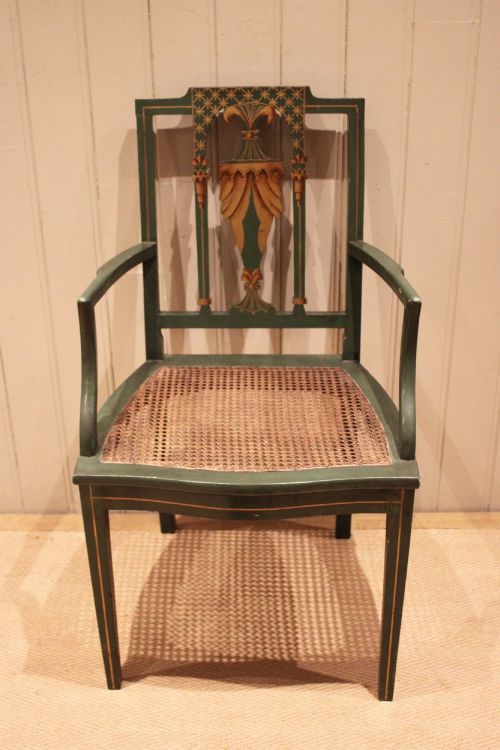
Upholstery methods varied from cane seats to traditional fabric coverings and floral upholstery, while decorative details incorporated brass mounts and painted surfaces.
Classical Armchairs Retail Price Guide 2026
Typical asking prices for classical armchairs among the pieces listed under this phrase on Sellingantiques today, from the lower quarter to the upper quarter. They describe what is for sale here now, not the wider market.
What Varies in Quality
The distinction between standard production and superior examples rests on the crispness of the wood carving and the fidelity of the classical proportion. Master workshops executed details such as lyre backs, monopodia supports, and gilded surfaces with sharper definition and greater depth.
Materials also dictate standing, with solid mahogany and fire-gilded giltwood frames holding higher regard than secondary painted substitutes. The integration of original cane work or period-appropriate fabric adds further substance to a piece.
Jacob-Desmalter·Thomas Hope·George Smith
The Classical Armchairs Glossary
- Fauteuil
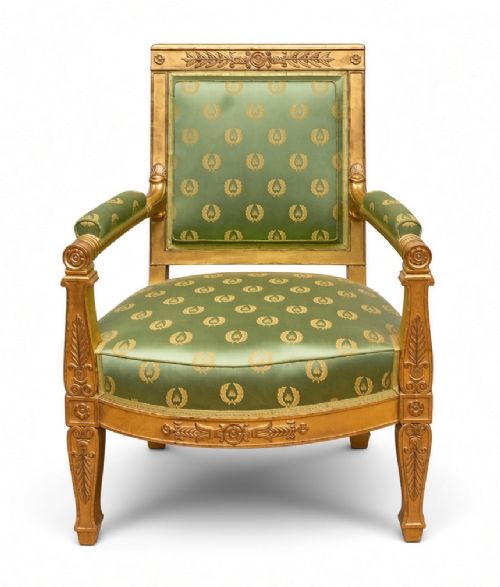
- An open-arm armchair with upholstered back and arm pads, originating in France. These wooden frame chairs often feature carved and gilt decoration.
- Bergère
- An enclosed armchair with upholstered back and sides, frequently incorporating cane panels. This form gained popularity in French and revival salons.
- Monopodia
- A furniture support carved as a single lion leg and paw, often seen in Regency designs. This classical motif derives from ancient Roman stone tables.
- Parcel Gilt
- A finishing technique where only specific carved elements or details of a wooden object receive gold leaf. It creates contrast against a dark ebonised or mahogany background.
- Giltwood
- Timber that has been coated with gold leaf over a prepared gesso ground. This luxurious finish defines many French Empire and neoclassical salon seats.
Classical Armchairs: Frequently Asked Questions
How do I identify a Regency armchair?
Regency armchairs typically exhibit classical restraint, drawing on ancient Greek and Roman models through forms like saber legs, lyre backs, and reeded frames.
They often incorporate mahogany, ebonised wood, or parcel-gilt decoration to achieve a disciplined architectural profile.
Where should I place a classical armchair?
These chairs function well as focal points in studies, libraries, or drawing rooms where their architectural silhouettes can be appreciated from multiple angles.
Pairing matching armchairs opposite a fireplace or flanking a sofa creates a balanced neoclassical arrangement.
How do I care for giltwood frames?
Giltwood requires gentle maintenance using a soft, dry ostrich feather duster to remove surface dust without disturbing the delicate gold leaf. Avoid liquid cleaners and keep the furniture away from direct sunlight and moisture to preserve the gesso and gilding.