
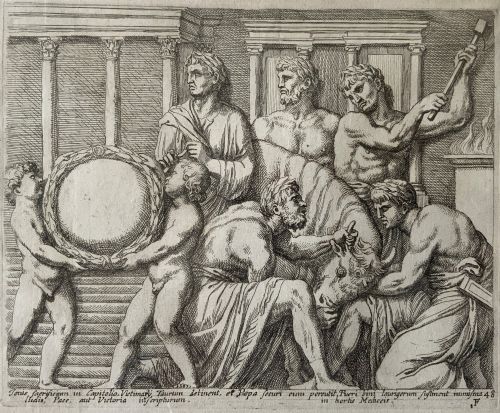


Classical Antiquity Print
A classical antiquity print captures the enduring architectural forms and mythological figures of the ancient world through detailed copperplate engraving.
Classical Antiquity Print
A classical antiquity print records the statues, temples, and ruins of Greece and Rome, predominantly sourced from monumental survey publications such as the Antiquities of Athens. These works preserve the monumental discoveries of the Grand Tour and subsequent archaeological expeditions across the Mediterranean.
The version most commonly encountered on this page is the eighteenth-century copper engraving, often executed on thick laid paper with rich plate marks. These large sheets frequently depict Greek gods, architectural details, and mythological scenes drawn from classical sculpture.
Materials and techniques
The primary material is handmade paper, principally laid paper, bearing the tonal variations and watermarks characteristic of early European paper mills. Ink is applied via intaglio printing from hand-carved copper plates, driven under heavy pressure to leave a distinct plate mark at the edge of the image.
Framed examples often employ wood surrounds and glass protection to preserve the delicate paper surface from atmospheric moisture and handling. Some sheets retain traces of gold leaf within decorative borders or contemporary framing appointments.
Materials documented across these works include handmade paper, traditional printing ink, wood framing, glass, and gold leaf accents.
What separates the best from the rest
Quality rests principally in the crispness of the plate impression and the fidelity of the graver work, where early strikes from freshly bitten copper lines retain hair-thin architectural details. Later strikes exhibit softened lines and slight flattening of the tonal gradations across sculptural shadows.
The sheet condition and historical provenance dictate the upper tiers of the market, favouring broad margins, clean paper free from heavy foxing, and clear attributions to master engravers such as James Basire or Alessandro Mocchetti.
François Perrier·Alessandro Mocchetti·James Basire·Edward Rooker
The Classical Antiquity Print Glossary
- Engraving
- A printmaking technique where an artist carves lines directly into a copper plate using a hardened steel tool called a burin. The resulting image holds ink within the grooves under high press pressure.
- Plate mark
- The indented impression left in the paper by the outer edge of the copper plate during printing. Its presence confirms an authentic intaglio print.
- Grand Tour
- The eighteenth-century custom of a traditional trip through Europe undertaken by upper-class young men to absorb classical art and antiquities. It fuelled the demand for architectural and sculptural prints.
- Laid paper
- Paper featuring a grid of fine parallel lines and wider spacing lines created by the wire mesh of the handmade mould. It is commonly found on prints predating the nineteenth century.
- Foxing
- Brown or yellowish age spots that develop on older paper due to chemical reactions involving iron impurities within the pulp. Mild foxing is a normal characteristic of antique sheets.
Classical Antiquity Print: Frequently Asked Questions
What subjects do these prints show?
These works record classical statues, Greek deities, architectural facades, and archaeological artefacts from ancient sites. They document the visual culture of antiquity through detailed scholarly rendering.
Common motifs include mythical figures, satyrs, and architectural elevations drawn from foundational archaeological surveys.
How were these prints originally published?
Many were issued as plates within large subscription volumes and folio books documenting Mediterranean antiquities. Wealthy patrons and institutions commissioned these ambitious publishing projects.
Individual plates were later extracted from bound volumes for framing and study by collectors.
How should I frame an antique print?
Framing requires archival materials to protect the fragile paper from degradation over time. Acid-free mounts and UV-filtering glass prevent light damage and discolouration.
Keep framed prints away from direct sunlight and damp environments to maintain the stability of the paper and ink.
How do I identify eighteenth-century paper?
Eighteenth-century paper typically exhibits visible laid lines and irregular deckle edges from the handmade manufacturing process. It tends to feel heavier and more fibrous than modern machine-made sheets.
Looking through the paper with backlight often reveals distinct watermarks placed by the original papermaker.