
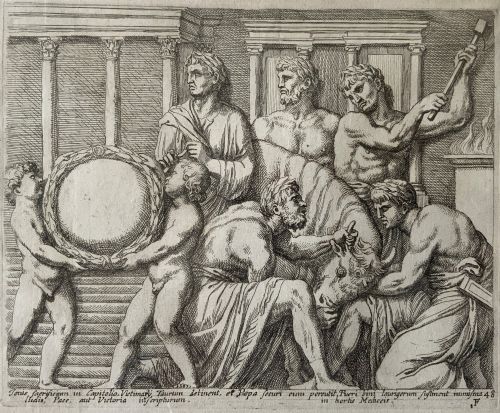


Classical Antiquity Paper Print
A classical antiquity paper print captures the noble proportions of ancient Greece and Rome through ink on paper.
Classical Antiquity Paper Print
A classical antiquity paper print records architectural marvels, Greek gods, and mythical scenes from the seventeenth and eighteenth centuries. These works draw heavily on neoclassical and baroque styles, translating ancient ruins into structured graphic art.
Most pieces met on this page stem from the eighteenth century, frequently concentrating on the architectural findings from Athens. Engravings form the predominant object type, mapping out temples, deities, and mythological figures with precise ink lines.
Collectors encounter both seventeenth-century etchings and eighteenth-century engravings. The imagery ranges from grand architectural elevations to detailed studies of satyrs, serpents, and classical deities.
How they were made
Makers produced these works using paper and ink through the traditional methods of etching and engraving. Artisans carved lines into metal plates before transferring the inked design onto heavy paper sheets.
The seventeenth-century pieces rely on the fluid lines of an etching, while the eighteenth-century architectural plates depend on the crisp incisions of an engraver's burin. Both techniques demand steady hands to render complex neoclassical motifs clearly.
The listings on this site span the seventeenth and eighteenth centuries, using paper and ink in neoclassical and baroque styles.
What varies in quality
The quality of the paper sheet and the preservation of its margins also dictate the standing of a print. Clean, substantial paper without heavy toning supports the detailed lines of neoclassical architectural renderings.
François Perrier·James Basire·Edward Rooker
The Classical Antiquity Paper Print Glossary
- Etching
- A printmaking method where acid bites lines into a metal plate covered with a protective ground. This technique allows for expressive, flowing marks in early works.
- Engraving
- A process where a sharp tool called a burin cuts directly into a metal plate. It produces clean, precise lines ideal for architectural precision.
- Neoclassical
- A style reflecting the art and culture of ancient Greece and Rome. It prioritises symmetry, proportion, and classical restraint.
- Baroque
- An artistic style known for grand scale and dramatic movement. Seventeenth-century prints often share this theatrical energy.
- Mythical
- Pertaining to traditional stories involving gods, heroes, and supernatural beings. These subjects frequently populate classical prints.
Classical Antiquity Paper Print: Frequently Asked Questions
What is a classical antiquity paper print?
These pieces are historical engravings and etchings depicting ancient architecture, gods, and mythological scenes from seventeenth and eighteenth-century sources.
They serve as graphic records of classical studies, translating ancient ruins and sculptures into works on paper.
How were these prints originally used?
Creators intended them for scholarly folios, architectural folios, and reference books documenting Mediterranean explorations.
Wealthy patrons later bound these plates into large volumes or framed them individually to display neoclassical taste.
How do I date an eighteenth-century engraving?
Dating relies on the paper characteristics, typographic style of any captions, and historical records tied to the print series.
The inclusion of specific publication details or known engravers helps place the work securely in its period.
How should I frame a paper print?
Framing requires conservation materials to protect antique paper from acid damage and direct sunlight.
Using window mounts keeps the paper surface from touching the glass directly, preserving the ink lines for years to come.