
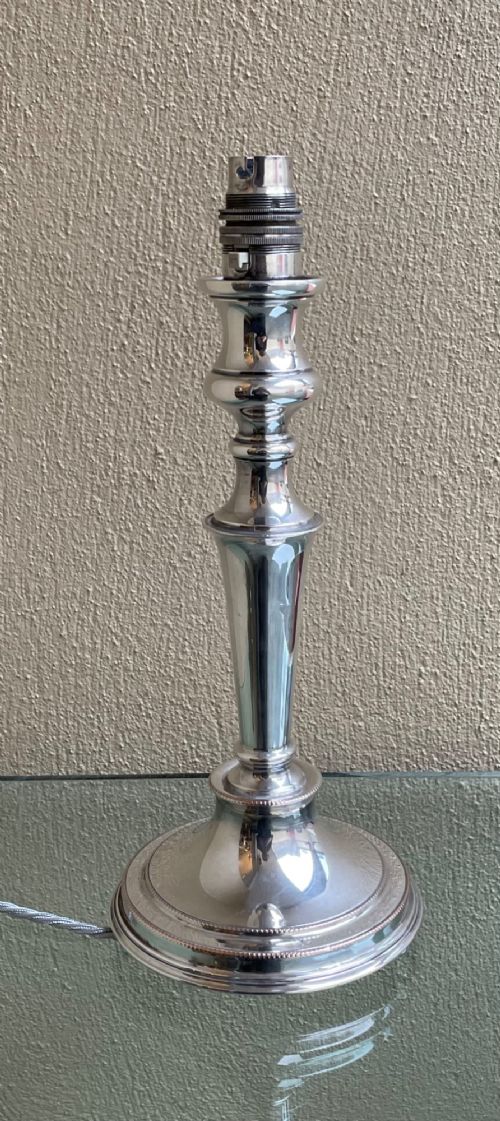
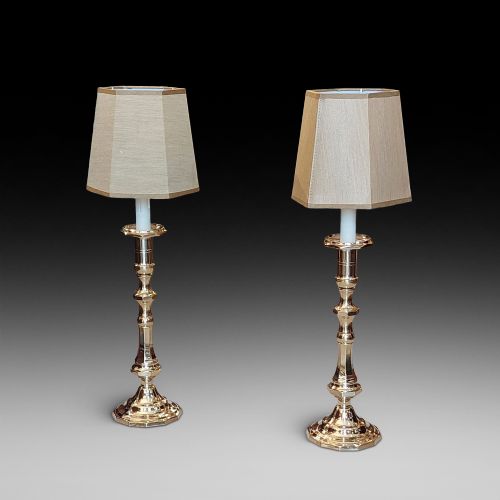
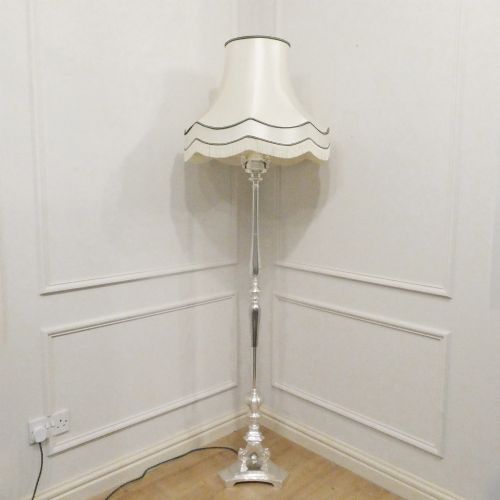
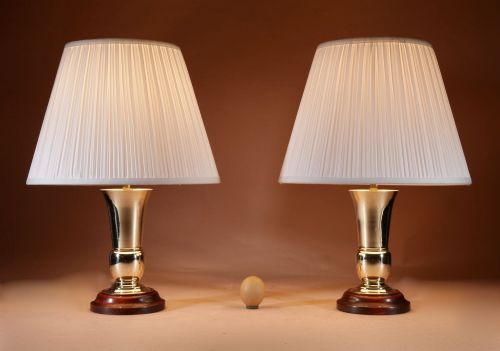



Classic Reading Lamp
A classic reading lamp focuses task light exactly where you need it, bringing together brass, toleware and practical height adjustment.
Classic Reading Lamp
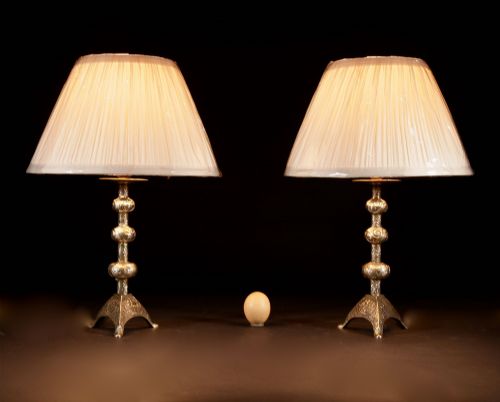
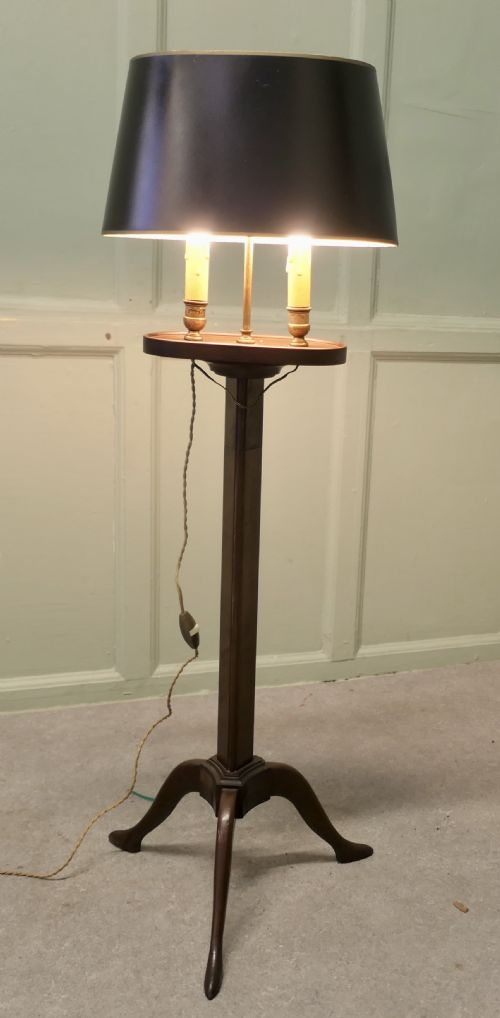
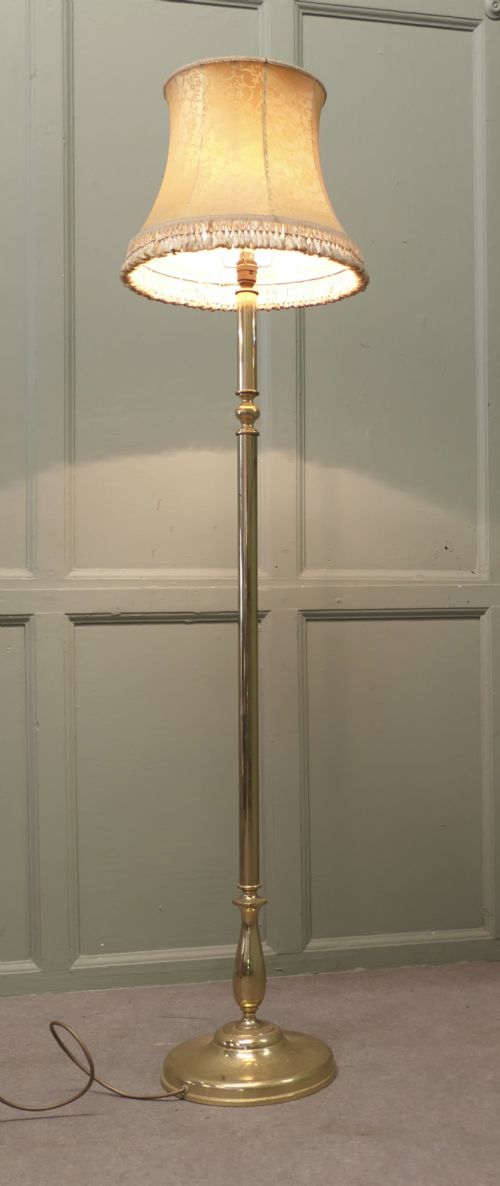
A classic reading lamp provides directional illumination for books and desks, drawing from forms created across the Victorian, Edwardian and Art Deco eras. You will encounter table lamps, desk lamps and tall standard floor lamps designed to stand beside armchairs or workspaces.
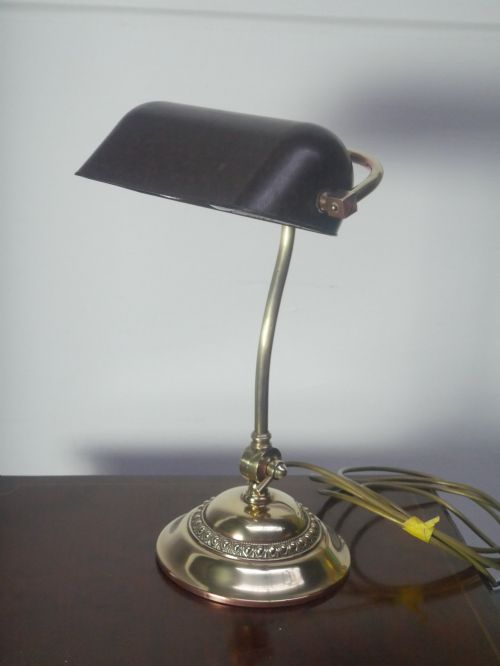
The selection ranges from bankers desk lamps with green shades to adjustable brass standards and toleware bouillotte lamps. Many pieces incorporate pivoting arms or sliding mechanisms to shift the angle of light.
Origins span British workshops, French makers and Italian ateliers, reflecting traditional styles from Neoclassical Revival to Arts and Crafts. These pieces serve as both functional lighting and period interior focal points.
Materials and construction methods
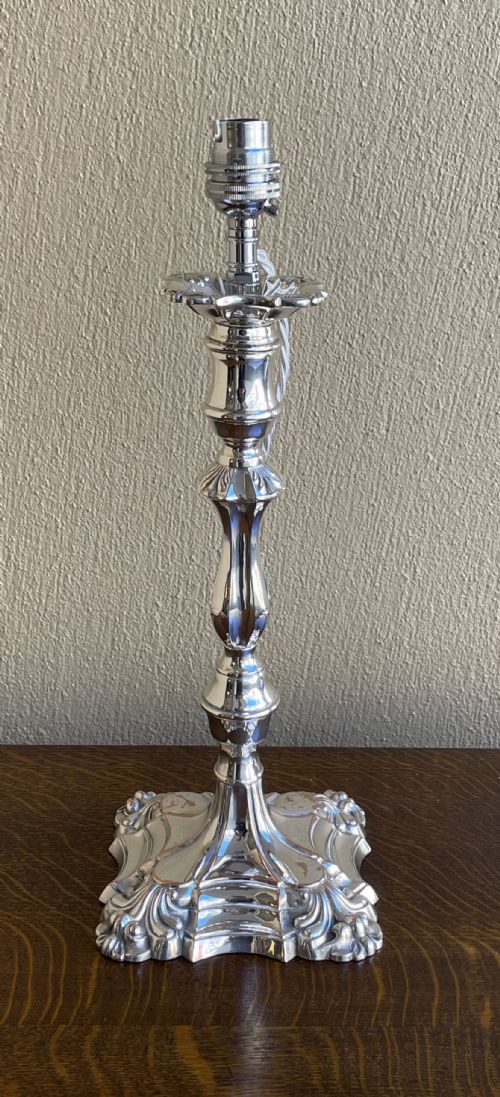
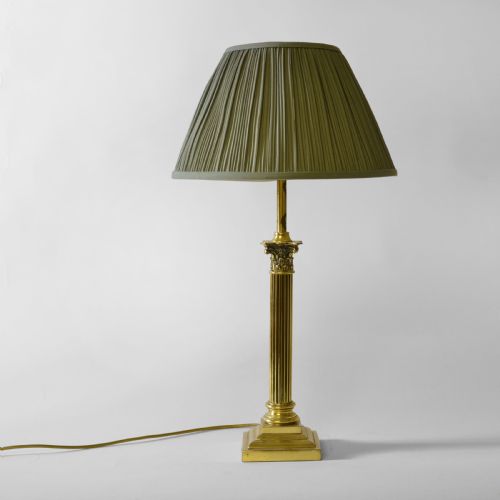
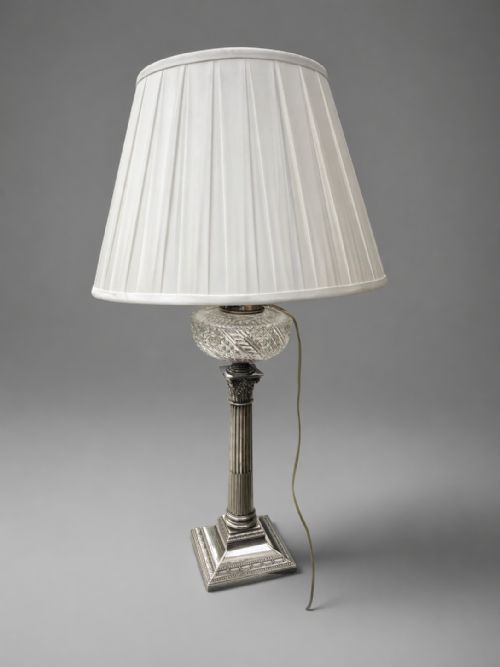
Brass forms the structural backbone for the majority of pieces, frequently paired with silver plate, gilt metal or polished mahogany. Makers utilised heavy weighted bases to support extended arms and standard lamp columns without tipping.
Shades utilise contrasting media such as opaline glass, painted toleware, majolica ceramics and tailored fabric. Metal components were cast, turned on lathes, chased or polished, while wiring setups were adapted during later decades for modern safety standards.
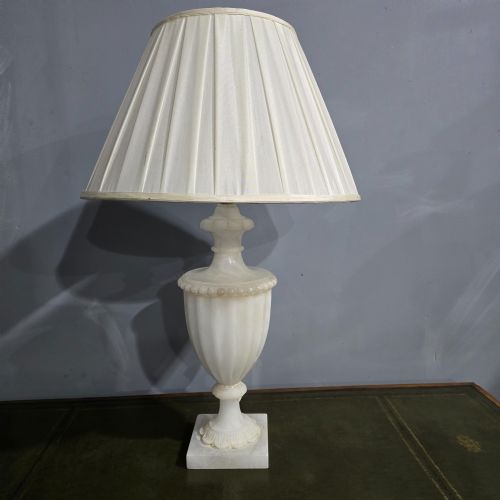
Materials recorded across current inventory include brass, silver plate, toleware, opaline glass, alabaster and mahogany.
Assessing build and material quality
Quality rests in the weight of the metal castings, the precision of the joints and the integrity of the adjustment mechanisms. Superior examples feature thick-gauge brass, hand-painted toleware details and well-balanced counterweights that hold position firmly.
The choice of shade and secondary materials also defines the tier of the piece, moving from standard utility brass to heavy silver plating, alabaster bases or layered opaline glass. Period originality in the fittings and shades elevates the integrity of an antique lamp.
Faraday & Sons
The Classic Reading Lamp Glossary
- Bouillotte lamp
- A traditional multi-light desk or table lamp featuring a central shaft and an adjustable painted metal shade. The design originated in France for card games.
- Opaline glass
- A milky, translucent glass popular in Victorian and Edwardian lighting. It softens and diffuses the bulb's glare.
- Standard lamp
- A tall floor-standing lamp designed to provide ambient or reading light beside seating areas. Many period versions include telescopic height adjustments.
- Toleware
- Painted or lacquered tinplate items often used for lamp shades and canisters. The dark green finish is typical of traditional desk lamps.
- Silver plate
- A thin layer of silver applied to a base metal core such as brass or copper. It offers the appearance of solid silver at a different weight.
Classic Reading Lamp: Frequently Asked Questions
How do I adjust a standard reading lamp?
Most period standard lamps utilise a screw key or a sliding telescopic collar on the central column. Loosening this mechanism allows you to raise or lower the height before tightening it back into position.
Heavier floor models may also feature weighted bases or pivoting arms to change the reach of the light without altering the main pole.
Are these lamps safe for modern homes?
Many antique lamps retain older wiring or have been partially updated over time. It is standard practice to have a qualified electrician inspect or rewire vintage pieces before regular daily use.
Original brass lamp holders can often be retained while updating the internal flex to meet current safety requirements.
What is a bankers desk lamp?
A bankers desk lamp is a task light featuring a heavy brass base and a characteristic green glass shade. The design was created to reduce eye strain for office workers.
They usually sit low on a desk and direct a focused beam downward onto paperwork or ledgers.
How do I clean antique brass?
Antique brass responds best to gentle dusting with a dry microfibre cloth to preserve its age and patina. Avoid harsh chemical polishes that strip away the historical surface character.
If the metal has a protective lacquer applied by a previous restorer, keep moisture away and wipe it clean with minimal pressure.