


Classic Mantel Clock
A classic mantel clock sits on a chimney piece or library shelf, bringing mechanical timekeeping and architectural presence into a room.
Classic Mantel Clock
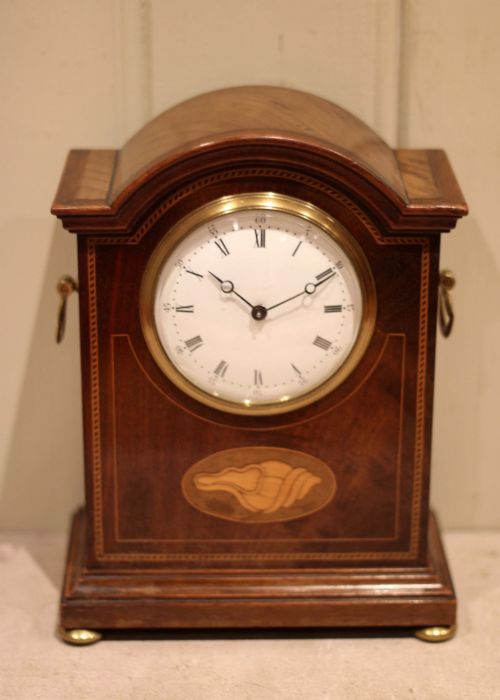
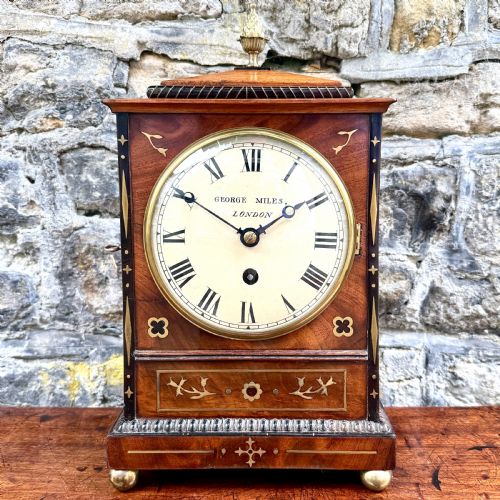
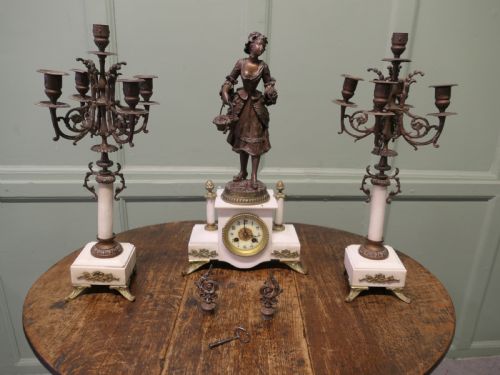
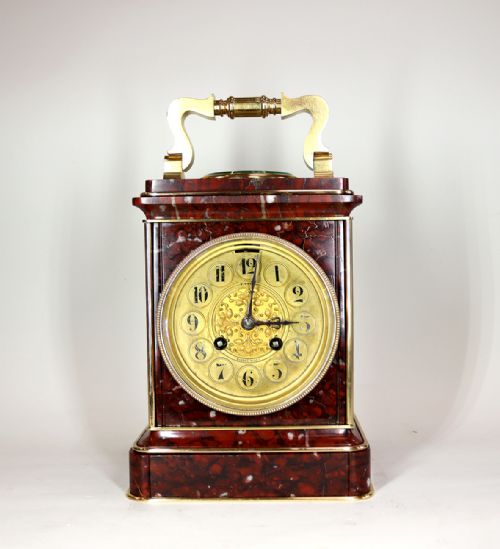
A classic mantel clock encompasses various domestic timepieces designed for a shelf or mantelpiece, spanning eras from the Regency and Victorian periods to mid-century modern designs. These objects take many shapes, from wooden bracket clocks and inlaid mahogany timepieces to heavy brass carriage clocks and marble garniture sets.
The selections on this page lean heavily towards traditional British and French domestic horology. Mahogany, brass, and gilt finishes dominate the offerings, alongside specialist pieces such as Swiss Atmos clocks housed in glass and metal cases.
Materials and construction
Cases utilise dense hardwoods like mahogany and rosewood, frequently enhanced with satinwood inlay, brass stringing, or ormolu mounts. Metal components range from cast bronze and gilt brass to heavy silver and polished steel.
Movements rely on traditional mechanical engineering, utilising fusee mechanisms, knife-edge suspensions, and striking trains housed behind enamel dials and protective glass bezels.
Some carriage clocks arrive with heavy glass panels and swinging handles, designed to survive bumpy horse-drawn journeys across nineteenth-century Europe.
Judging quality in domestic clocks
Quality rests in the crispness of the case timber, the precision of the brass or ormolu casting, and the reputation of the maker inscribed on the dial or movement. Finer examples show meticulous attention to inlay work and robust, well-finished mechanical movements rather than mass-produced components.
Charles Frodsham And Holingue Freres·Dent Of London·DeLa Salle And Christie·James Murray London·Jaeger Le Coultre·Garrards·Luxor
The Classic Mantel Clock Glossary
- Bracket clock
- A portable spring-driven clock originally designed to sit on a wall bracket. They typically feature fine wooden cases with carrying handles on top.
- Carriage clock
- A small, spring-driven timepiece developed for travel in the nineteenth century. These enclosed brass and glass cases often feature folding top handles.
- Fusee
- A conical pulley used in mechanical clocks to maintain even power from the mainspring as it unwinds. This mechanism improves timekeeping accuracy across the power reserve.
- Garniture set
- A clock accompanied by matching decorative ornaments such as urns or vases. They provide a balanced decorative arrangement for a mantelpiece.
Classic Mantel Clock: Frequently Asked Questions
How do I wind a mechanical mantel clock?
Most mechanical clocks require a key inserted into specific winding holes on the dial to tension the mainspring. Care must be taken not to overwind the movement.
Striking clocks should be allowed to complete their chime sequence without interference during the setting process.
What is the difference between a timepiece and a clock?
A timepiece simply tells the time without any striking mechanism or hourly chime. It contains a simpler gear train dedicated solely to motion work.
A clock includes a striking or chiming train that sounds the hours or quarters using gongs, bells, or gongs.
Where should I place a heavy marble or brass clock?
These dense pieces require a stable, level surface such as a heavy sideboard or a secure mantelpiece. Uneven placement can cause the pendulum to catch and stop the beat.
Proximity to direct sunlight or damp exterior walls should be avoided to protect the movement and case materials.
How do Atmos clocks work without a key?
An Atmos clock operates on changes in atmospheric temperature and pressure acting on a sealed capsule inside. Expansion and contraction wind the mainspring continuously.
This ingenious mechanism requires no manual winding or batteries to maintain constant operation.