
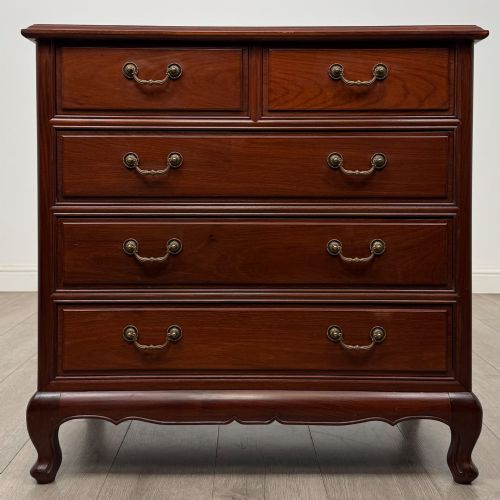
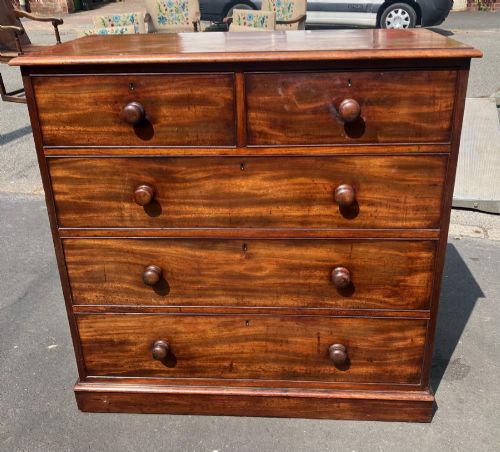
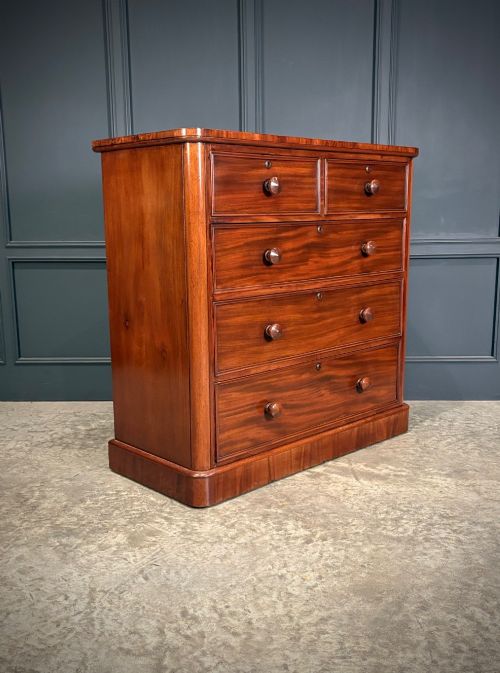

Classic Mahogany Storage Chest
A classic mahogany storage chest offers practical depth and enduring timber grain for any room.
Classic Mahogany Storage Chest
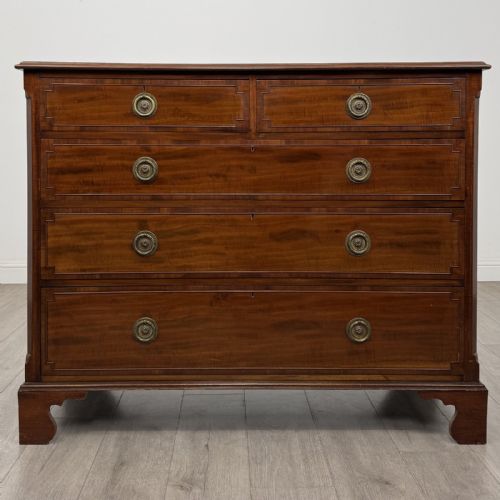
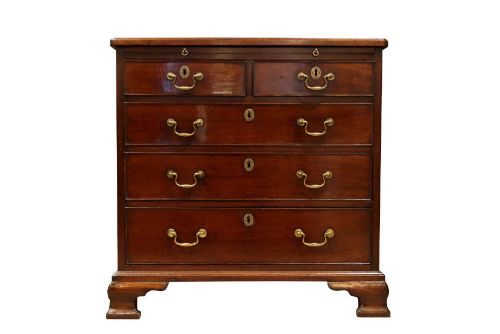
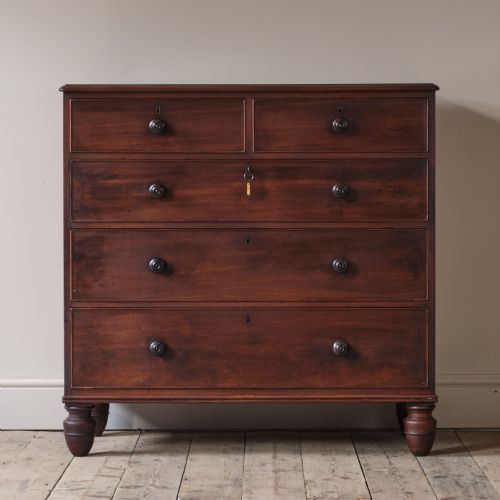
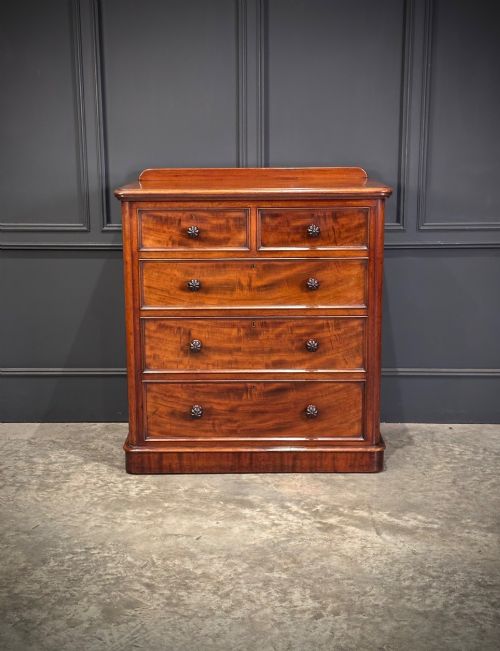
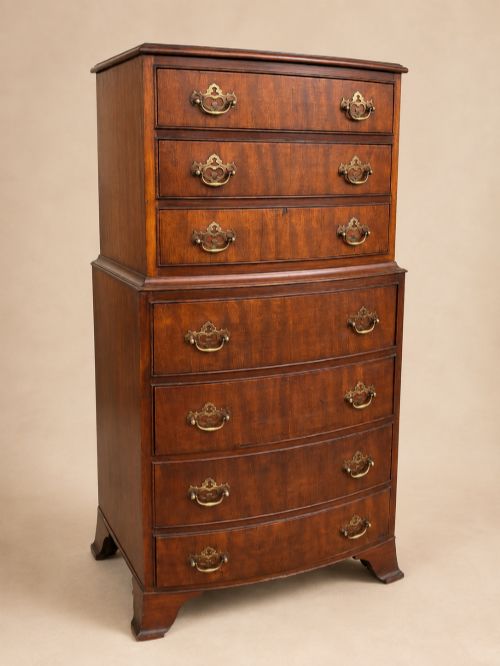
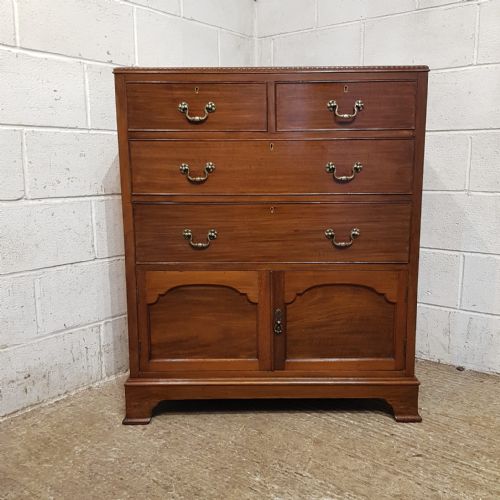
When you search for a classic mahogany storage chest, you encounter a variety of forms including chests of drawers, tallboys, chests on stands, and collectors cabinets. These pieces originate from periods spanning the eighteenth century through to the Edwardian era and the 1920s.
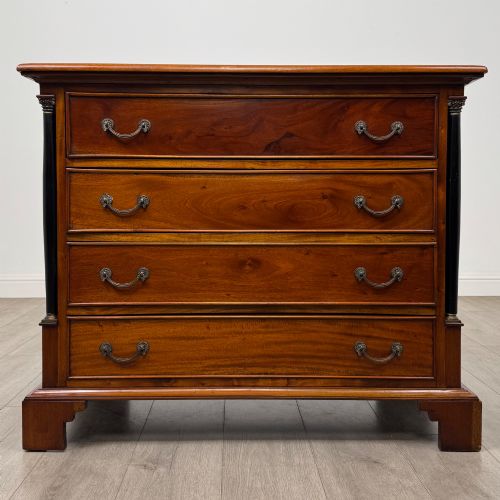
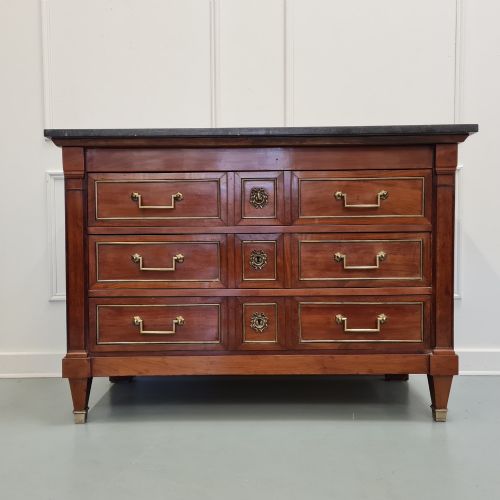
Makers and workshops from Georgian times up to the twentieth century produced these storage pieces in regional British styles as well as continental French Empire and Directoire manners.
Distinctions in quality
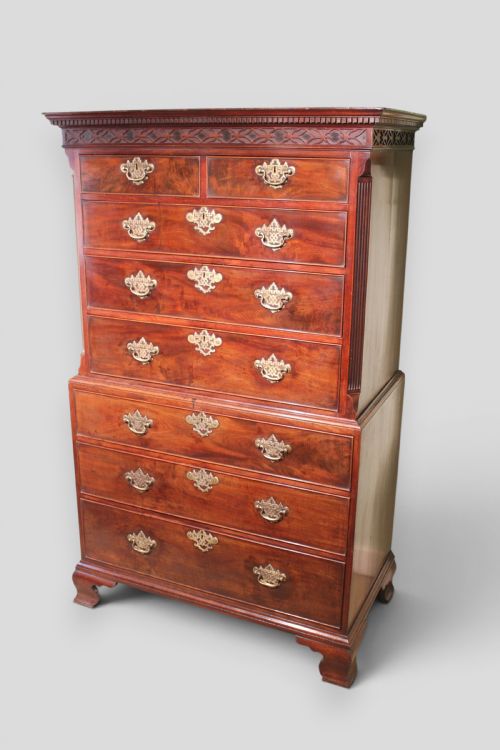
The standard of timber selection separates simpler utility items from finer examples, particularly where figured flame mahogany veneer is matched across drawer fronts. Original brass hardware and well-executed boxwood stringing also indicate higher workshop origin.
Structural integrity and surface finish preservation dictate the standing of an individual piece. Retaining original drawer linings and unblemished marble or timber surfaces elevates the piece within its period.
Listings span the eighteenth century through the 1920s, featuring mahogany, brass, marble, and boxwood.
T & G Seddon·C Hindley·Brady
The Classic Mahogany Storage Chest Glossary
- Bowfront
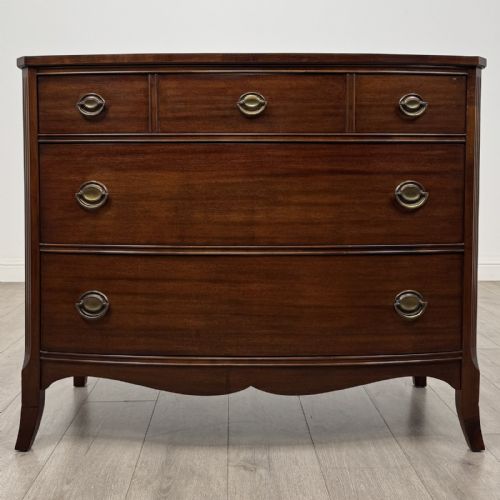
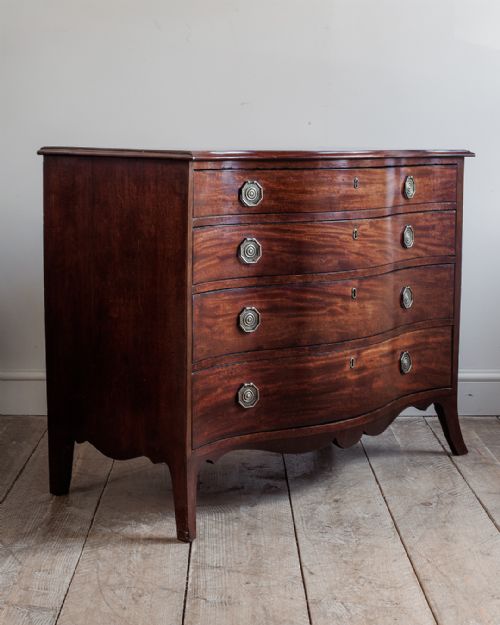
- A convex, curved cabinet front that swells outward in the centre. This shape became popular during the Georgian and Regency periods.
- Serpentine
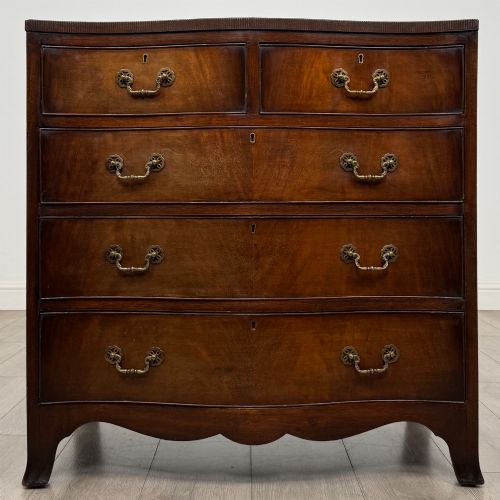
- A cabinet front featuring a undulating line, curving outward in the middle and inward at the sides. It requires considerable woodworking skill to execute properly.
- Tallboy
- A tall storage piece comprising one chest of drawers stacked on top of another. These provide substantial vertical storage capacity.
- Flame mahogany veneer
- Thin slices of mahogany cut from fork joints where branches meet the main trunk, displaying a fiery, mottled grain pattern. Cabinet makers applied these over solid wood carcases.
- Collectors cabinet
- A specialised storage cabinet fitted with numerous shallow internal drawers intended for holding specimens or small objects.
Classic Mahogany Storage Chest: Frequently Asked Questions
What periods do these storage chests cover?
The available selection spans from the eighteenth century through the Georgian, Regency, and Victorian eras into the Edwardian period and the 1920s.
Craftsmen adapted stylistic details across these eras, moving from restrained lines to more decorative veneers and brass mounts.
How do I distinguish a bowfront from a serpentine chest?
A bowfront presents a single outward curve across the front of the drawers. A serpentine front curves both outward and inward in a wave-like profile.
Both shapes appear frequently in Georgian and Regency examples.
What materials are used besides mahogany?
Primary surfaces often feature flame mahogany veneer alongside solid mahogany. Secondary woods like pine appear in internal construction.
Detailing includes brass handles, boxwood stringing, ebonised wood, and occasionally grey marble tops.
How were collectors cabinets used?
Collectors cabinets were built with many shallow internal drawers to house natural history specimens, coins, or small artefacts. Their numerous drawers distinguish them from standard clothes chests.
Workshop production for these specialised cabinets occurred into the early twentieth century.