




Classic Mahogany Seating
Classic mahogany seating brings together timber frames and upholstered forms from the eighteenth century onwards, offering durable utility and period design for the home.
Classic Mahogany Seating
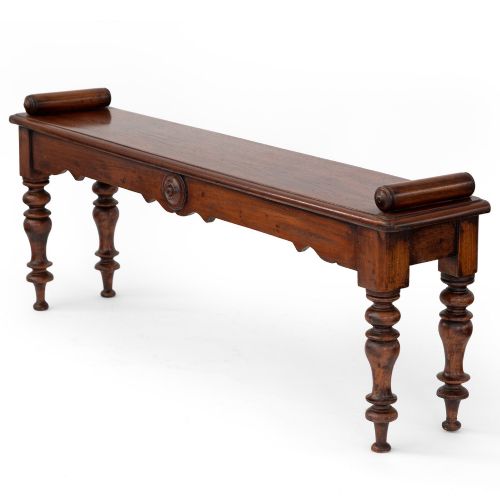
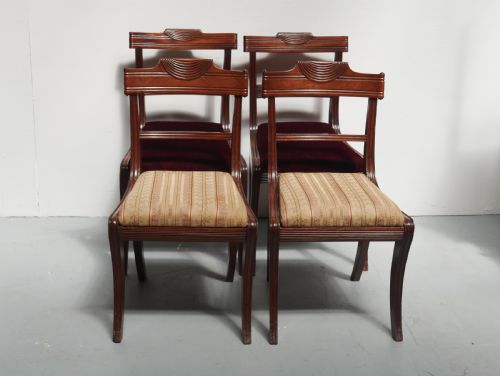
Classic mahogany seating encompasses dining chairs, armchairs, sofas, benches, and piano stools produced across multiple centuries including the Georgian, Regency, Victorian, and Edwardian eras. Buyers searching for classic mahogany seating encounter individual library chairs, window seats, and extensive dining sets numbering up to twelve pieces.
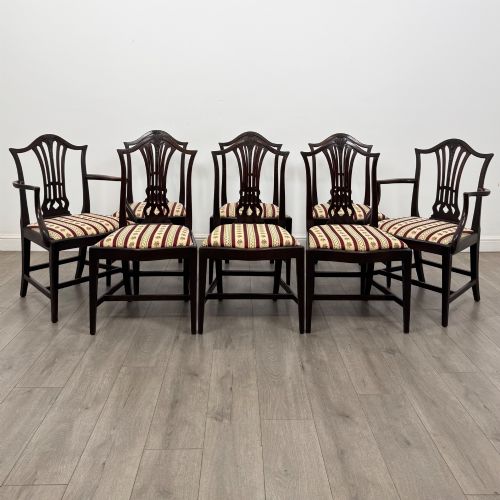
The forms range from Hepplewhite shield backs and Sheraton revival elbow chairs to large wingbacked armchairs, chesterfield porters, and framed bergere seating. Many examples adhere to specific historical periods like the Regency or George III era, whilst others reflect later revivals from the nineteenth and twentieth centuries.
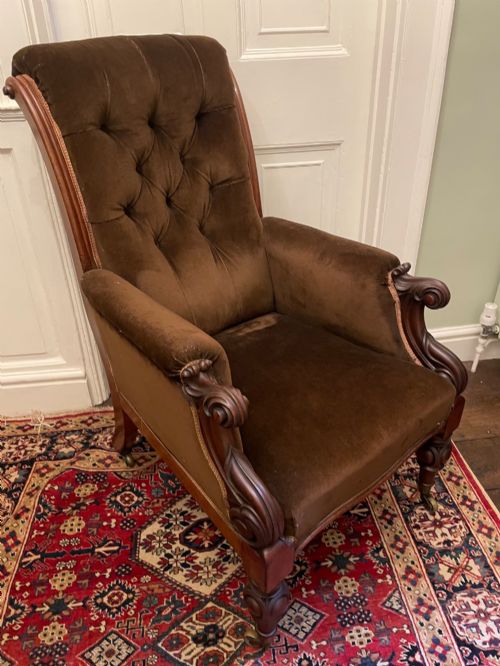
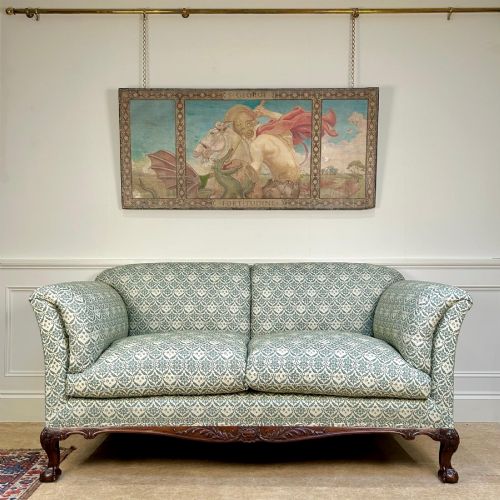
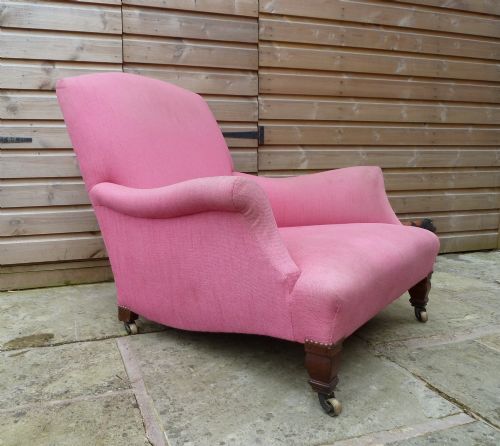
Dining chairs appear frequently as sets or singles, constructed with wood frames and various upholstery treatments. Armchairs and sofas provide larger seating options, utilising materials such as leather, velvet, and fabric to finish the frames.
Materials and construction
Makers utilised mahogany as the primary timber for frames, occasionally incorporating inlay and brass details to decorate the wood. Wood structural components support diverse seating forms from simple dining chairs to X-framed piano stools.
Upholstery techniques involve traditional textiles including leather, velvet, fabric, hessian, and corduroy. These materials cover the seating pads, backs, and arms of armchairs, sofas, and dining sets.
Classic Mahogany Seating Retail Price Guide 2026
Typical asking prices for classic mahogany seating among the pieces listed under this phrase on Sellingantiques today, from the lower quarter to the upper quarter. They describe what is for sale here now, not the wider market.
Some dining chairs arrive in squads of twelve, ready to host an impressively large dinner party without any awkward seating shortages.
Assessing quality in construction and material
The standard of classic mahogany seating rests upon the precision of the timber framing, the integrity of the joinery, and the execution of carved or inlaid details. Pieces reflecting formal periods such as George III or Regency display refined proportions and careful shaping of elements like cabriole legs or reeded rails.
Upholstery selection and finish also differentiate the examples, with leather and traditional textiles applied to match the period style of the wooden frame. The consistency across large dining sets of eight to twelve chairs indicates the skill of the original workshop.
Gillow
The Classic Mahogany Seating Glossary
- Mahogany
- A durable tropical hardwood utilised for furniture frames, valued for its rich dark grain and strength.
- Bergere
- An enclosed upholstered armchair with exposed wooden framing, frequently featuring canework panels.
- Shield back
- A chair back design shaped in the form of a heraldic shield, popular in eighteenth-century dining furniture.
- Reeded
- A decorative moulding comprising parallel convex strips carved directly into the wooden leg or frame.
- Wingback
- An armchair featuring protective side panels designed to shield the sitter from draughts.
Classic Mahogany Seating: Frequently Asked Questions
How do I care for leather upholstery?
Leather surfaces require gentle cleaning with appropriate conditioning products to prevent drying and cracking over time. Regular dusting keeps the material in good condition.
Avoid placing leather seating near direct heat sources or strong sunlight, which can alter the colour and finish of the hide.
Can I mix different chair styles?
Mixing individual chairs or sets introduces varied period styles into a room, provided the timber tones complement one another. Many buyers pair single armchairs with larger dining sets.
Consider the scale and wood finish of each piece to maintain a balanced appearance across the seating arrangement.
How do I identify a revival piece?
Revival furniture borrows stylistic elements from earlier periods like the Georgian or Regency eras while incorporating construction methods typical of its actual manufacture date. Inspect the timber age and joinery details to determine the production era.
Sheraton revival and Regency style pieces replicate classic silhouettes whilst maintaining the characteristics of nineteenth or twentieth-century workshops.