
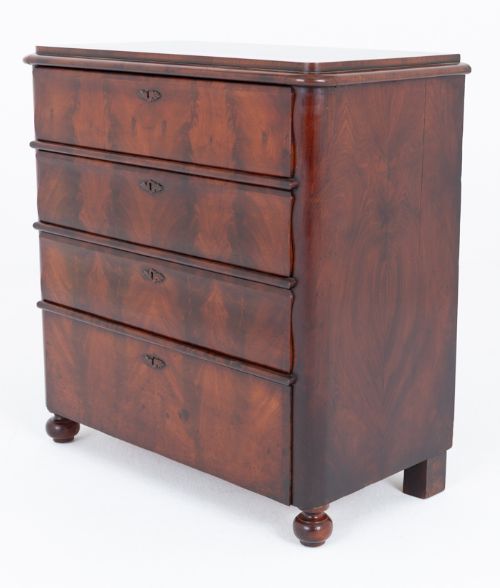


Classic Mahogany Dresser
A classic mahogany dresser brings rich timber grain and timeless proportions into a room, offering dependable storage that grounds any traditional interior.
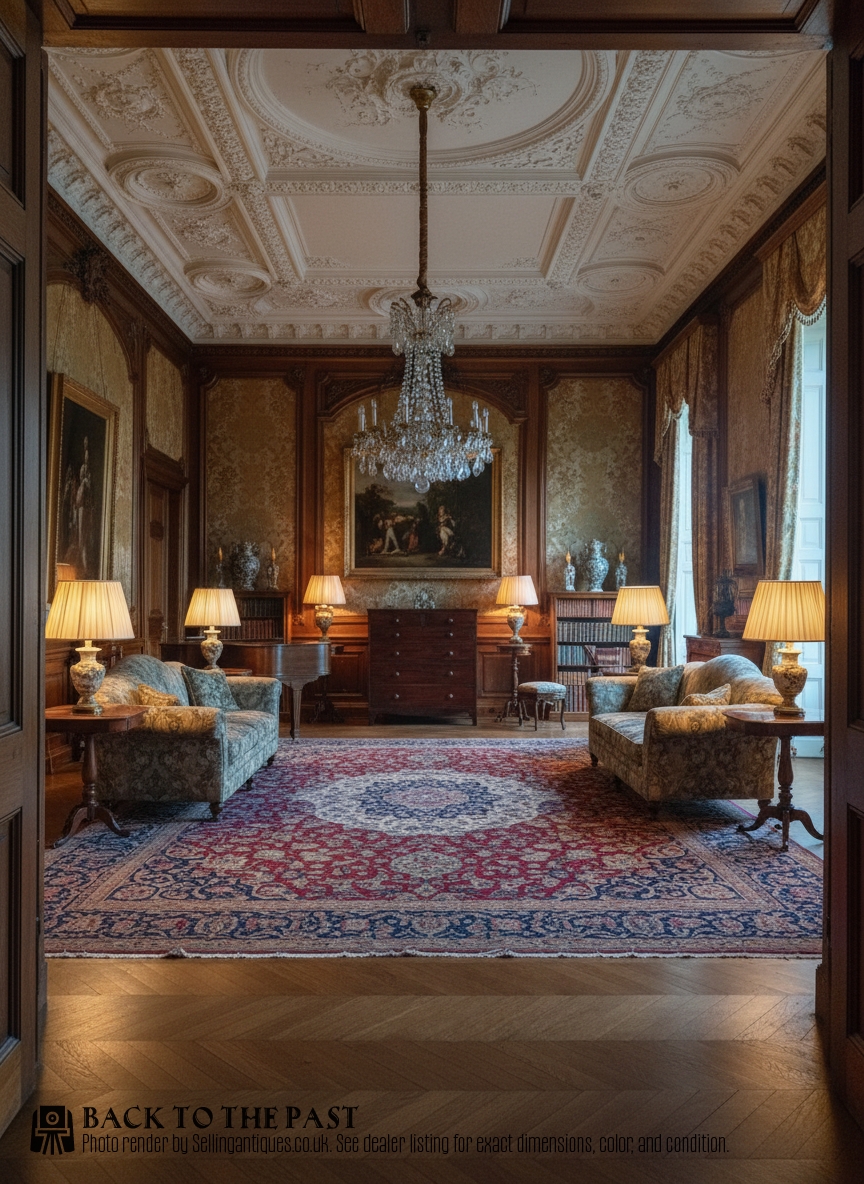
Classic Mahogany Dresser
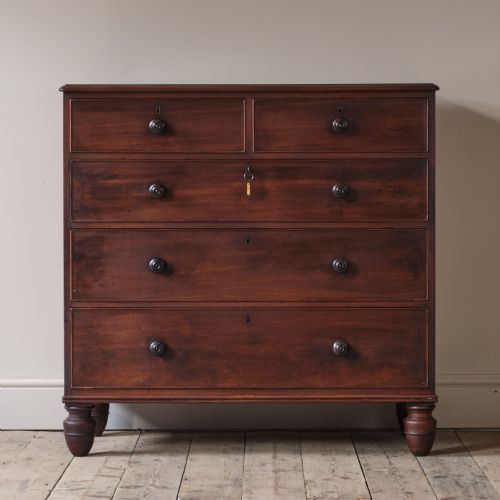
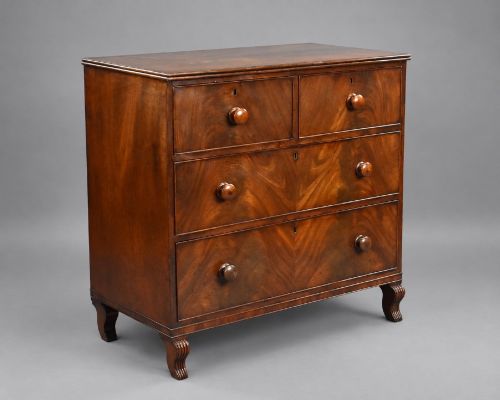
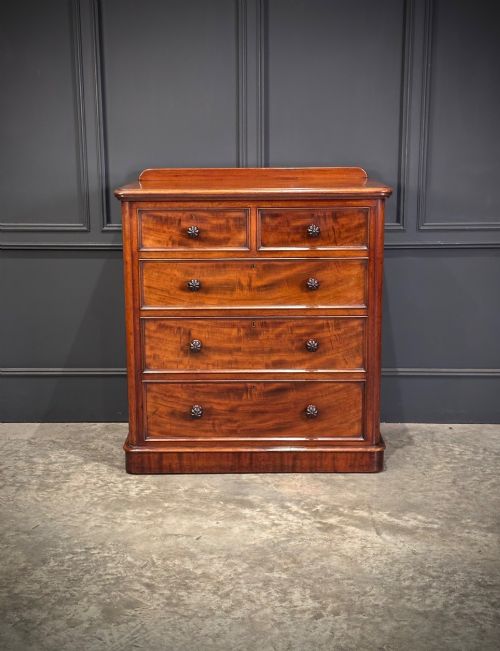
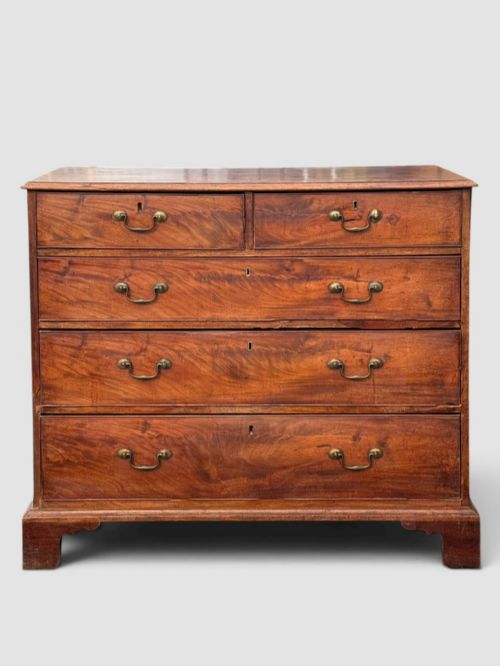
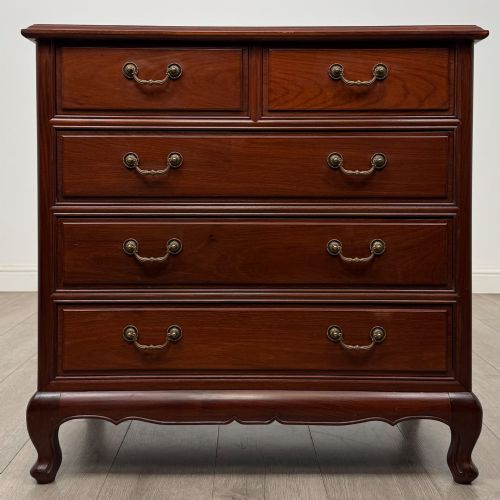
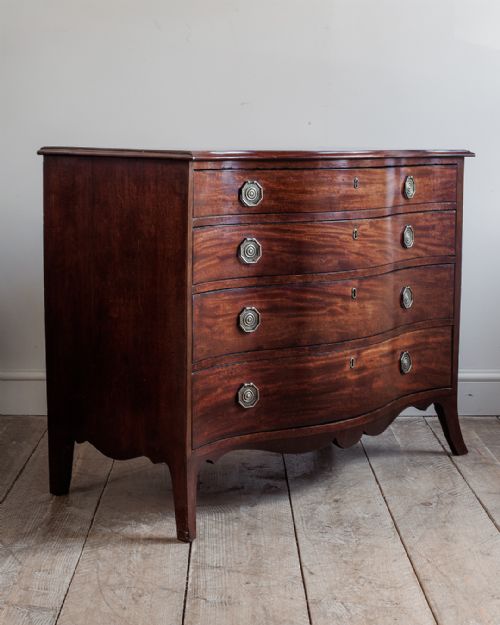
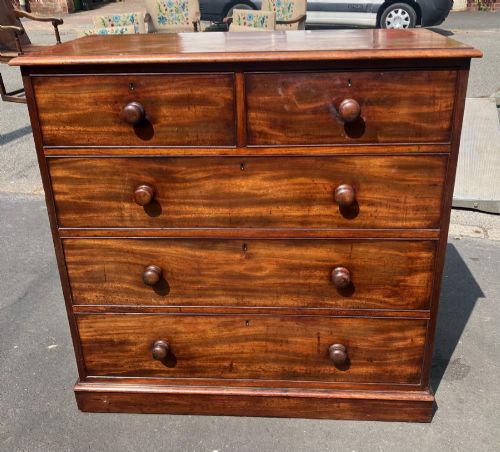
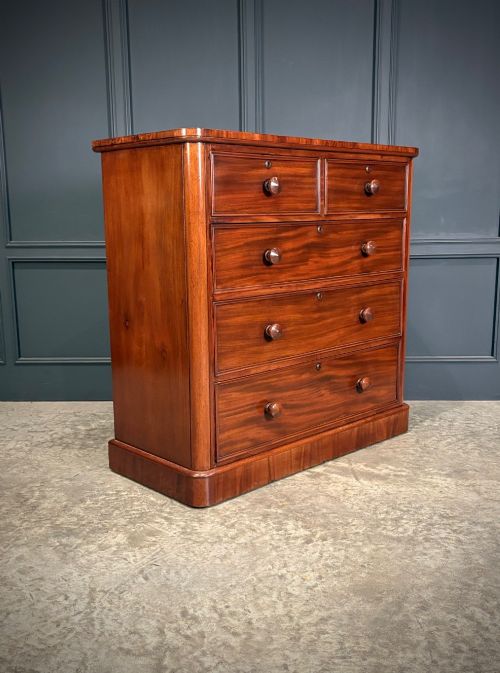
A classic mahogany dresser primarily takes the form of a chest of drawers, spanning several foundational periods including the Georgian, Regency, and Victorian eras. These pieces serve as functional storage units featuring varied drawer arrangements, such as the standard two-over-three configuration or graceful bow-fronted designs.
The selections available here range from austere 18th-century forms to decorative 19th-century interpretations, occasionally incorporating sideboard variants and marble-topped commodes. Buyers most frequently encounter straightforward mahogany chests of drawers alongside refined serpentine and bow-front profiles rooted in British cabinet-making traditions.
Materials and Construction Methods
Cabinet makers utilised solid mahogany and flame mahogany veneer applied over secondary woods like pine, creating deep figured grain patterns across drawer fronts and tops. Structural integrity relied on traditional joinery methods, supplemented by secondary timbers within internal drawer carcases.
Surface details typically include cast brass handles, delicate boxwood stringing, and elaborate wood inlay that highlights the natural warmth of the timber. Selected pieces incorporate contrasting grey marble tops or specialised secondary woods to achieve specific decorative effects.
One resourceful Victorian cabinet maker utilised concealed bone escutcheons to guide the key safely into the lock without scratching the veneer.
Distinctions in Quality
Quality rests upon the selection of timber veneers and the precision of the cabinet work, where master workshops achieved seamless alignment in serpentine and bow-front profiles. The depth of the flame figure in the mahogany and the crispness of inlaid boxwood separate standard utility items from exceptional examples.
Original hardware, cohesive drawer construction using period techniques, and the preservation of the untreated timber surface elevate a piece. Lesser examples display unsympathetic alterations, replacement brasses of incorrect scale, or fatigued secondary woods.
T & G Seddon·C Hindley
The Classic Mahogany Dresser Glossary
- Flame mahogany
- A veneer cut from timber where the branch meets the trunk, producing a dramatic, flickering flame-like grain pattern. This decorative surface was favoured by cabinet makers for principal drawer fronts.
- Serpentine front
- A furniture front characterised by a wavy outline with a convex centre flanked by concave curves. This complex shape required advanced woodworking skill to execute properly.
- Bow front
- A convex, outwardly curved front profile popular during the Regency and Georgian periods. It softens the room's geometry while increasing internal drawer capacity.
- Commode
- A low cabinet or chest of drawers, often derived from French furniture design. In this context, it frequently describes pieces featuring decorative marble tops.
Classic Mahogany Dresser: Frequently Asked Questions
How do I style a mahogany chest of drawers?
Place the piece against a neutral wall to let the deep red-brown tones of the timber stand out as a focal point. Balance the heavy visual weight of the wood by hanging a simple mirror or placing ceramic lamps on top.
Keep surface styling restrained to maintain the clean lines of the mahogany. A tray for daily accessories or a single framed artwork allows the grain pattern to remain the primary feature.
What is the difference between a Georgian and Victorian chest?
Georgian pieces generally exhibit restrained proportions, subtle cockbeading around drawers, and architectural bracket feet or straight bracket supports. The timber often has a softer patina developed over a longer period.
Victorian variants tend to be heavier in scale, sometimes utilising bolder flame mahogany veneers and turned or platform feet. Drawer configurations also shifted, with deeper proportions and occasionally more ornate brass hardware.
How do I care for antique mahogany timber?
Protect the wood by placing the piece away from direct sunlight and heat sources, which can dry out the natural oils and cause the veneer to lift. Dust regularly with a soft, dry cloth rather than using silicone-based polishes.
Apply a traditional beeswax sparingly once or twice a year to nourish the finish and maintain the natural sheen. Avoid placing damp items directly on the surface to prevent water rings.
Where should I place a bow front chest?
A bow front chest works well in a bedroom or hallway where the curved projection softens traffic flow around tight corners. Because the front extends outward, ensure there is adequate clearance from opposing walls or furniture.
The curved profile also makes these pieces effective as standalone feature items in living rooms or dining spaces. They offer substantial internal storage without dominating the surrounding floor plan.