
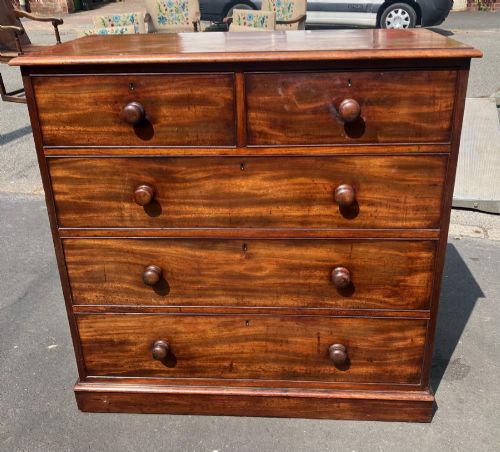
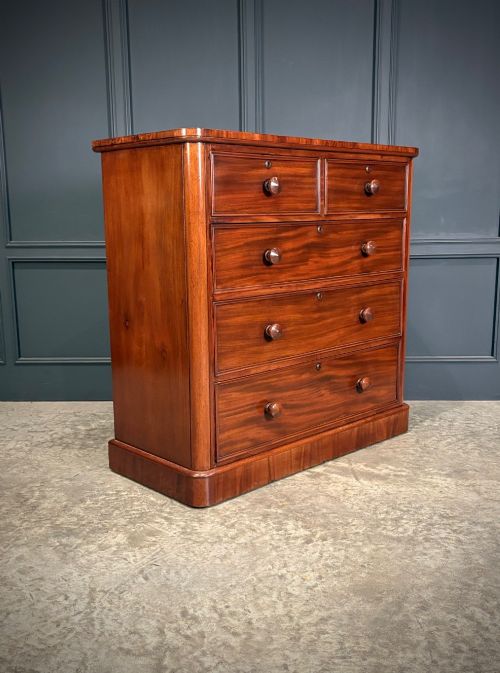
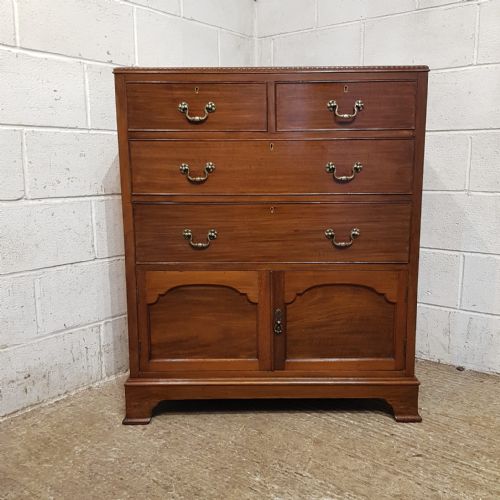
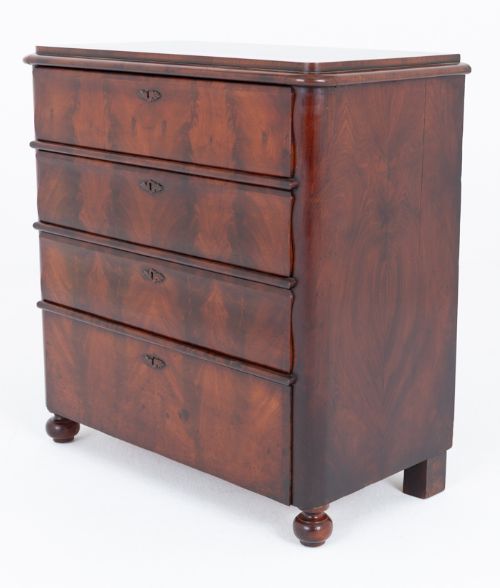

Classic Mahogany Chest Drawers
These classic mahogany chest drawers offer rich timber grain and timeless storage, spanning Georgian grace through to Edwardian practicality.
Classic Mahogany Chest Drawers
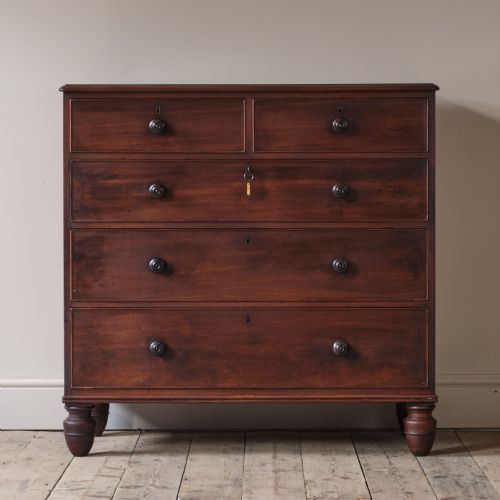
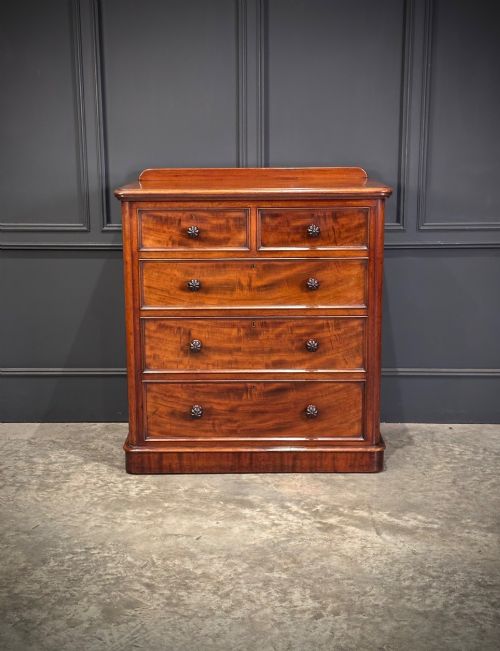
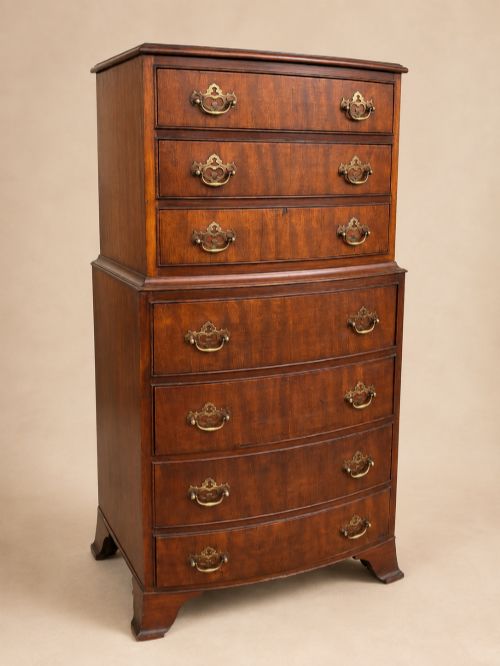
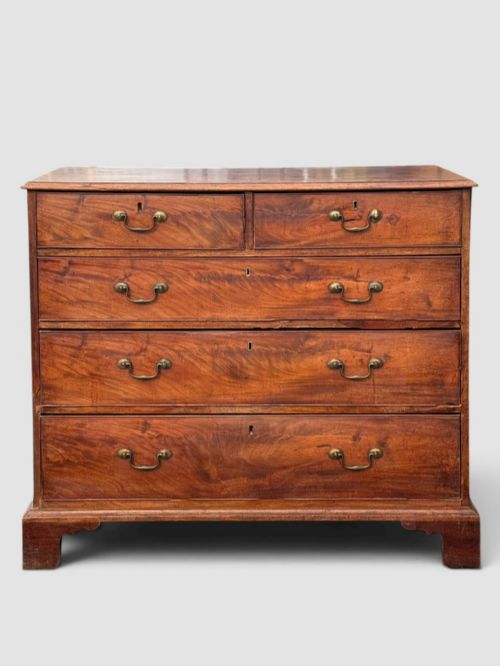
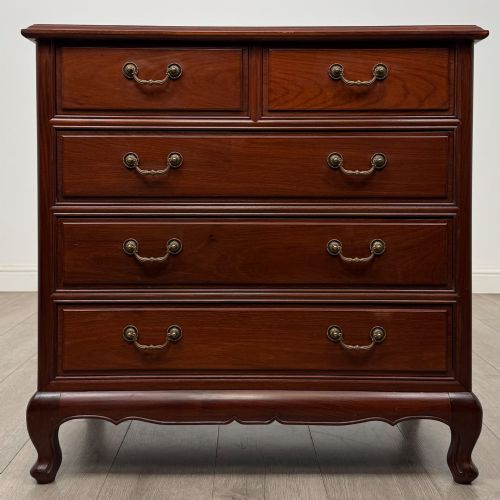
A classic mahogany chest drawers provides substantial storage through stacked horizontal compartments, appearing in forms ranging from simple bedroom units to grand tallboys and collectors cabinets. Buyers encounter pieces spanning several eras, notably Georgian, Regency, and Victorian periods, alongside later Edwardian interpretations.
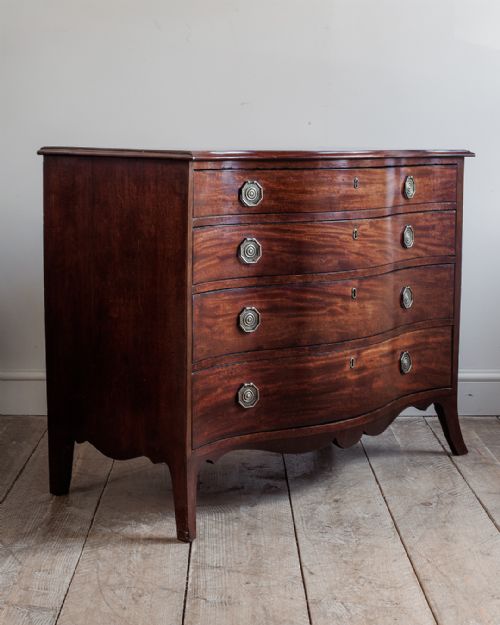
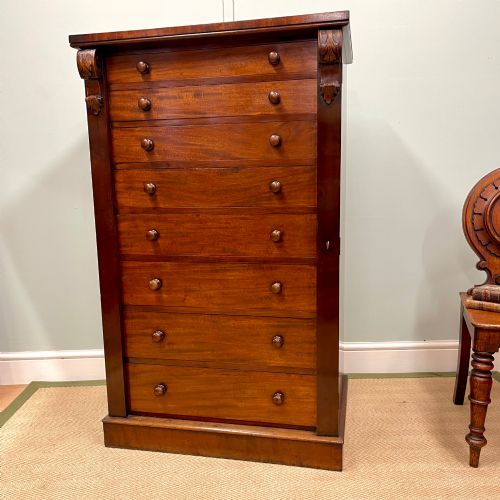
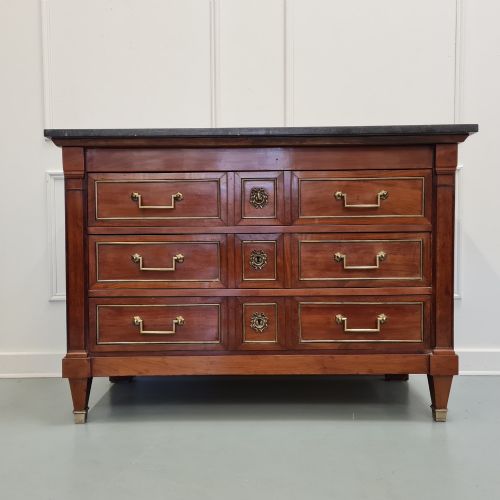
The layout typically follows a standard graduation of smaller drawers over deeper ones, though alternative configurations include bow fronts, serpentine shapes, and secretaire drawers. Workshops also produced specialised pieces such as Wellington chests and commodes with marble tops.
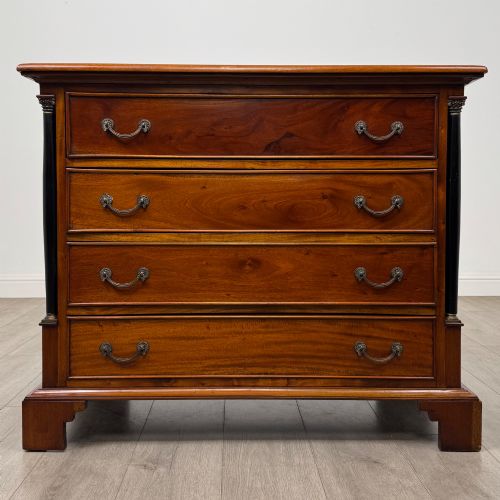
Origins vary from English country workshops to continental centres like the Biedermeier tradition, showing diverse regional interpretations of the form while maintaining the core timber and storage purpose.
Materials and Construction Methods
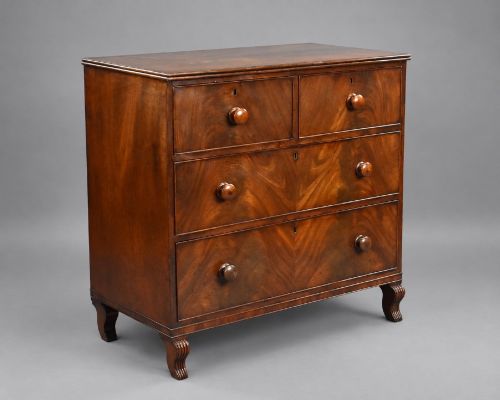
Makers built these pieces primarily from solid mahogany and flame mahogany veneer, often enhanced by secondary timbers such as pine for internal framing and drawer carcassing. Cabinetmakers selected figured grain for drawer fronts to create visual depth and decorative contrast.
Surface ornamentation relied on natural timber properties supplemented by boxwood stringing and ebonised wood details. Metalwork played a functional and decorative role, with brass handles and escutcheons secured to the drawer faces.
Structural integrity depended on traditional joinery methods, allowing timber to move naturally with seasonal humidity changes while supporting heavy loads of stored items.
Periods represented across the pieces include Georgian, Regency, Victorian, Edwardian, Biedermeier, and Directoire.
Evaluating Construction and Material Quality
Superior examples demonstrate precision in timber selection, utilising highly figured flame mahogany veneer or rich burr walnut matched symmetrically across drawer fronts. Lesser pieces rely on plain, uniform planking with minimal grain movement or visual interest.
The refinement of internal carpentry separates standard production from exceptional work, seen in the thickness of drawer linings, the use of fine dovetail joints, and the retention of original brass hardware. Secondary timbers inside the piece also indicate the workshop standards applied during manufacture.
T G Seddon·C Hindley·Brady
The Classic Mahogany Chest Drawers Glossary
- Bowfront
- A curved convex front profile that projects outward in the centre, frequently seen on Regency and Georgian chests.
- Flame mahogany veneer
- A sliced timber sheet displaying a distinct feather-like flame pattern, prized by cabinetmakers for decorative drawer fronts.
- Tallboy
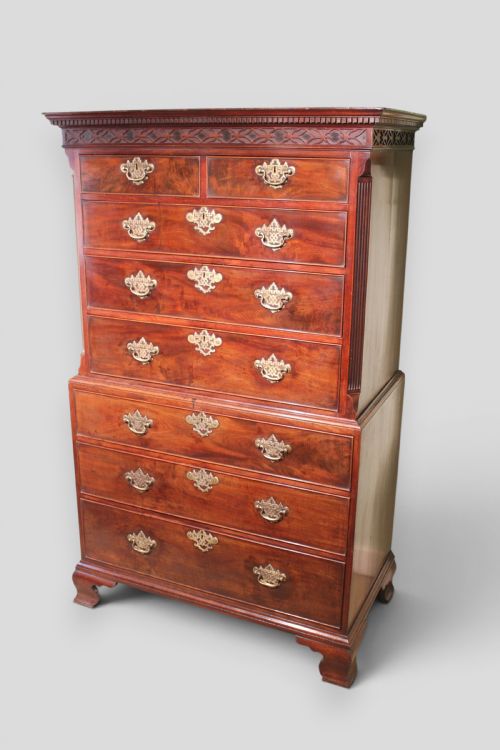
- A tall storage unit comprising a chest of drawers stacked upon another chest or stand, maximising vertical capacity.
- Secretaire chest
- A drawer unit featuring a fitted fall-front writing drawer that conceals a desk interior with small compartments.
- Dovetail
- An interlocking joint formed by wedge-shaped fingers, used traditionally to join drawer corners with maximum strength.
Classic Mahogany Chest Drawers: Frequently Asked Questions
How do I date a mahogany chest?
Examine the construction methods visible inside the drawers and around the carcass framing. Hand-cut dovetails and cedar or pine secondary timbers usually point to earlier periods.
Style indicators such as bracket feet, apron shapes, and brass handle patterns further narrow the manufacturing decade.
How should I care for mahogany furniture?
Keep mahogany pieces away from direct sunlight and heat sources to prevent the timber from drying out or the veneer from lifting. Dust regularly with a dry cloth and apply natural beeswax occasionally to nourish the grain.
Avoid silicone-based sprays, which can penetrate old finishes and attract dust over time.
What is the difference between a tallboy and a chest on chest?
A tallboy generally refers to a single tall chest of drawers, sometimes sitting on a dedicated stand. A chest on chest specifically consists of two separate carcass sections stacked one directly upon the other.
Both forms provide extensive vertical storage while occupying a modest floor footprint.