





Classic Desk Clock
A classic desk clock brings mechanical precision and period warmth to a study, drawing the eye with brass, mahogany, and enamel.
Classic Desk Clock
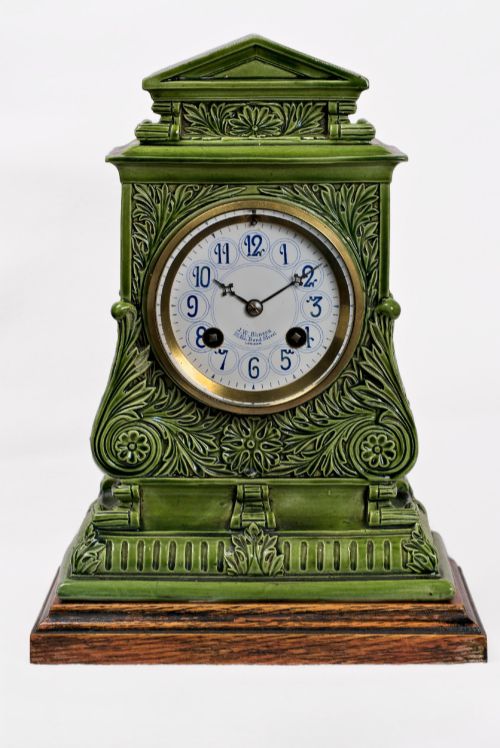
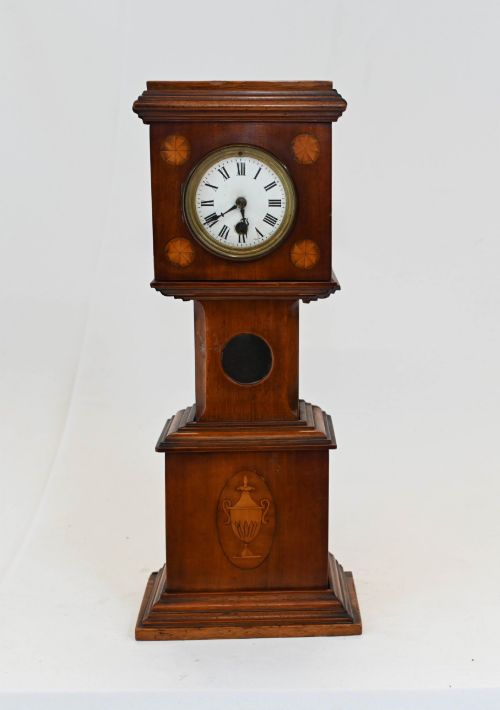
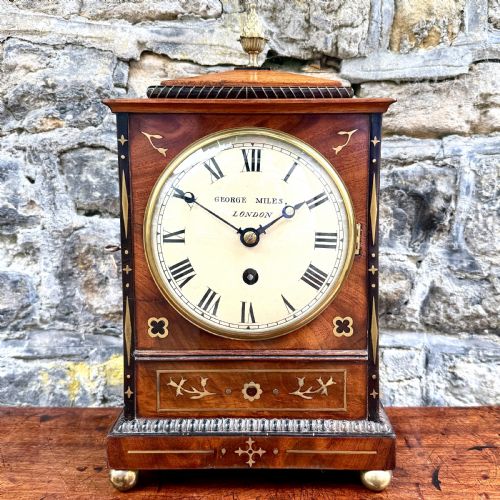
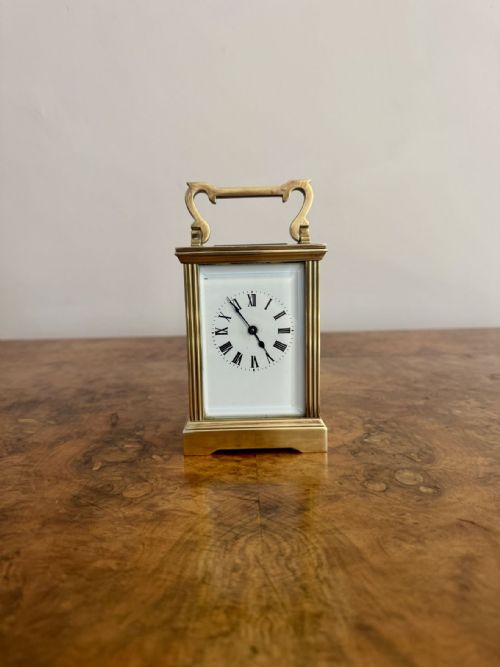
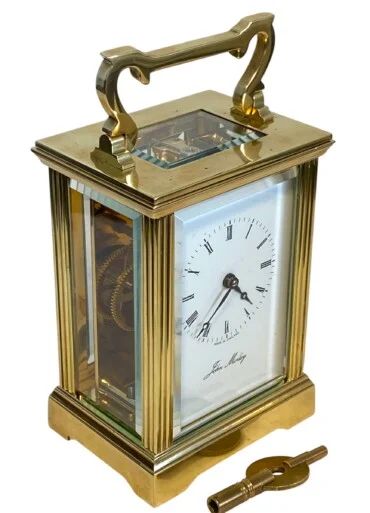
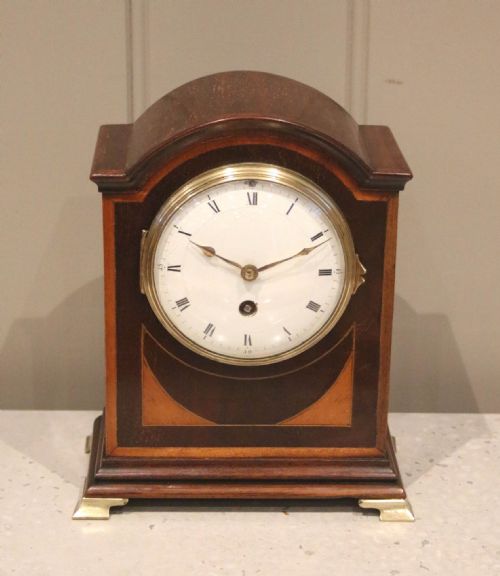
A classic desk clock spans portable brass carriage designs, architectural wood bracket clocks, and precision-driven Atmos models. These pieces serve as functional timekeepers while anchoring a room with traditional or mid-century proportions.
The selections here range from Georgian and Regency mahogany library pieces to Victorian brass carriage designs and Swiss Atmos desk pieces. Each style reflects the interior tastes of its era, from Neoclassical Revival to Mid-Century Modern.
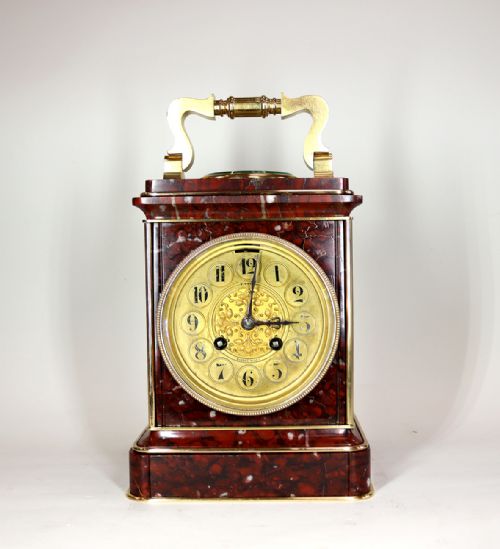
Buyers encounter everything from heavy marble cases and lapis lazuli accents to delicate porcelain boudoir clocks. Form follows function closely, with portable timepieces sitting alongside fixed mantel and desk instruments.
How they were made
Brass and gilt metal form the primary housing for carriage and Atmos clocks, often paired with glass panels that display the movement within. Mahogany and satinwood provide the structural timber for bracket and library clock cases.
Movements rely on complex brass gear trains, ranging from eight-day spring-driven mechanisms to temperature-powered Atmos systems. Enamel dials, porcelain faces, and rhodium plating complete the interior and exterior detailing.
Classic Desk Clock Retail Price Guide 2026
Typical asking prices for classic desk clock among the pieces listed under this phrase on Sellingantiques today, from the lower quarter to the upper quarter. They describe what is for sale here now, not the wider market.
Materials utilised across the current selection include lapis lazuli, rouge marble, porcelain, and solid mahogany.
What varies in quality
Case materials and timber selection set the baseline, with solid mahogany, brass inlay, and carved marble marking out superior examples. Secondary woods and simpler metal alloys appear on more utilitarian models.
The sophistication of the movement dictates the grade of the piece, from standard spring-driven timepieces to complex striking mechanisms and self-winding Atmos systems. Maker reputation and signed dials further distinguish finer workshop output.
John Morley·Dent of London·Luxor·Jaeger Le Coultre
The Classic Desk Clock Glossary
- Carriage clock
- A portable spring-driven timepiece fitted with a carrying handle and glass sides. These were originally designed for travel by horse-drawn carriage or train.
- Bracket clock
- A portable house clock traditionally placed on a bracket or shelf. They feature wooden cases, often in mahogany, housing striking or chiming movements.
- Atmos clock
- A mechanical desk clock manufactured by Jaeger-LeCoultre that runs using changes in atmospheric temperature and pressure. It requires no manual winding.
- Library clock
- A formal timepiece designed for institutional or domestic study rooms. They typically feature restrained wooden cases suited to scholarly interiors.
- Timepiece
- A clock that measures and indicates time without including a striking or chiming mechanism. Simpler versions focus purely on the visual display of the hours.
Classic Desk Clock: Frequently Asked Questions
How do I wind a vintage carriage clock?
Most mechanical carriage clocks require a specialised key inserted into the backplate squares to tension the mainspring.
Care should be taken not to overwind the mechanism, stopping as soon as resistance is felt.
What powers an Atmos desk clock?
An Atmos clock uses a hermetically sealed chamber containing a gas and liquid mixture that expands and contracts with temperature shifts. This perpetual motion winds the mainspring automatically.
Temperature fluctuations as small as one degree provide enough power for days of operation.
Where should I place a mahogany desk clock?
Position the clock on a stable, level surface away from direct sunlight, radiators, and exterior doors. Wooden cases react poorly to extreme humidity and temperature swings.
Keeping the piece on a solid desk or mantel ensures the escapement beats evenly.
How do I identify a Victorian carriage clock?
Victorian models often feature heavy brass frames with bevelled glass panels and cast carrying handles. Dials frequently show white enamel with Roman numerals.
Signatures or patent marks on the backplate help confirm the nineteenth-century production period.