




Classic Crystal Ceiling Fitting
These classic crystal ceiling fitting examples bring genuine period illumination and sparkle to a room.
Classic Crystal Ceiling Fitting
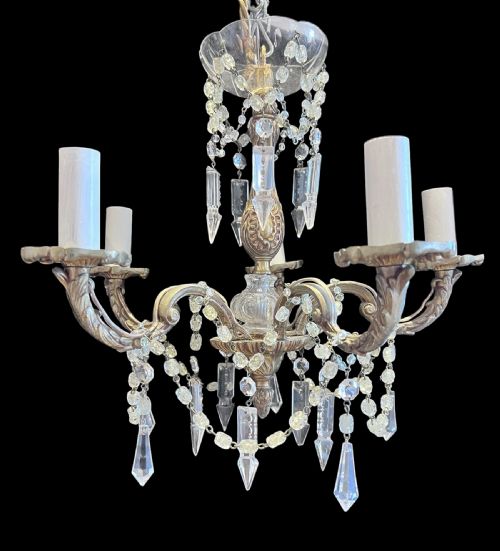
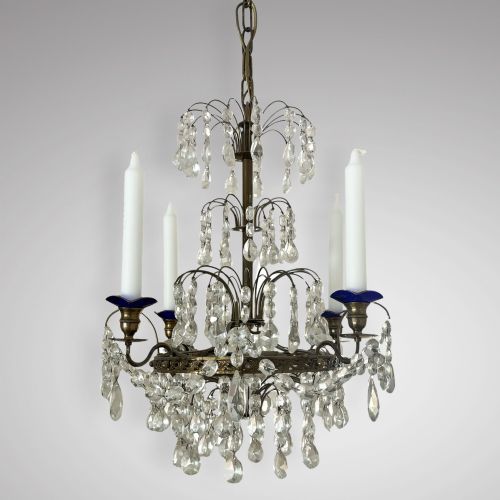
When you search for a classic crystal ceiling fitting, you are looking at substantial hanging light fixtures designed to illuminate larger spaces with refracted light. The examples found here take the form of chandeliers and ceiling lighting spanning the nineteenth and early twentieth centuries.
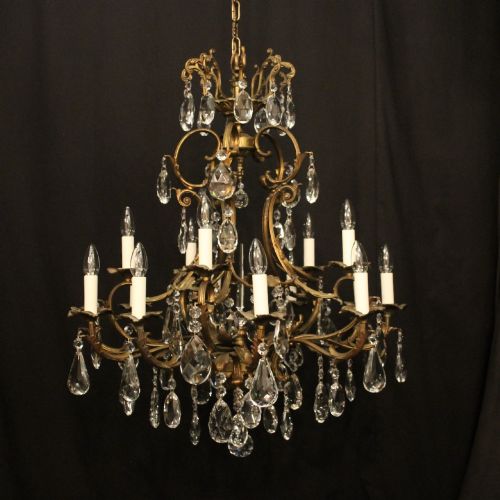
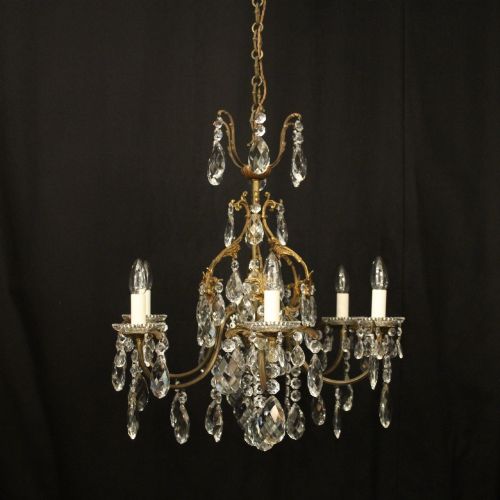
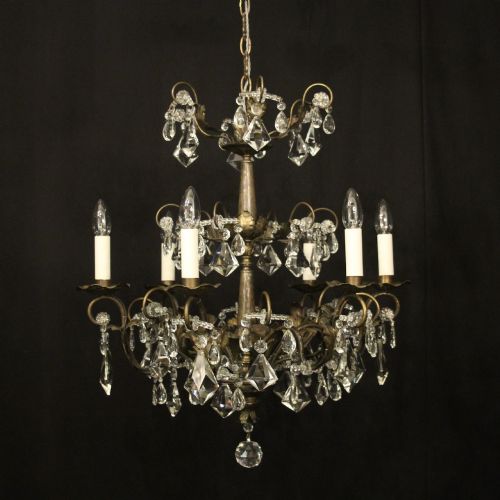
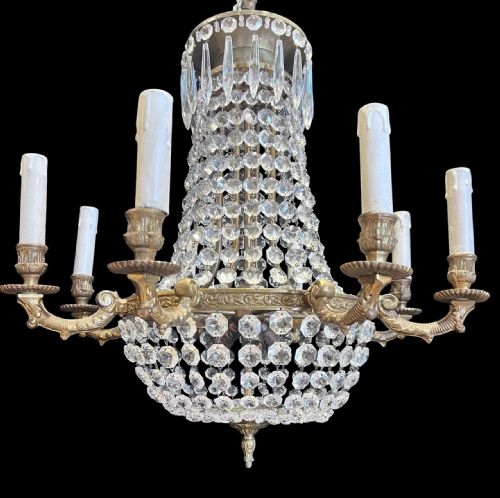
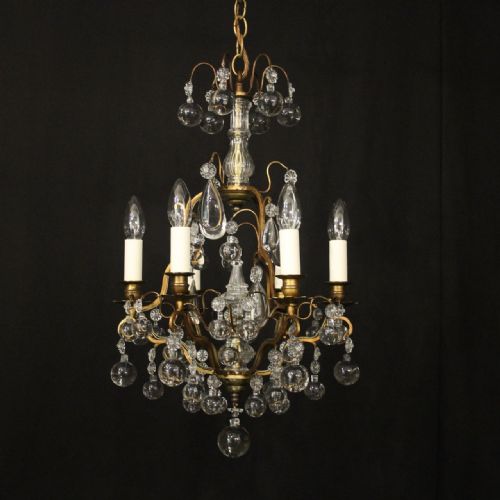
The version you are most likely to meet on this page is a French or Italian chandelier dating from the 1920s or 1930s. These pieces frequently incorporate multiple tiers, arms, and elaborate drop configurations.
Originating from periods including the Edwardian era, 1900, 1910, 1920, and 1930, these fittings reflect diverse European design vocabularies. Styles range from French Empire and Rococo to Italian Neo-Classical, Regency, and Georgian manners.
Materials and construction
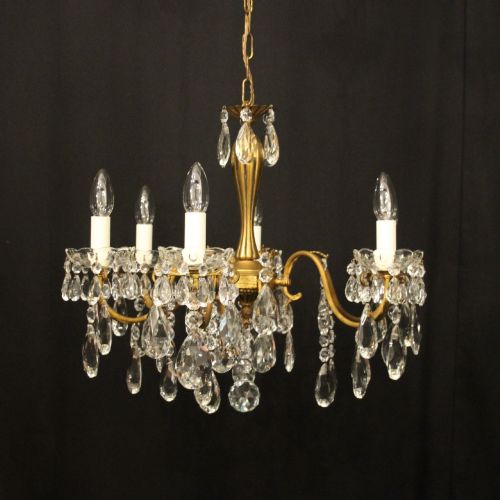
The structural framework relies predominantly on metals such as brass, bronze, and silvered or gilded metal. These durable skeletons support the weight of numerous glass and crystal elements while providing the armature for multiple lighting branches.
The decorative impact depends entirely on cut glass and crystal components arranged as pendants, beads, and waterfalls. Artisans suspended these reflective elements from the metal frames to catch and scatter light across the interior.
Classic Crystal Ceiling Fitting Retail Price Guide 2026
Typical asking prices for classic crystal ceiling fitting among the pieces listed under this phrase on Sellingantiques today, from the lower quarter to the upper quarter. They describe what is for sale here now, not the wider market.
Some twelve-light models contain enough individual crystal drops to keep an enthusiastic owner polishing through a long winter afternoon.
Distinctions in quality
Quality rests in the precision of the metal casting and the clarity of the crystal components. Finer pieces demonstrate intricate bronze or brass work alongside deeply cut crystal that refracts light with exceptional brilliance.
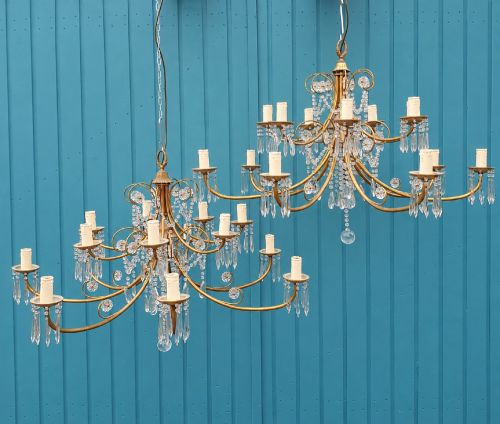
Scale and proportion also divide the range, with larger multi-tier examples requiring superior structural engineering to support heavy frames safely. The complexity of the design, from simple bag tents to fifteen-light gilded compositions, dictates the relative ambition of the piece.
The Classic Crystal Ceiling Fitting Glossary
- Chandelier
- A branched ceiling-mounted lighting fixture designed to hold multiple bulbs or candles. These hanging fixtures serve as the primary decorative focal point in a traditional room.
- Tent and waterfall
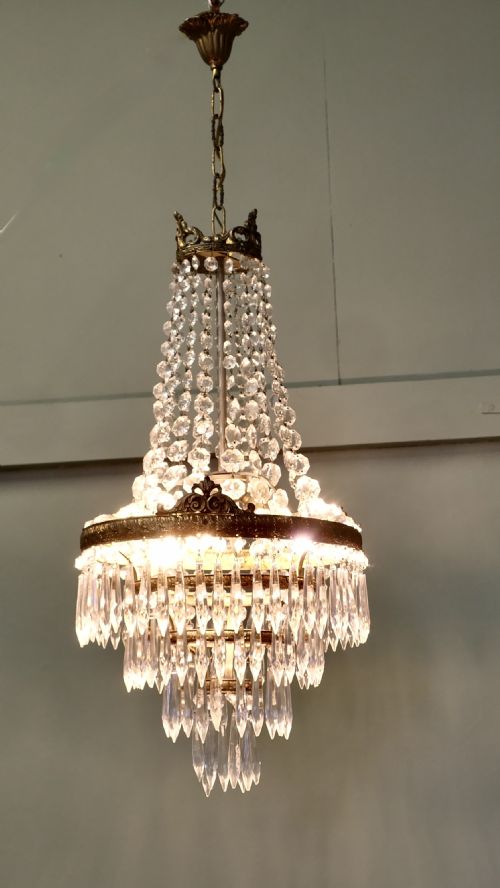
- A specific configuration where crystal beads form an upper tent shape above a cascading tier of drops. This style maximises the surface area of reflective glass.
- Bag chandelier
- A fixture enclosed in a bag-like net of crystal drops suspended from a circular metal band. This compact form gained popularity for lower ceilings.
- Maria Theresa
- A distinct chandelier style characterised by flat metal arms covered with glass strips and secured with rosette pins. Originating in Austria, this design style became widely adopted across Europe.
Classic Crystal Ceiling Fitting: Frequently Asked Questions
How do I clean a crystal chandelier?
Maintenance involves gentle cleaning of individual glass and crystal drops using a mild solution and a soft cloth while the fixture remains supported.
Care must be taken to protect the underlying metal frame, whether brass, bronze, or gilded, from excess moisture during the process.
How do I date a crystal ceiling fitting?
Dating relies on examining the metal casting techniques, wiring methods, and specific stylistic traits associated with periods like the Edwardian era or the 1920s and 1930s.
Subtle shifts in proportion and metal finishing help distinguish nineteenth-century examples from later twentieth-century revivals.
Where should I hang a crystal chandelier?
These fittings find their natural home in principal reception rooms, dining spaces, or entrance halls where adequate ceiling height allows the fixture to hang freely.
Placement should account for both the physical clearance beneath the lowest drop and the visual balance of the room's proportions.