
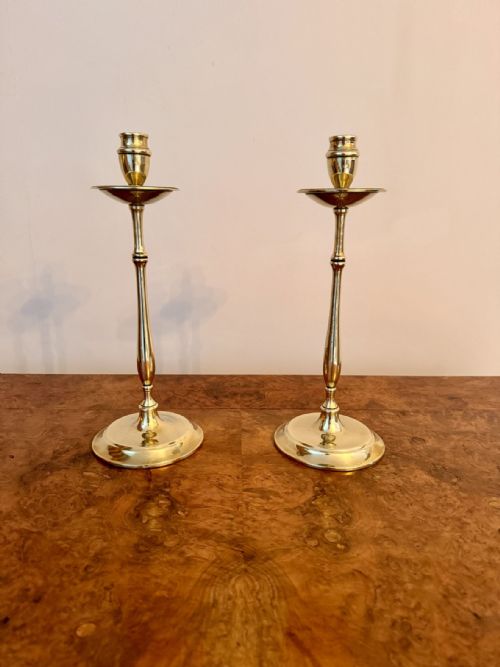
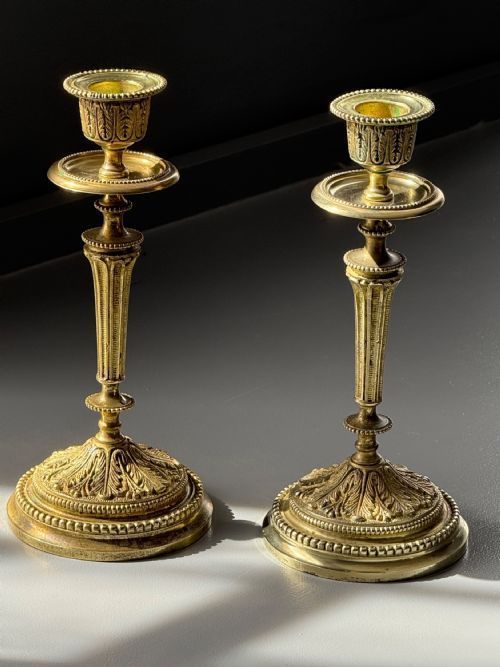

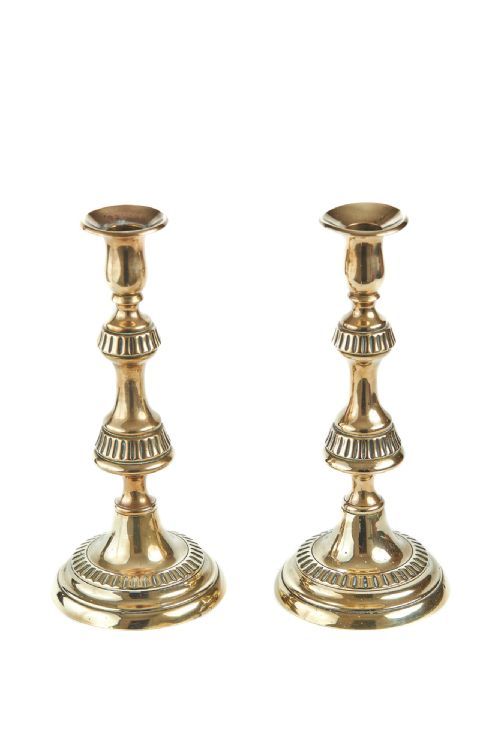


Classic Brass Taper Stand
These classic brass taper stand items bring enduring form and utility to any room, offering the warm gleam of period metalwork.
Classic Brass Taper Stand
A classic brass taper stand buyer looks at candlesticks spanning the eighteenth, nineteenth, and early twentieth centuries. These metal items take various forms, from single examples on fitted bases to matched pairs originating in Georgian, Victorian, and Edwardian periods.
The versions most commonly met on this page include Georgian petal based designs, mid eighteenth century seamed brass ejector candlesticks, and Louis XVI style gilt bronze pieces. Makers utilised traditional casting and construction methods suited to each era's prevailing aesthetic.
How they were made
Makers fashioned these pieces primarily from brass, solid brass, gilt bronze, and ormolu. Construction techniques ranged from seaming metal sheets to casting solid forms, depending on the desired weight and decorative detail.
Georgian and Victorian artisans applied finishing touches by hand, creating petal bases and ornate surfaces that reflected the traditional styles of the workshop. Gilt bronze and ormolu examples received fine surface treatments to achieve their distinct metallic lustre.
Listings span from the mid eighteenth century through the Victorian and Edwardian eras, utilising brass, gilt bronze, and ormolu.
What varies in quality
The highest quality pieces exhibit crisp casting details and substantial weight in the metal, particularly in solid brass and gilt bronze examples. Finer items retain their original proportions and surface patination without excessive smoothing from polishing.
Simpler or later productions often show less refined casting and lighter construction materials. The distinction lies in the precision of the joints, the integrity of the base, and the overall harmony of the period design.
The Classic Brass Taper Stand Glossary
- Brass
- An alloy of copper and zinc used extensively for domestic metalware due to its durability and warm appearance. It takes a polish well and ages with a characteristic dark patina.
- Ormolu
- A finely ground high-carat gold powder applied to a bronze base, historically known as gilt bronze. This finish provides a rich, golden decorative surface.
- Ejector
- A mechanical device incorporated into candlesticks featuring an internal slide to push out the remaining candle stub. This practical addition appears in eighteenth-century designs.
- Petal base
- A distinctive foot shape resembling overlapping flower petals, commonly found on Georgian candlesticks. This stylistic choice adds sculptural weight to the base.
Classic Brass Taper Stand: Frequently Asked Questions
What is a taper stand?
A taper stand holds a thin wax taper used historically for melting sealing wax or lighting lamps.
These small lighting devices provide a focused flame and sit comfortably on desks or mantelpieces.
How do I date brass candlesticks?
Dating relies on examining construction methods, base shapes, and metal composition across different centuries.
Georgian pieces often feature petal bases or seamed construction, while Victorian examples lean towards heavier ornamentation.
Where should I place them?
These pieces suit mantelpieces, side tables, or dining settings where their metallic finish catches the light.
Pair them with complementary antique accessories to create a balanced period display in a room.
Are they difficult to clean?
Cleaning requires minimal effort using a soft cloth to preserve the natural aged patina of the metal.
Avoid harsh chemical polishes that strip away the historical character accumulated over decades of use.