


Turned Brass Candle Holder
A turned brass candle holder brings immediate warmth to a room, offering the satisfying weight and honest craftsmanship of past centuries.
Turned Brass Candle Holder
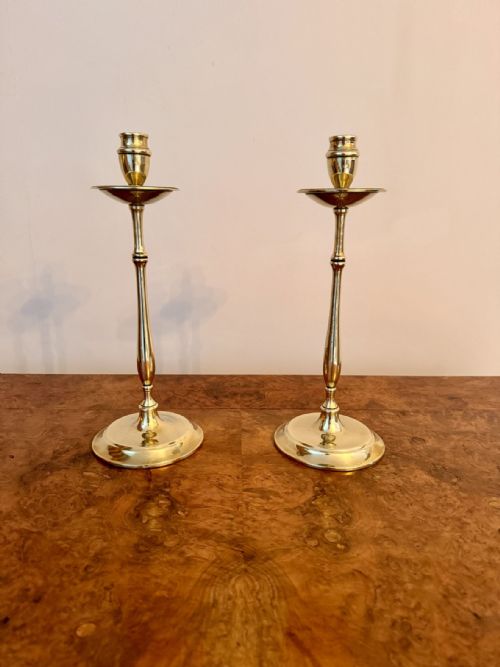
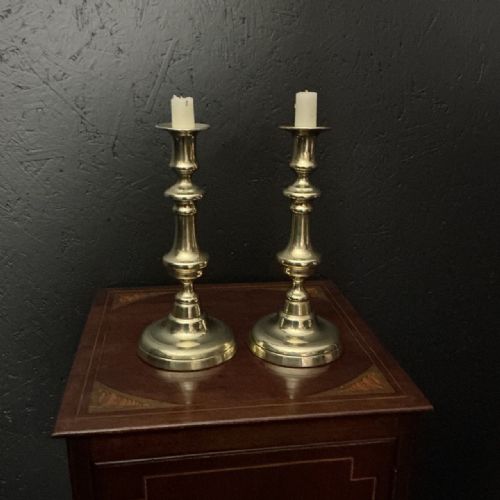
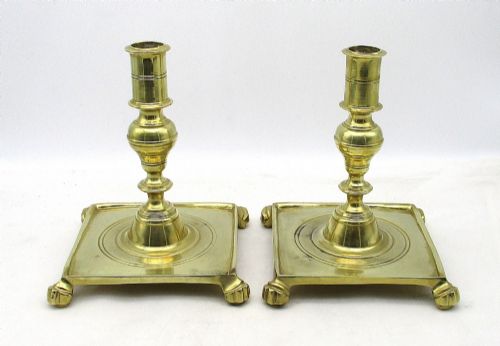
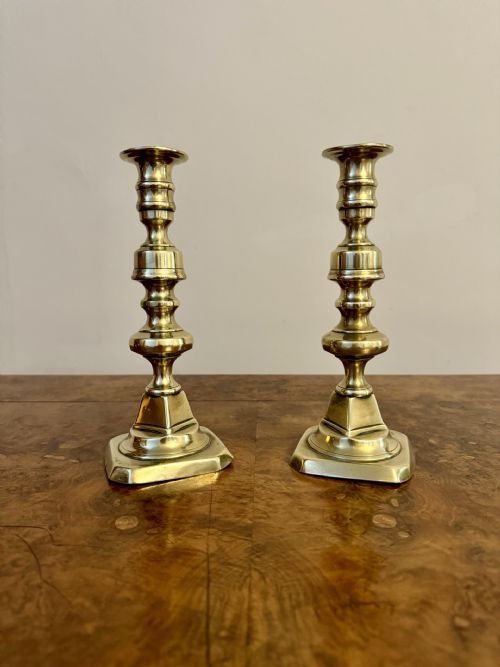
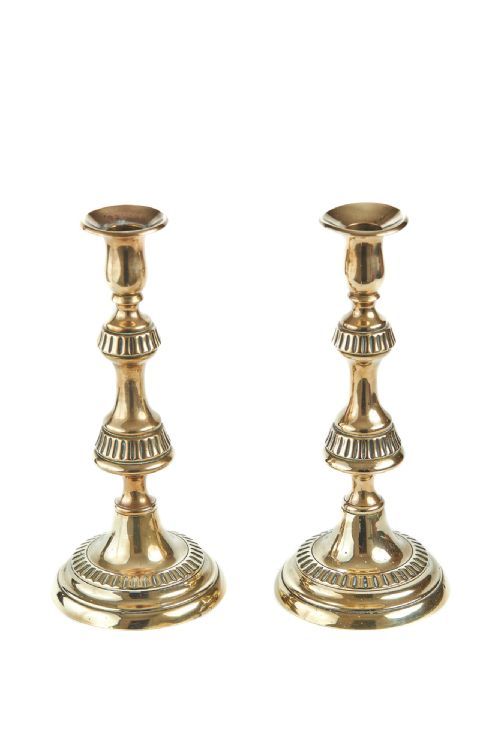
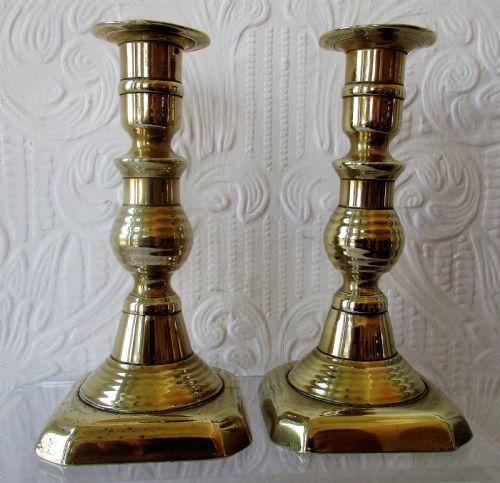
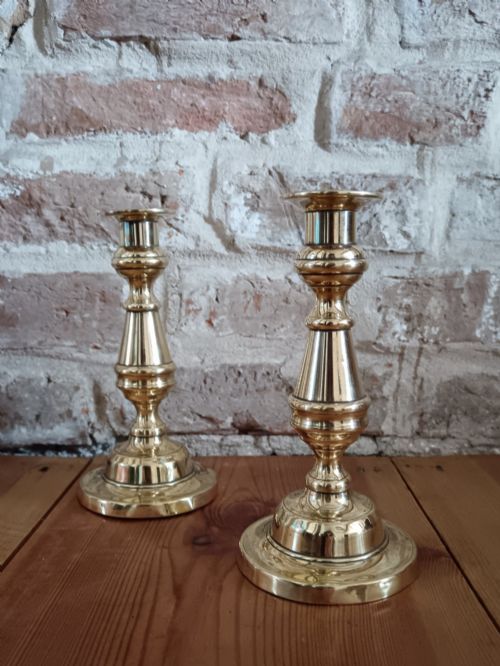
A turned brass candle holder typically takes the form of a candlestick or chamberstick designed to support tallow or wax candles safely on a table, desk or sideboard. When searching for a turned brass candle holder, buyers encounter various interpretations spanning the Georgian, Victorian and Edwardian eras, alongside revival styles that emulate earlier centuries.
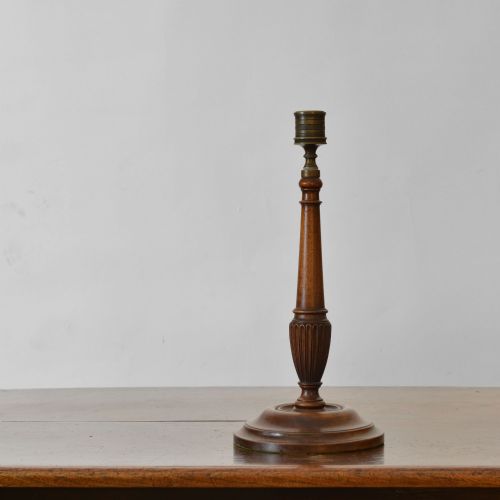
The selection on this page leans heavily towards Victorian and late nineteenth-century examples alongside Georgian pieces, often found in pairs. Alongside solid cast and turned brass, makers frequently combined brass with timber components such as mahogany, oak, teak and walnut to create pleasing textural contrast.
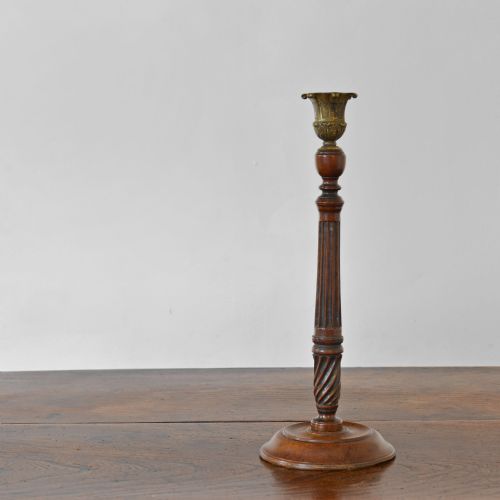
Forms range from simple domestic lighting to taller decorative pairs designed for prominent display on mantelpieces or dining tables. The presence of wood, whether through mahogany shafts or oak barley twist columns paired with brass drip pans and bases, demonstrates the versatility of these domestic objects.
How they were made
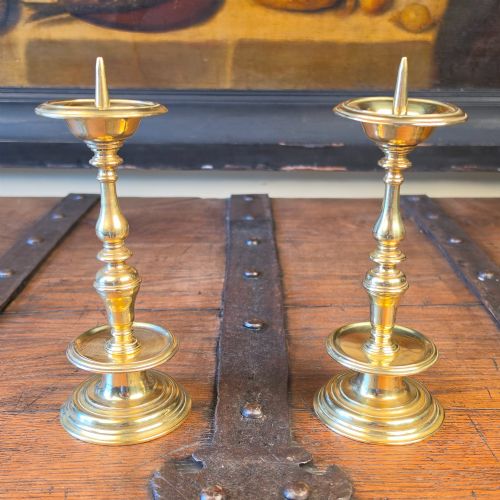
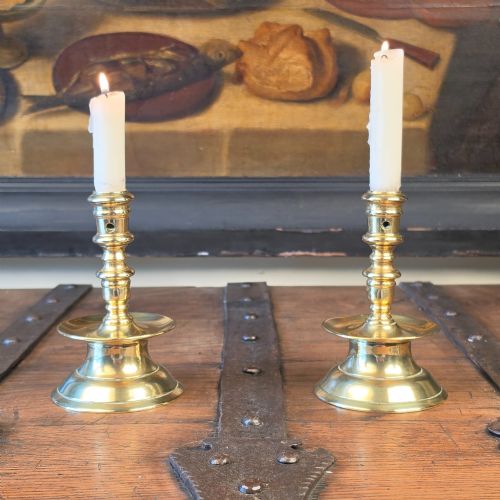
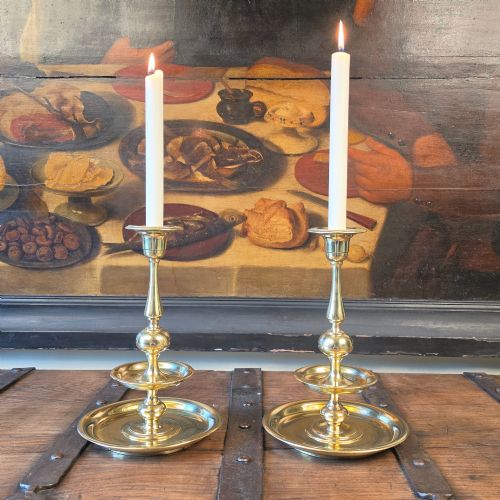
Makers utilised brass casting and lathe-turning techniques to shape the metal components, producing clean geometric profiles and smooth cylindrical columns. Sections of brass were often cast in pieces and joined together, or turned on a lathe to create the characteristic stepped bases and slender shafts seen on this page.
When timber was introduced, turners shaped woods like mahogany, oak, walnut and teak into bobbin or barley twist columns, mounting them with brass socket tops and weighted bases. This combination required precise carpentry to secure the metal birmingham-style sockets firmly to the wooden stems without splitting the material.
Listings feature oak, mahogany, walnut, teak and gilt bronze alongside solid brass.
What varies in quality
Quality rests in the crispness of the turning and the substantial weight of the metal or timber used in construction. Better examples display clean, deep mouldings and securely fitted components that do not wobble when handled.
Proportion and balance dictate the appeal of each piece, with superior specimens showing thoughtful design between the width of the base and the height of the stem. The integration of brass and wood on mixed-material pieces reveals the maker's skill in joining disparate elements cleanly.
Frederick J Smith & Co·Wm Tonks & Sons·Abel Landry
The Turned Brass Candle Holder Glossary
- Pricket candlestick
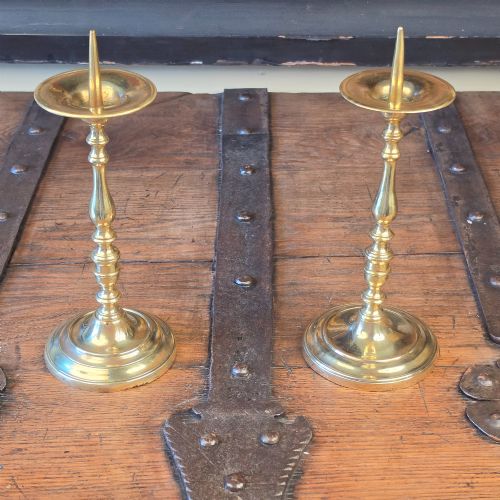
- A candlestick featuring a sharp metal spike at the top designed to impale the base of a wax candle, rather than holding it in a socket. This traditional form appears frequently in early revival styles.
- Ejector candlestick
- A domestic candlestick containing an internal sliding mechanism operated by a small side lever to push out the remaining candle stump. Late Georgian and Regency examples often include this practical device.
- Chamberstick
- A low candle holder featuring a wide drip pan and a loop handle, designed to be carried safely around a house at night. These often incorporate matching snuffers tucked into the side.
- Barley twist
- A decorative spiral carving resembling a twisted rope, executed on wooden stems or metal shafts during the nineteenth and early twentieth centuries. This technique adds dynamic movement and texture to the silhouette.
- Petal base
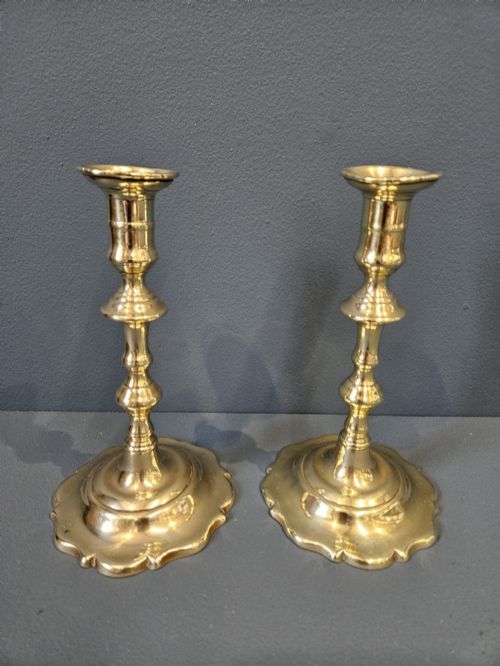
- A candlestick base formed with multiple rounded lobes spreading outward like flower petals, commonly found on Georgian brass examples. This weighted footprint provides stability.
Turned Brass Candle Holder: Frequently Asked Questions
How do I date a brass candlestick?
Dating relies on observing manufacturing techniques, base construction, and stylistic clues such as the transition from solid cast petal bases to multi-part assembly methods. Wear patterns around the socket and the presence of ejector mechanisms also help establish the likely period of manufacture.
Later Victorian and Edwardian pieces often exhibit machine-threaded components and lighter construction compared to their heavier Georgian predecessors. Examining the underside of the base frequently reveals casting marks or construction details specific to certain decades.
What is an ejector candlestick?
An ejector candlestick incorporates a concealed internal push-rod linked to a thumbpiece on the stem, allowing the user to eject a stuck candle stump easily. This clever mechanical feature gained popularity during the late Georgian and Regency periods.
By sliding the lever upward, the internal disc rises to clear out leftover wax without damaging the socket. Finding a working ejector mechanism adds considerable practical charm to these antique pieces.
Are wooden and brass candlesticks antique?
Many candlesticks combining turned wood and brass date from the Victorian and Edwardian eras, when mixed-material furnishings enjoyed widespread popularity. Woods like mahogany, oak and walnut were frequently turned on lathes and fitted with brass sockets.
These combination pieces were used to bring warmth and varied texture into domestic interiors alongside polished metal wares. Inspecting the joinery and timber patination confirms their period authenticity.
How should I clean antique brass?
Antique brass benefits from gentle dusting and occasional cleaning with a soft cloth to preserve its natural patination and aged warmth. Harsh chemical polishes should be avoided because they strip away the accumulated character of centuries.
Allowing the metal to retain its darker recessed areas highlights the crisp details of the turning and casting. Regular soft wiping keeps the surface stable without altering its historic appearance.