




Classic Brass Candlestick Lamps
Classic brass candlestick lamps bring warm metal tones and traditional illumination to a room, spanning Victorian, Edwardian, and nineteenth-century forms.
Classic Brass Candlestick Lamps
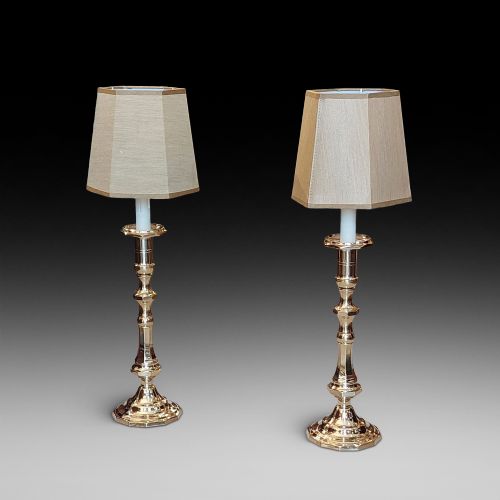
Classic brass candlestick lamps are lighting fixtures adapted from traditional candlesticks or manufactured as dedicated table and desk lamps, taking forms such as column lamps, bouillotte desk lamps, and multi-branch candelabra.
The pieces on this page appear in styles including Victorian, Edwardian, Regency, Louis XV style, Louis XVI style, and French Empire, reflecting domestic lighting needs across the nineteenth and early twentieth centuries.
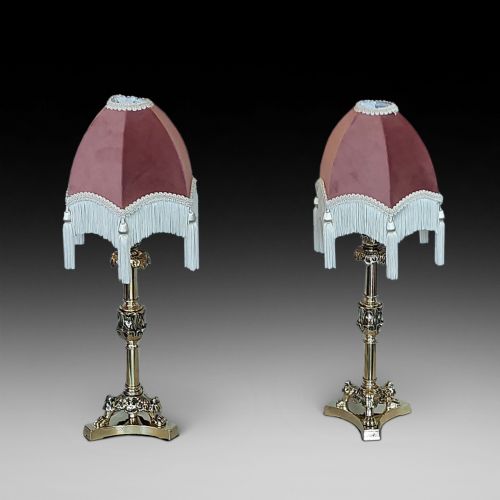
Buyers will find individual pieces alongside matched pairs and sets, utilising base materials like solid brass, bronze, and ormolu, frequently paired with fabric shades and fringe.
Materials and Construction
Construction relies heavily on cast and turned brass, bronze, or ormolu, with certain examples incorporating marble, wood, porcelain de Paris, and green toleware to vary the visual weight of the base.
Many items originate as period candlesticks or candelabra subsequently converted to electric table lamps, retaining their original structural metalwork while integrating modern wiring.
Additional decorative elements include fabric shades, fringe, and opaline glass mounted alongside the primary metal structures.
Listings feature pieces spanning the 1800s, Victorian, Edwardian, and 1920 periods, utilising brass, bronze, ormolu, marble, and fabric.
Assessing Quality and Execution
Quality in these pieces is dictated by the crispness of the metal casting, the weight and thickness of the solid brass or bronze, and the refinement of the period decorative style.
Finer examples demonstrate careful integration during the conversion from original candlesticks or feature complex multi-branch configurations with superior surface chasing and supplementary materials like porcelain de Paris or marble.
The Classic Brass Candlestick Lamps Glossary
- Ormolu
- Gilded bronze, frequently utilised in French furniture and decorative hardware. It provides a bright, rich gold-coloured surface finish on decorative metal objects.
- Bouillotte lamp
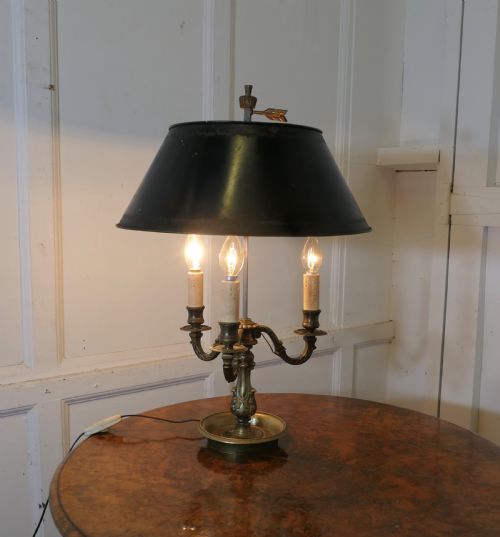
- An adjustable desk or table lamp featuring a central shaft, multiple candle arms, and a distinctive toleware shade. It originates from eighteenth-century card games.
- Candelabra
- A branched candlestick designed to hold multiple tapers. Many period examples are subsequently converted into electric lamps.
- Opaline
- A type of semi-translucent glass, popular in the nineteenth century for decorative vases and lamp bodies. It often appears in pastel shades.
- Toleware
- Painted or lacquered metalware, commonly used for lamp shades and desk lamp bodies. Green is a traditional colour for this material.
Classic Brass Candlestick Lamps: Frequently Asked Questions
What is a candlestick lamp?
A candlestick lamp is a lighting fixture formed by mounting electrical fittings onto a traditional candlestick base. They retain the slender profile of taper holders while providing modern illumination.
These pieces range from single-column Victorian designs to multi-branch French candelabra adapted for table use.
How do I identify a Victorian lamp?
Victorian lamps often feature heavy cast brass, ornate detailing, or combinations with opaline glass. They reflect the eclectic revival styles popular during the nineteenth century.
Look for robust construction and traditional column or stick forms typical of the period.
Where should I place a bouillotte lamp?
A bouillotte lamp works well on a desk, sideboard, or side table where its adjustable shade can direct light downward. Originally used for card games, it suits focused task lighting.
The classic metal shade and multiple arms make it a distinct focal point in traditional interiors.
Are these lamps converted from old candlesticks?
Many examples on this page started as eighteenth or nineteenth-century candlesticks and candelabra before being adapted for electricity. This conversion preserves period metalwork while adding modern wiring.
Other pieces were manufactured as dedicated electric table lamps during the Edwardian era or the 1920s.