


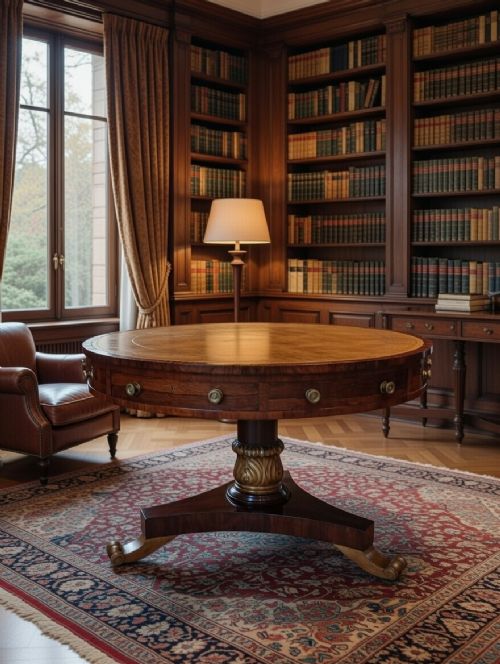
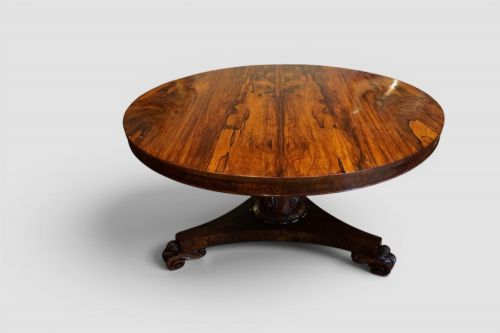
Circular Rosewood Pedestal Table
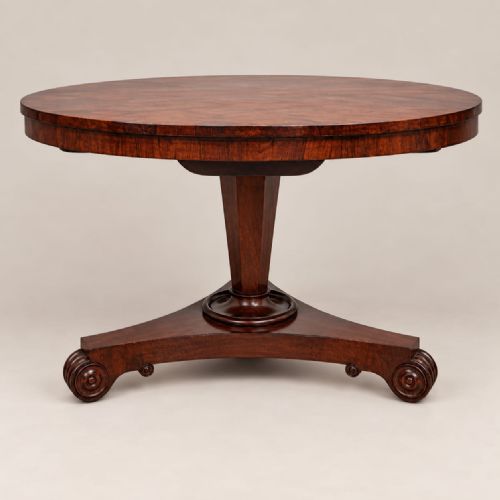
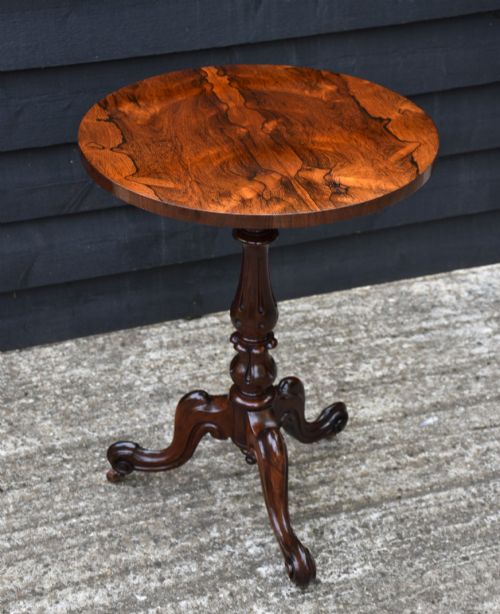
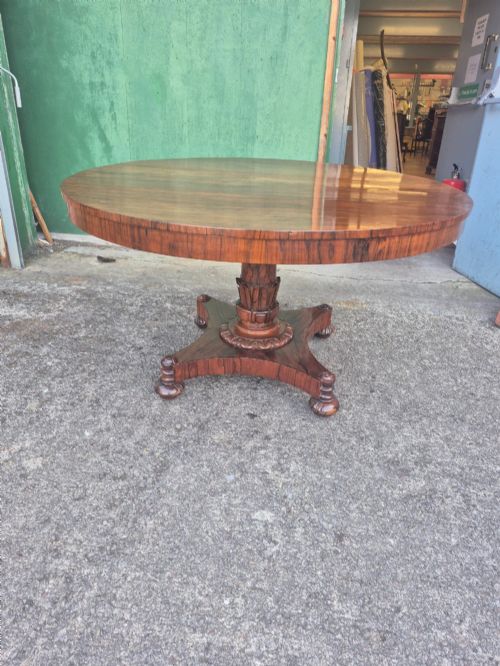
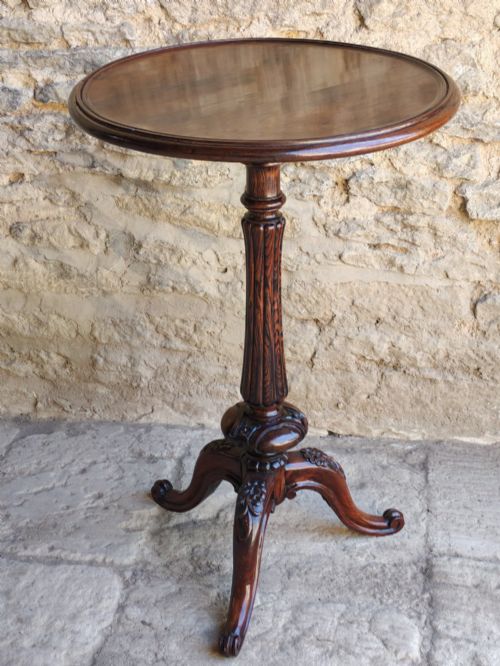
A circular rosewood pedestal table brings rich grain and solid proportions to a room, functioning as a dining piece, breakfast table, or lamp stand.
Circular Rosewood Pedestal Table
A circular rosewood pedestal table is a foundational form in nineteenth-century British furniture, appearing across the Regency, William IV, and Victorian periods.
The selections available here span small occasional and lamp tables up to large dining and library breakfast tables supported by central pedestals and triform or platform bases.
Makers of the period utilised the dense timber for centre tables, drum tables, and tilt-top formats designed to stand proudly in the middle of a room.
How they were made
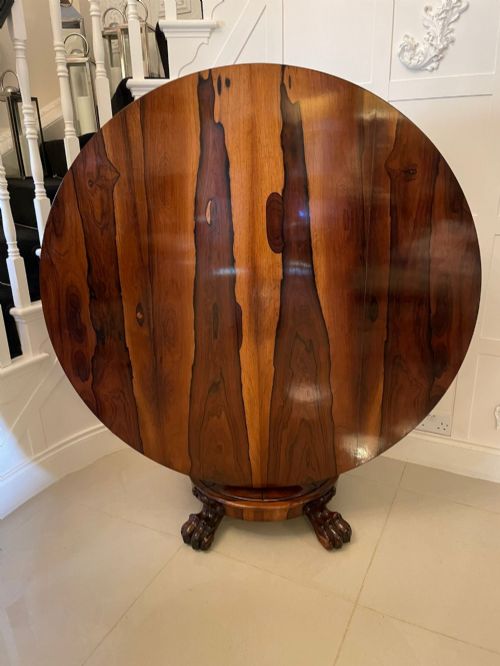
Cabinet makers applied figured rosewood veneer over solid timber carcases to display dramatic grain patterns, often pairing the dark wood with brass inlay or parcel gilt details.
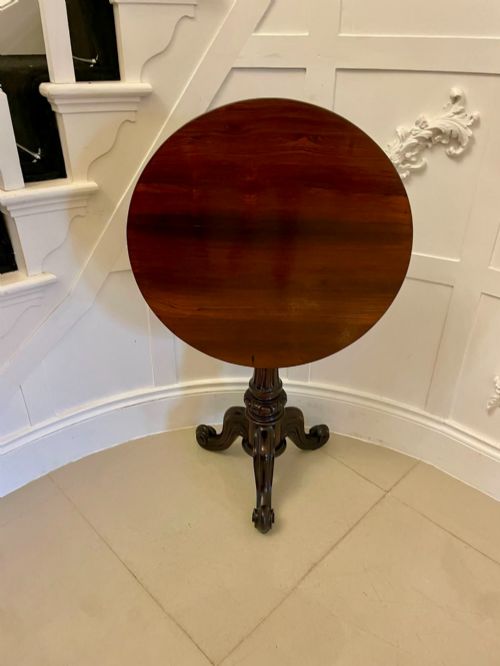
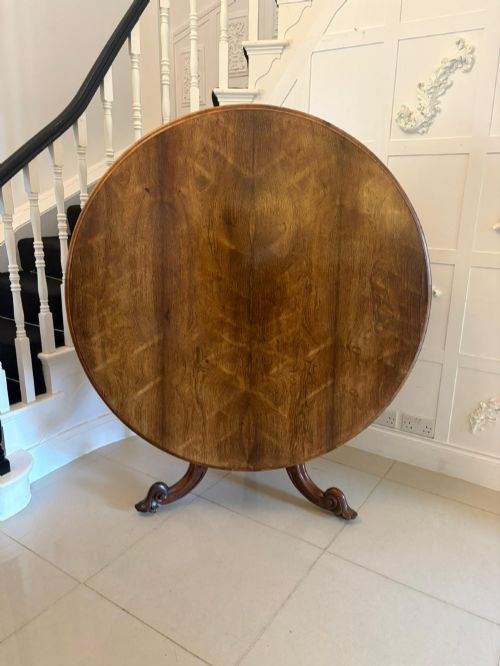
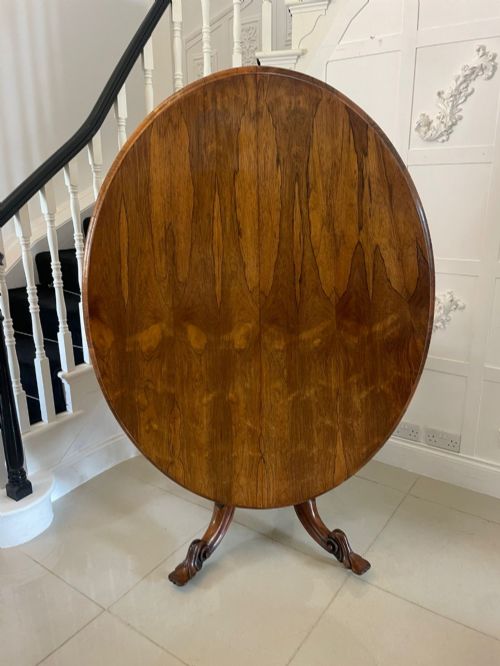
Many breakfast and dining versions incorporate tilt-top mechanisms, allowing the circular top to fold down vertically when not in use.
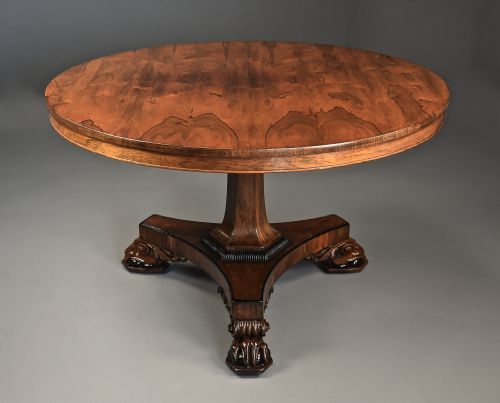
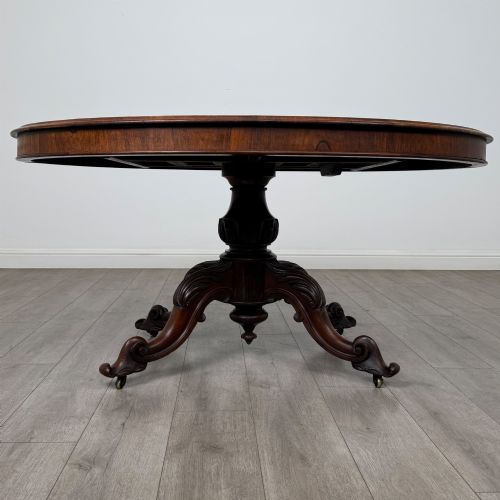
Heavy central pedestals rest upon triangular platforms or carved feet, sometimes incorporating substantial brass castors beneath the base for mobility.
Some nineteenth-century dining tables hide brass castors beneath heavy scrolled feet so servants could reposition the heavy rosewood without scratching the floorboards.
What varies in quality
The distinction between standard production and top-tier pieces rests upon the selection of timber, where expertly matched veneers create symmetrical grain patterns across the circular top.
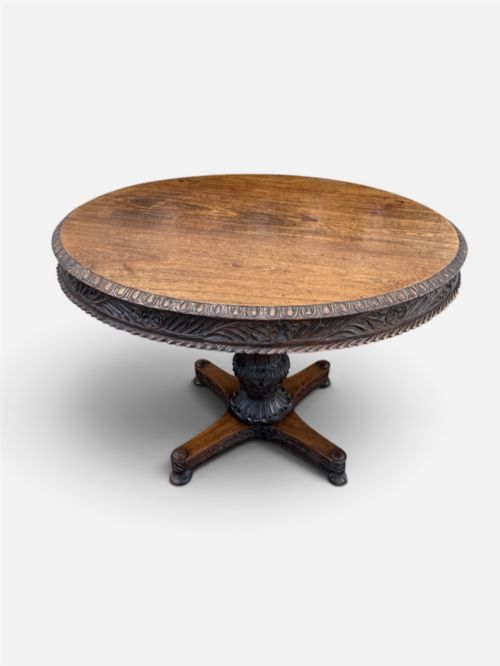
Carving execution defines the better examples, showing crisp relief work on the pillar and base rather than soft, repetitive machine shaping.
Structural stability in the pedestal and mechanism ensures the heavy top remains balanced without tilt or wobble over decades of use.
Peters of Genoa·Gillows
The Circular Rosewood Pedestal Table Glossary
- Pedestal table
- A freestanding table supported by a single central pillar rising from a stable base. This design replaced traditional four-legged configurations to allow uninterrupted seating.
- Tilt-top
- A hinged table top that rotates into a vertical position. This clever mechanism saved floor space in period drawing rooms.
- Drum table
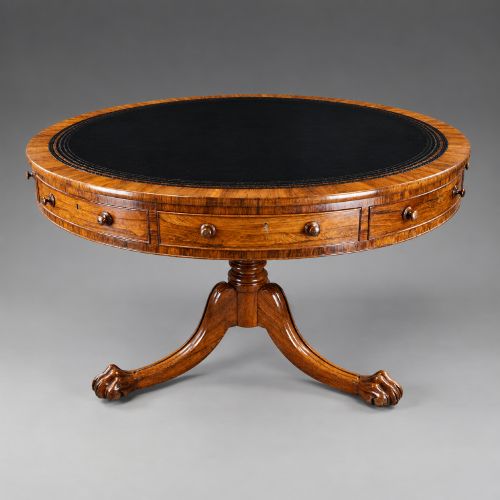
- A circular library table containing a deep frieze fitted with drawers. These pieces frequently feature leather-inlaid writing surfaces.
- Triform base
- A three-sided pedestal support characteristic of Regency and William IV design. It provides sturdy weight distribution beneath heavy rosewood tops.
Circular Rosewood Pedestal Table: Frequently Asked Questions
How are circular rosewood pedestal tables used today?
These tables adapt easily to modern interiors as centrepieces in large entrance halls, dining spots in compact kitchens, or lamp tables beside seating.
Their generous circular tops encourage conversation when utilised for dining or casual gatherings.
What periods do these tables come from?
Most examples date from the Regency, William IV, and Victorian eras spanning the early to late nineteenth century. Earlier pieces often display restrained neoclassical lines, whilst Victorian variations frequently showcase heavier carving.
Occasional twentieth-century revival pieces also appear among the selections.
What is the difference between a centre table and a breakfast table?
Centre tables generally remain stationary in the middle of a room for display or lamps, whilst breakfast tables historically served informal morning dining.
Breakfast tables more frequently incorporate the tilt-top function for convenient storage.