
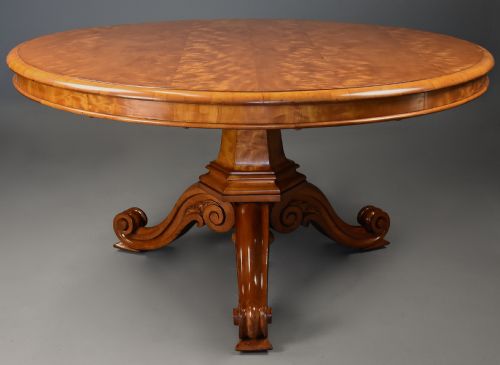
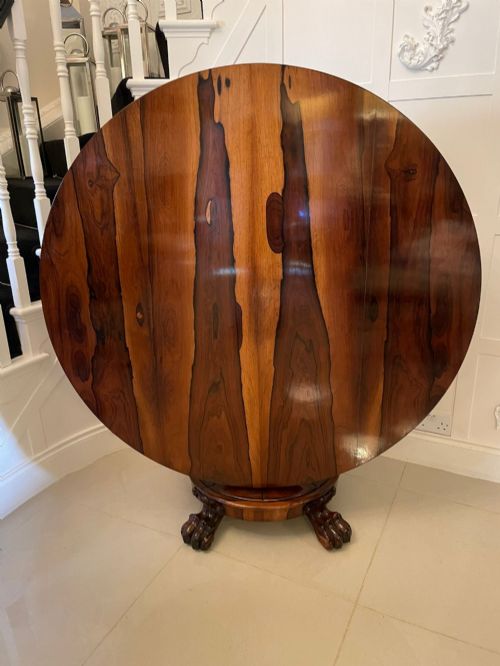
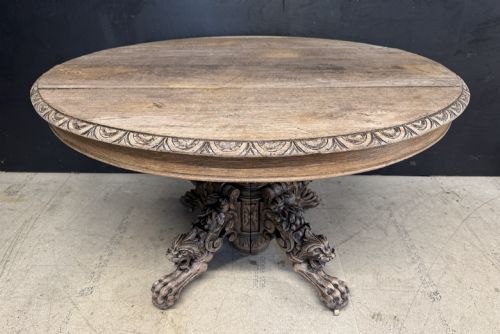
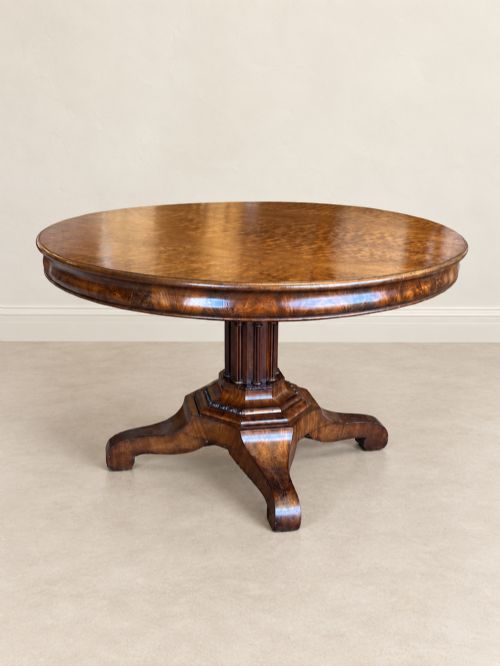


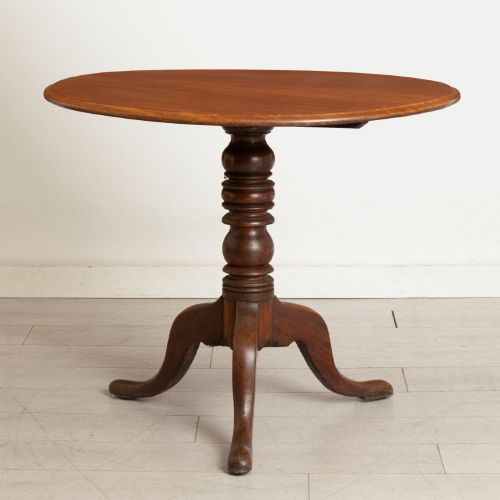
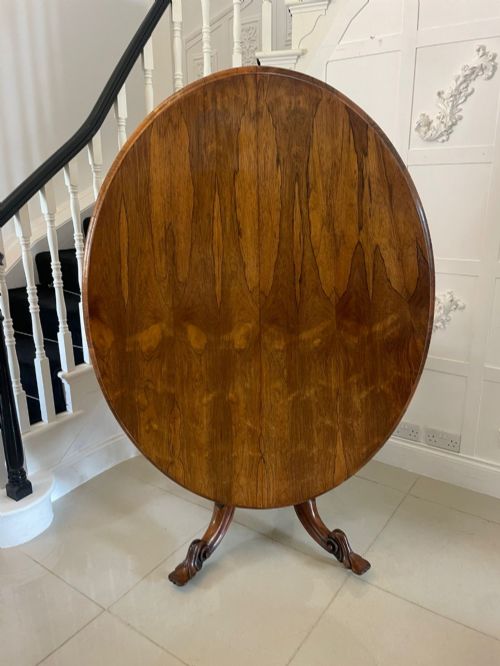
Circular Pedestal Breakfast Table
A circular pedestal breakfast table stands ready for morning dining or daily display, anchored by a solid central column.
Circular Pedestal Breakfast Table
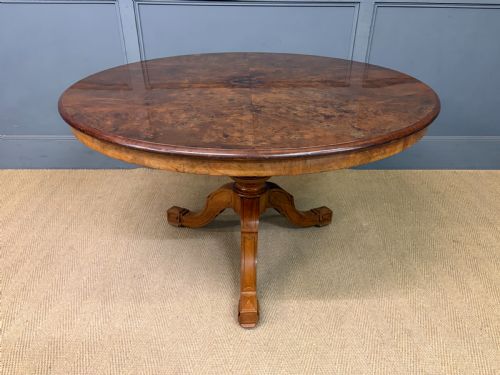
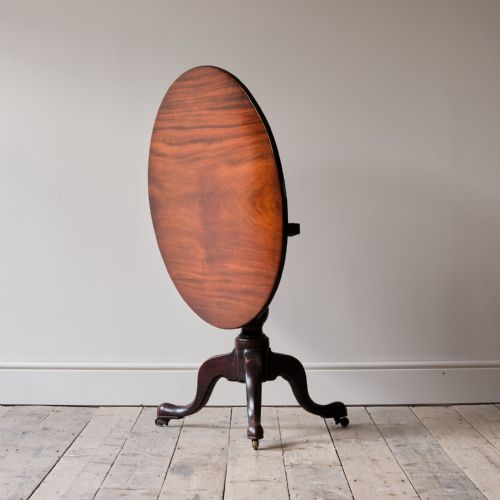
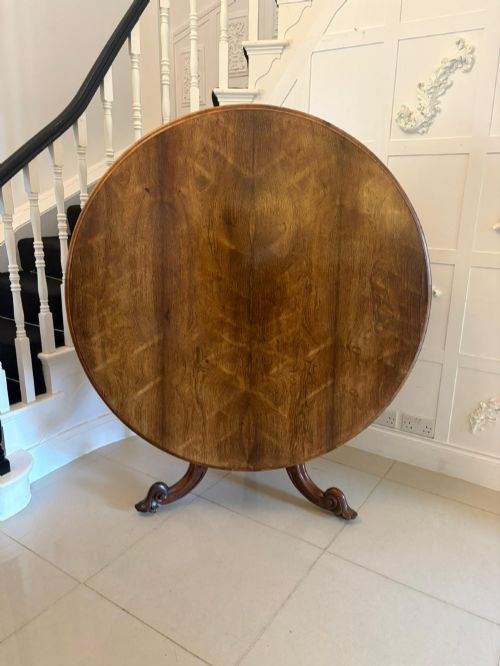
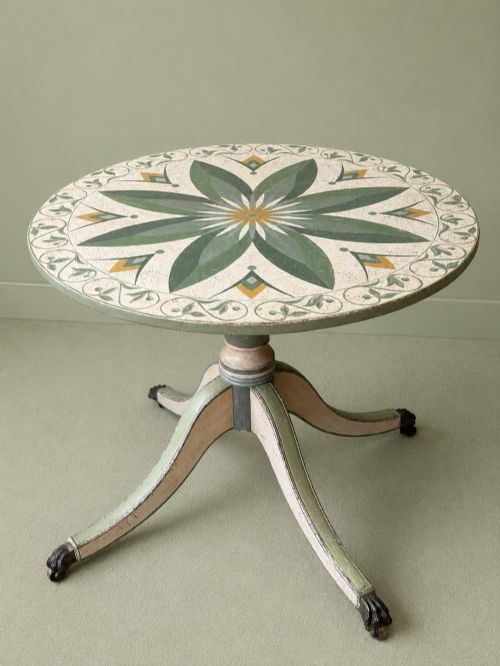
A circular pedestal breakfast table is a versatile domestic piece designed around a single central column rather than traditional corner legs. You will find these tables appearing across multiple eras, with the Victorian and Regency periods supplying the bulk of the examples on this page.
The form frequently incorporates a tilt-top or snap-top mechanism allowing the top to pivot upright when not in use. Proportions range from compact tripod bases suited for occasional use up to substantial four-foot dining formats intended for larger rooms.
Construction and Materials
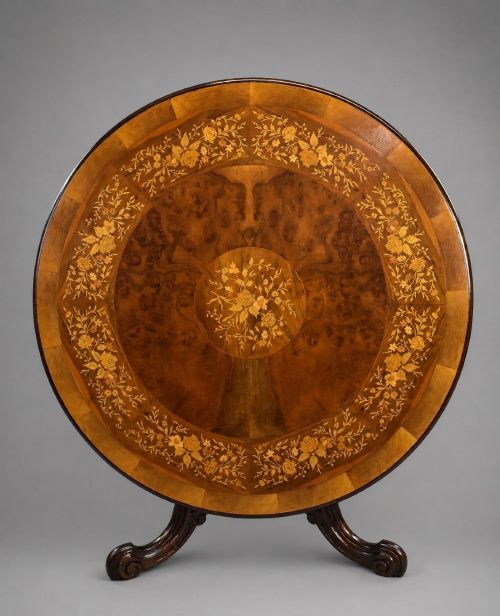
Cabinet makers utilised dense hardwoods like mahogany and rosewood, often applying figured veneers such as burr walnut, flame mahogany, or pollard oak across the circular surface. These timbers were selected for their rich grain patterns and durability.
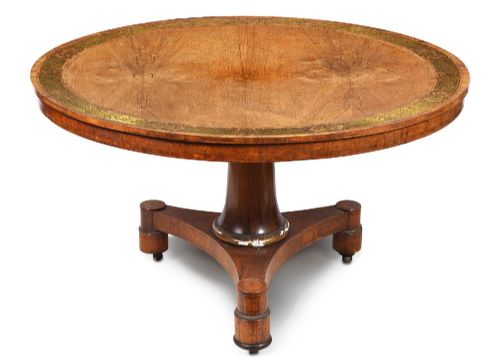
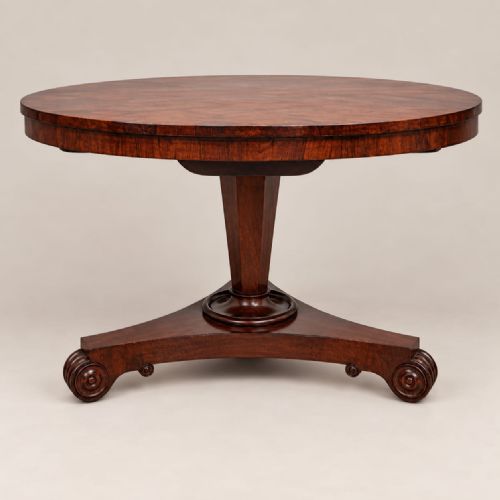
Structural stability relied upon heavy central pedestals mounted on triform or platform bases, frequently augmented with concealed brass casters to permit movement despite the considerable weight of the timber.
Materials documented across these listings include rosewood, mahogany, walnut, burr elm, coromandel, oak, and pine.
Quality Variations
The standard of timber selection and veneer matching defines the upper tier of these tables. Superior examples display continuous, symmetrical grain across the circular top rather than mismatched sections.
Carving detail on the pedestal and the precision of the tilt mechanism reveal the hand of a skilled workshop. Heavy, stable bases with crisp mouldings distinguish better pieces from simpler country alternatives.
Walker-Lancaster
The Circular Pedestal Breakfast Table Glossary
- Tilt top
- A hinged mechanism allowing the table surface to rotate into a vertical position for storage or clearance. This feature appears frequently on 19th-century examples.
- Triform base
- A three-way supporting foot structure radiating from the central column. It provides stability on uneven floors.
- Flame mahogany
- A veneer cut from the fork of the mahogany tree to produce a flickering, flame-like pattern. Makers utilised this on prominent surfaces for visual impact.
- Marquetry
- The art of applying pieces of veneer to a structure to form decorative designs and patterns. This technique decorates several walnut surfaces on this page.
- Centre table
- A freestanding table designed to be viewed from all sides rather than pushed against a wall. Many breakfast tables served this dual purpose.
Circular Pedestal Breakfast Table: Frequently Asked Questions
What is a circular pedestal breakfast table?
A circular pedestal breakfast table is a freestanding dining or centre piece supported by a single central column and base.
These tables date primarily from the Georgian, Regency, and Victorian eras and often feature tilting tops.
How do I use a tilt top table?
The top releases via a catch beneath the surface, allowing the timber disk to pivot upright against the pedestal.
This mechanism allowed historical households to push the furniture against walls when the room was needed for other activities.
How do I tell Regency from Victorian tables?
Regency pieces often display restrained classical lines, brass inlay, and rich flame mahogany veneers.
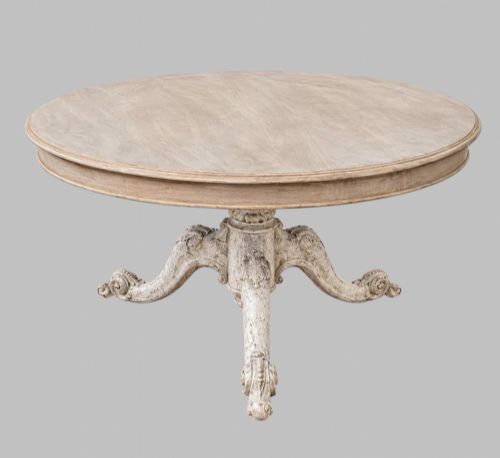
Victorian iterations tend towards heavier proportions, darker rosewood or walnut timbers, and more exuberant carved decoration on the central pillar.
Can these tables seat four people comfortably?
The central pedestal design removes corner legs, which actually improves legroom for diners seated around the perimeter.
Tables measuring around four feet across accommodate four chairs easily without obstruction from the base.