
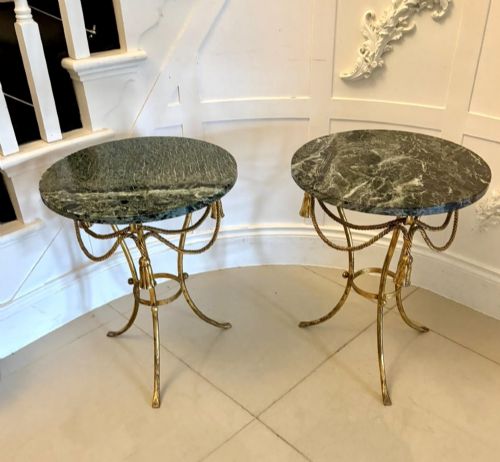
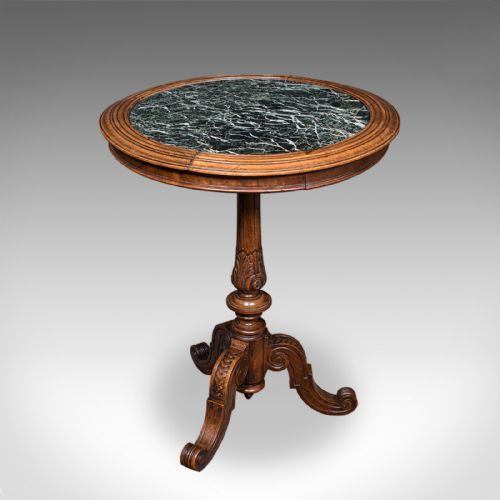


Circular Marble Top Stand
A circular marble top stand brings a solid stone surface into domestic spaces, prized for its cool utility and decorative presence.
Circular Marble Top Stand
When you search for a circular marble top stand, you encounter a diverse group of small tables, pedestals, and display surfaces designed for various domestic rooms. These pieces function as side tables, lamp stands, or dedicated display surfaces to elevate ornaments and plants.
The versions you are most likely to meet on this page span the nineteenth and early twentieth centuries, drawing on Victorian, Regency, French Neoclassical, and Chinese Qing Dynasty traditions. Forms range from tripod tables and gueridons to revolving book tables and cylinder cupboards.
Origins vary widely between English workshop traditions, continental European design, and Chinese carved hardwood furniture. Each region imparts distinct structural characteristics and decorative treatments to the foundational circular stone inset.
Materials and construction
Makers combined heavy stone surfaces with supporting frames built from hardwoods like mahogany, walnut, rosewood, and satinbirch. Metal components in brass, gilt bronze, and gilt metal frequently reinforce or adorn the structural timber.
Decorative techniques recorded in the evidence include parcel-gilt finishes, hand painting, gesso work, and intricate wood carving. Inset marble slabs are carefully fitted into wooden or metal tops to create stable, level surfaces.
Listings feature marble, brass, mahogany, and giltwood across nineteenth and early twentieth century periods.
Distinctions in quality
Quality rests upon the selection and integration of materials, particularly the grain of the timber and the character of the marble insert. Superior examples display harmonious proportions between the heavy stone top and the supporting base.
Finishing details distinguish finer work, such as precise brass inlay, careful carving on hardwood frames, and the quality of parcel-gilt or painted surfaces. The structural integrity of the joints determines how well the piece bears the weight of the stone over time.
The Circular Marble Top Stand Glossary
- Gueridon
- A small French table, often circular, designed to hold a light or decorative object. These pieces frequently feature prominent stone or marble tops supported by slender legs.
- Tripod table
- A small stand supported by three legs radiating from a central pillar. This form provides stability on uneven floors.
- Qing Dynasty
- The final imperial dynasty of China, spanning from sixteen-forty-four to nineteen-twelve. Furniture from this era often utilises carved dense hardwoods combined with inset marble panels.
- Regency
- An English stylistic period spanning the early nineteenth century. Pieces from this era often incorporate classical motifs and gilt wood or brass decoration.
- Parcel-gilt
- Partially gilded with gold leaf or paint over a painted or polished wooden surface. This technique highlights specific carved details on the frame.
Circular Marble Top Stand: Frequently Asked Questions
What were circular marble top stands used for?
These pieces served multiple domestic functions, including holding lamps, displaying decorative figures, or serving drinks.
Their sturdy stone surfaces made them practical for daily use in drawing rooms, bedrooms, and halls.
How do I care for the marble top?
Clean the stone surface with a soft, damp cloth and mild soap, avoiding acidic cleaners that can etch the polish.
Use coasters and protective pads to prevent moisture rings and scratches on older marble.
Where should I place this stand?
Position the piece beside seating as an accessible surface for lamps or cups, or use it as a standalone display pedestal.
Ensure it sits on a level floor to maintain the stability of the heavier stone top.
How can I tell French styles apart?
French Neoclassical and gueridon forms often lean towards refined gilt finishes and classical proportions.
Examine the framing and decorative motifs to distinguish continental European workshop practices from English equivalents.