
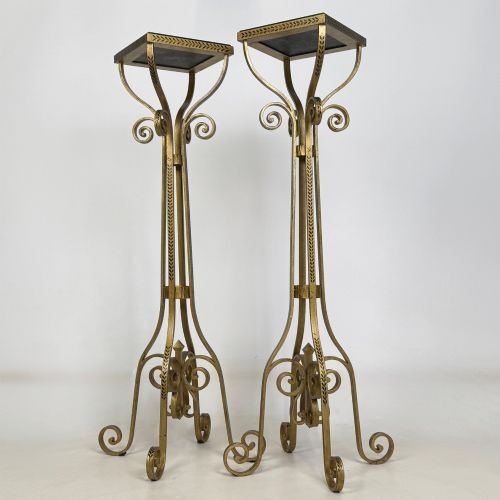

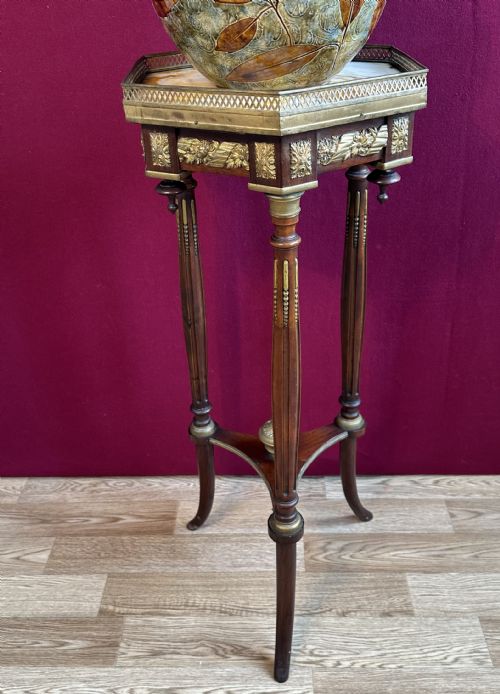

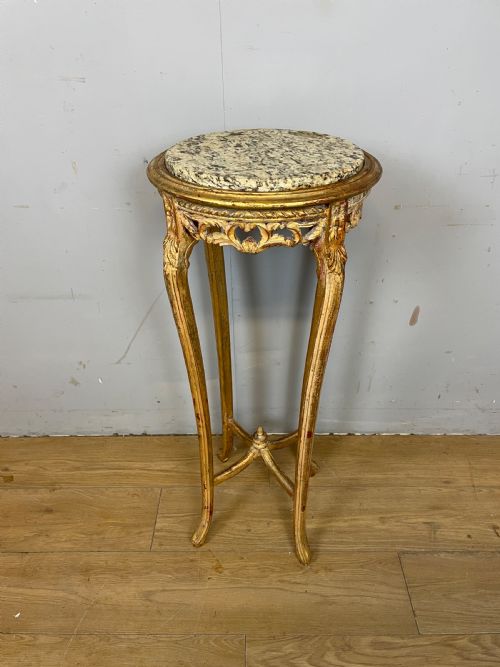


Marble Top Torchere Stand
A marble top torchere stand brings height and a cool stone surface to a corner, and these pieces span the 19th century through the Edwardian era in wood, giltwood, and kingwood.
Marble Top Torchere Stand
A marble top torchere stand functions primarily as an elevated display piece for plants, urns, or decorative objects within a room. When searching for a marble top torchere stand, buyers encounter forms ranging from slender torchere columns to lower occasional tables and plant stands.
The examples recorded here stretch from the Georgian and Regency periods through Victorian, Edwardian, and early 20th century iterations. French influences appear frequently through Louis XVI Revival and French Rococo styling alongside English cabinetmaking.
Makers utilised diverse formats including round tables, pedestal stands, and jardiniere tables. Walnut, rosewood, burr elm, and kingwood provide the structural timber foundations for the inset stone surfaces.
Materials and construction
Carved giltwood and gesso form the decorative framework for many of the grander French and English stands. Artisans shaped these wooden bases with intricate ornamentation before applying gold leaf or gilding.
Cabinetmakers employed exotic timbers such as kingwood and ebony alongside traditional walnut and rosewood for veneered structures. Ormolu mounts and glass details frequently accentuate the primary woods on continental pieces.
Inlaid marble slabs provide a durable, cool-touch upper surface designed to support heavy planters or ornaments. These stone tops sit flush within the wooden or gilded rims of the tables and pedestals.
Vernis Martin finishes bring simulated oriental lacquer into 19th-century French drawing rooms.
Distinguishing quality
The refinement of the carving distinguishes standard production from superior work. Crisp detail in giltwood acanthus leaves or moulded gesso reveals the hand of a skilled artisan rather than mass output.
Selection of timber veneers dictates the visual weight of the piece, with figured burr elm, rosewood, and kingwood demanding greater joinery expertise. The fit and thickness of the marble top within its mount further indicate the standard of construction.
The Marble Top Torchere Stand Glossary
- Torchere
- A tall stand originally designed to hold a candle or torch, now adapted for displaying decorative objects or plants. These pieces typically feature a slender profile to occupy tight corners.
- Giltwood
- Wood that has been coated with gold leaf or a gold-coloured metallic finish. This technique was widely favored for decorative French and English salon furniture.
- Kingwood
- A dense, heavily figured timber with dark violet-brown streaks used extensively in high-end French cabinetmaking. It often appears as a veneer on 19th-century pedestals.
- Ormolu
- Gilded bronze used for decorative mounts and decorative highlights on furniture. It provides a bright metallic contrast against dark woods and marble.
- Jardiniere
- An ornamental stand or receptacle designed to hold plants or flowers. These items often incorporate waterproof liners or inset trays beneath the plant surface.
Marble Top Torchere Stand: Frequently Asked Questions
What is a torchere stand used for?
A torchere stand elevates decorative objects, urns, or potted plants to bring height variation into a room layout. Their compact footprints make them suitable for lighting dark corners or displaying single focal items.
Historically designed for illumination, modern interiors utilise them primarily for display purposes where floor space is limited.
How do I clean a marble top?
Clean marble surfaces using a soft cloth dampened with warm water and a mild, neutral soap. Avoid acidic cleaners, vinegar, or harsh abrasives that can etch or dull the polished stone.
Dry the surface thoroughly after wiping to prevent water spots from forming on the porous mineral.
Are these stands sturdy enough for plants?
Most stands are structurally robust enough to support standard ceramic planters and heavy floral arrangements. The weight of the inset marble top also adds natural ballast to the base.
Care should be taken with exceptionally heavy specimens to ensure the timber legs or pedestal base remain stable on uneven flooring.
How do I date a wooden pedestal?
Dating relies on examining the secondary timbers, construction methods, and prevailing decorative styles of the period. Characteristics such as Regency rosewood work or Edwardian giltwood carving provide clear chronological markers.
Tool marks, fixings, and the wear patterns on the base offer additional clues to a piece's age and origin.