
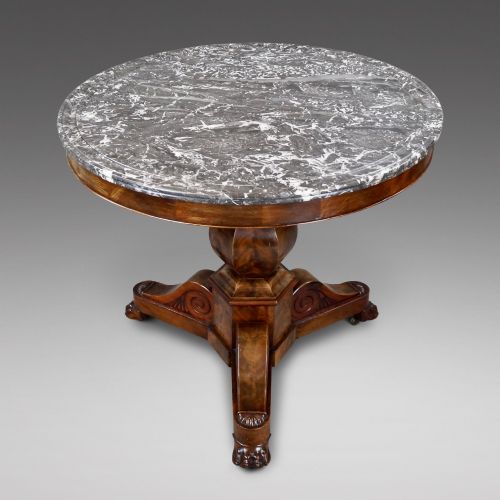
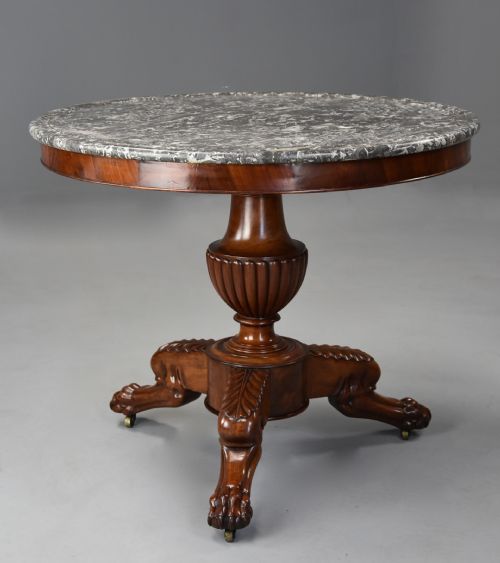
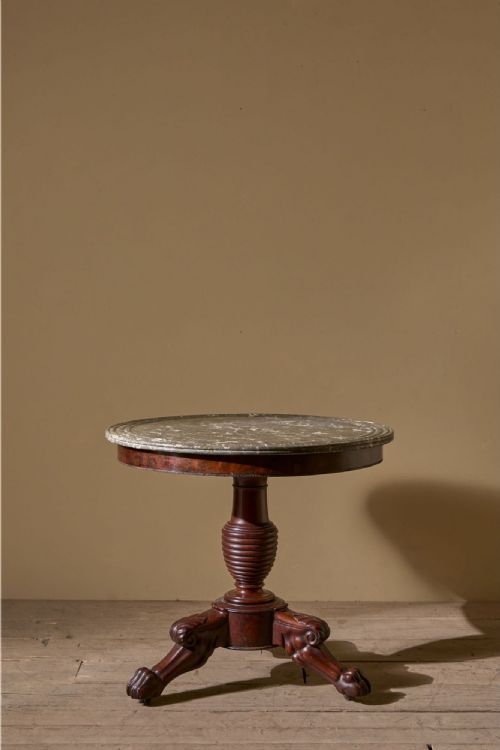
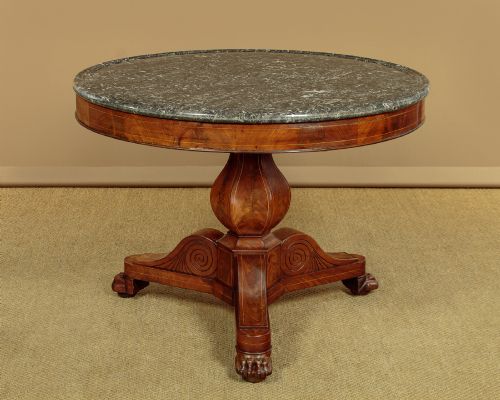
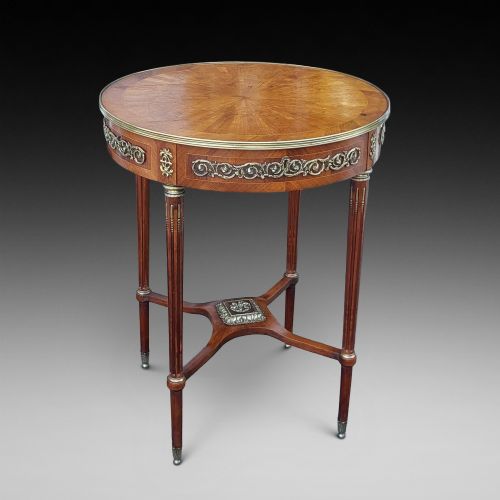
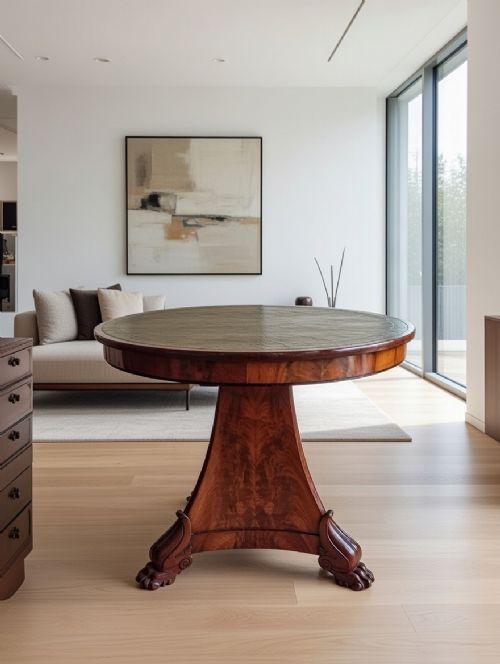
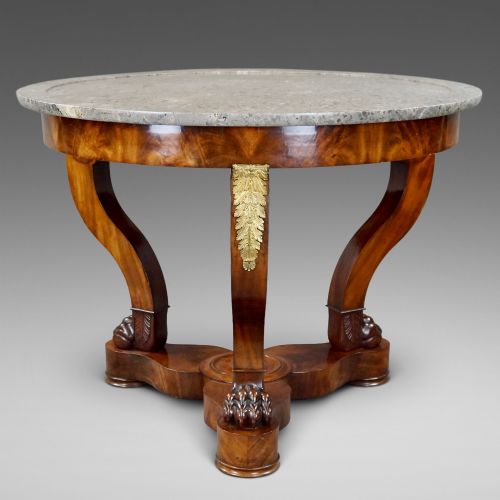
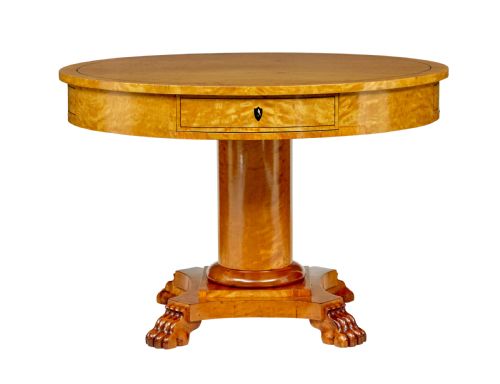
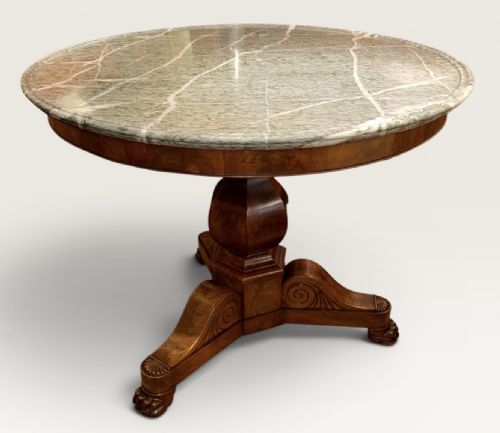


Circular Gueridon Table
A circular gueridon table brings classic French poise to a room, offering a slender pedestal base and a polished stone or timber top.
Circular Gueridon Table
When you search for a circular gueridon table, you look for a freestanding pedestal piece designed to sit in the centre of a room or serve as an occasional table. Most examples on this page hail from the nineteenth century, reflecting French Empire, Louis XVI revival and neoclassical tastes.
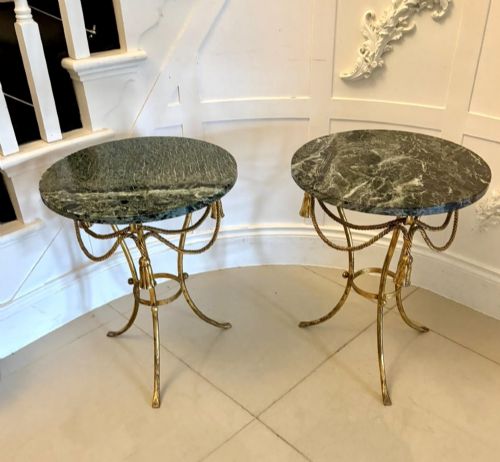
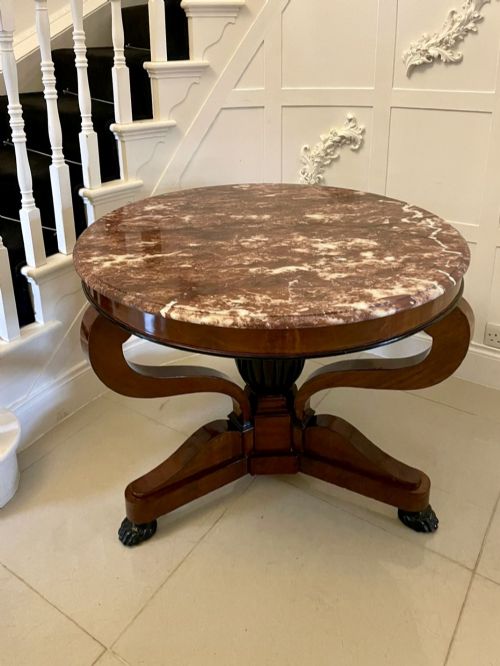
These items function as centre tables, lamp tables or wine tables, typically pairing a heavy circular top with timber or gilded metal supports. Makers often utilised marble, granite or travertine for the top surface, resting it upon a pillar and claw foot base.
The form developed across several decades, ranging from restrained mahogany designs to ornate gilt bronze and ormolu mounts. Buyers find both intimate occasional sizes and larger centre proportions among these offerings.
Materials and construction
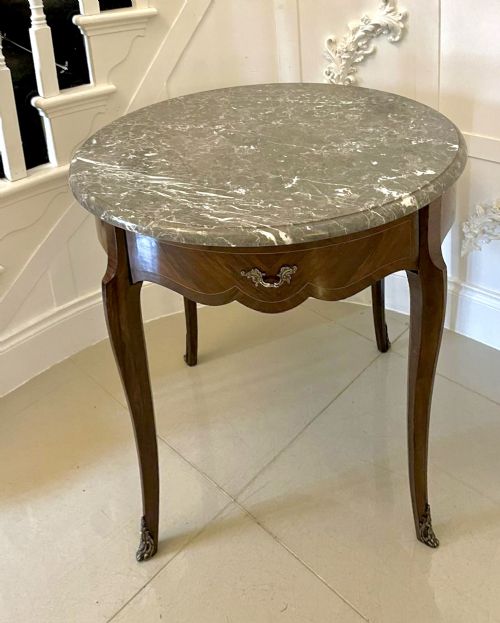
Cabinetmakers constructed the frames of these tables primarily from solid and veneered timbers, selecting mahogany, flame mahogany, walnut, kingwood and birch. Selected pieces incorporate painted finishes or satinwood stringing to add contrast to the timber ground.
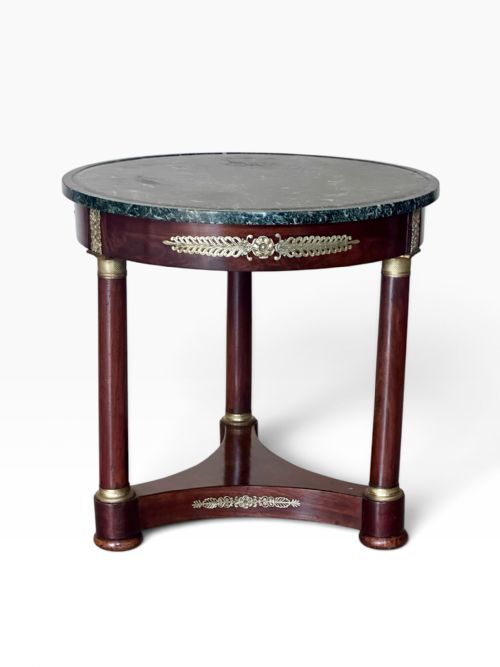
The defining characteristic of many pieces is the heavy inset top, carved from white, grey, verde or specimen marble, and occasionally travertine stone. Workshops integrated cast ormolu, brass and gilded bronze mounts, collars and gallery rails to decorate the structural joints and pedestal bases.
Some nineteenth-century tables feature hidden tilting mechanisms, designed so the heavy stone top could fold flat against the pedestal when not in use.
What separates the grades
Quality rests in the crispness of the bronze or ormolu mounts and the selection of the timber veneers. Superior examples display finely chased metalwork and well-figured flame mahogany or kingwood that wraps cleanly around the curved apron.
The integrity of the stone top and the stability of the central pillar dictate the grade of a piece. Finer tables balance heavy marble discs upon rigid, substantial pedestals without reliance on secondary bracing.
A Hugnet Paris
The Circular Gueridon Table Glossary
- Gueridon
- A small pedestal table originating in France during the seventeenth century. The form typically supports a circular top on a central column or tripod base.
- Ormolu
- Gilded bronze mounts applied to furniture for decoration. Artisans cast and chased the metal to produce crisp architectural details and foliage.
- Travertine
- A form of terrestrial limestone with a fibrous texture. Makers utilised this durable stone for circular table tops in certain twentieth-century pieces.
- Kingwood
- A dense, richly figured timber utilised for decorative veneering. Cabinetmakers favoured its contrasting dark and golden brown tones for nineteenth-century occasional tables.
Circular Gueridon Table: Frequently Asked Questions
Where should I place a circular gueridon table?
These pieces suit positions where foot traffic flows around all sides, such as the middle of an entrance hall or a spacious drawing room.
They also function effectively beside seating as a lamp table, where the round top prevents sharp corners from jutting into the walkway.
How do I identify a French Empire style table?
Look for architectural severity combined with classical bronze or ormolu mounts. Mahogany and kingwood dominate this aesthetic, often accompanied by strong vertical columns.
Pedestals frequently terminate in paw feet or tripartite platforms that anchor the heavy marble top.
What is the difference between a centre table and a gueridon?
In practical terms, the titles overlap heavily in nineteenth-century French furniture. A gueridon specifically denotes a small round pedestal table, whereas a centre table may adopt various geometric shapes.
Most items listed under both names share the same circular format and freestanding design.
How do I care for a marble top table?
Clean the stone surface regularly with a damp cloth and mild, neutral soap. Avoid acidic liquids like wine or lemon juice, which can etch polished marble.
Use coasters and protective mats beneath lamps and decorative objects to preserve the original finish.