
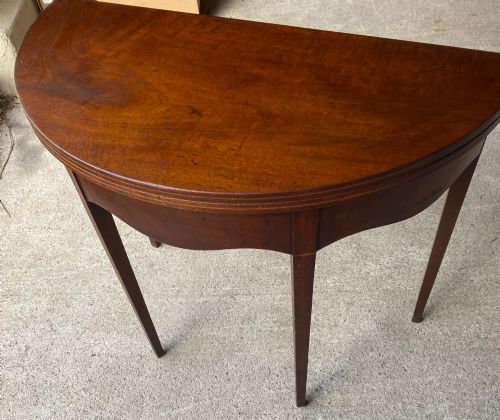
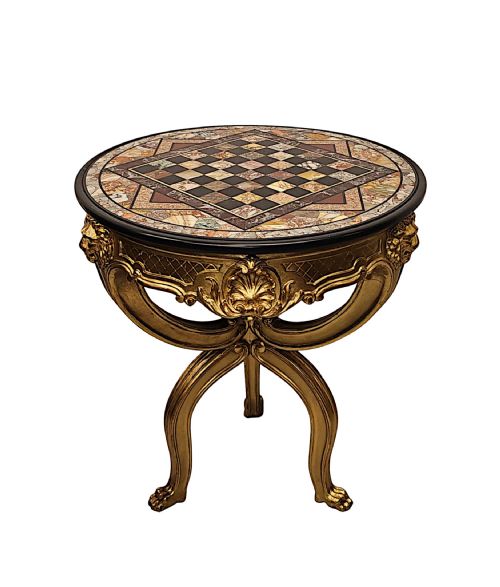
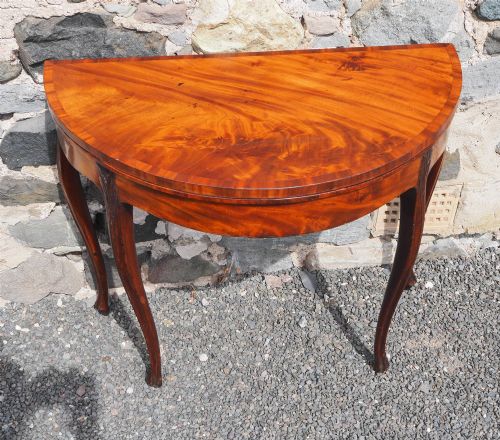
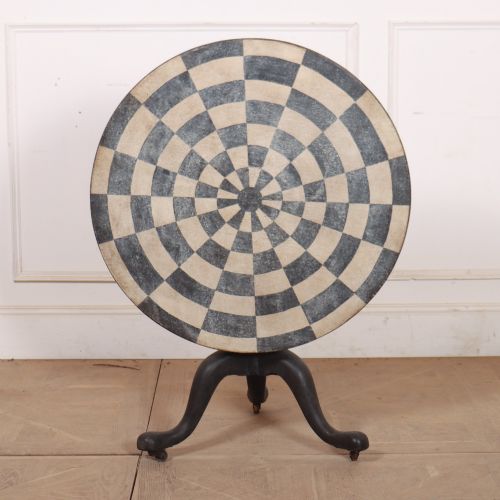
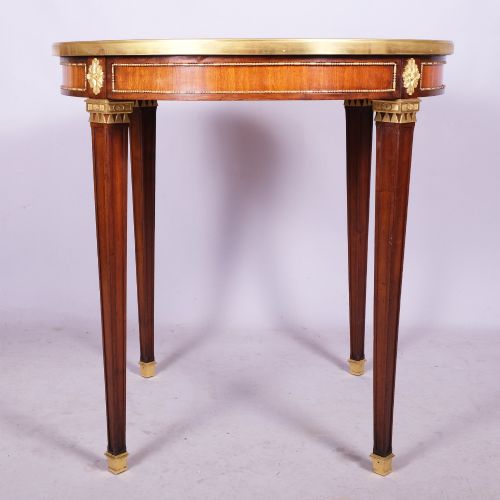


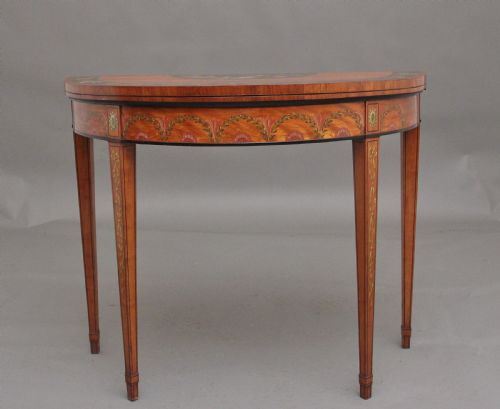

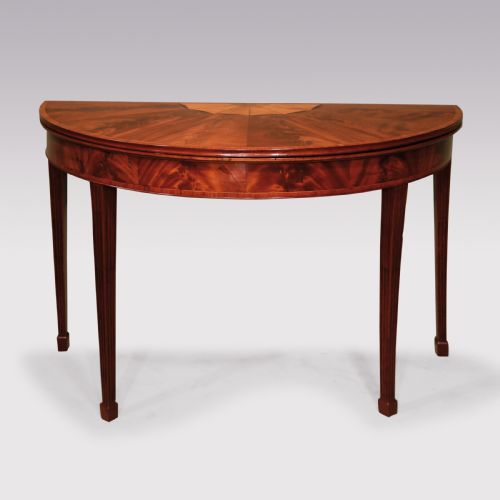

Circular Games Table
A circular games table offers a compact surface that transforms for play, bringing social history directly into your living room.
Circular Games Table
A circular games table provides a dedicated surface for pastimes like chess and cards while maintaining a domestic presence when folded or closed. Buyers seeking a circular games table encounter pieces spanning the Georgian, Regency, and Victorian eras, often featuring ingenious folding tops or revolving mechanisms.
The selection ranges from French marble-topped bouillotte tables to English walnut and mahogany designs with inlaid chess boards. These pieces served polite society for evening entertainment, functioning as side tables or occasional tables when not in use for gaming.
How they were made
Cabinet makers utilised dense timbers such as mahogany, rosewood, and walnut, frequently applying flame mahogany veneer to create striking visual depth on the top surface. Boxwood and satinwood stringing often outlines the geometric boundaries of the playing surface or border.
Structural complexity defines these items, particularly where pivoting tops, hidden compartments, or concentric trays require precise joinery. Brass fittings, galleries, and hinges provide both mechanical support and decorative contrast against the polished wood.
Several tables manage to hide entire chess boards and card surfaces within furniture that otherwise looks entirely innocent against the parlour wall.
What varies in quality
The refinement of the timber selection and the precision of the marquetry inlay mark the distinction between standard and superior examples. Finer pieces display matched veneers and intricate banding that demonstrate considerable workshop skill.
Mechanical integrity dictates everyday usability, with top-tier tables offering smooth rotation, stable folding leaves, and flush joints when closed. The crispness of carved details on the legs and the retention of original brass hardware further elevate the standing of a piece.
The Circular Games Table Glossary
- Bouillotte table
- A small French card table, usually circular, featuring a raised brass gallery around a marble top and candle sconces. It derives its name from a French card game popular in the eighteenth and nineteenth centuries.
- Marquetry
- Decorative veneer work formed by fitting together small pieces of different coloured woods, ivory, or shell to create pictorial or geometric patterns. This technique adorns the top surfaces of many finer gaming pieces.
- Demi-lune
- A half-moon shape, describing tables with a straight edge for placing against a wall and a curved front. Many card and console tables utilise this format to save space when folded.
- Spin top
- A rotating tabletop mechanism that allows the surface to turn and reveal a different function or storage compartment underneath. It represents a clever adaptation for multi-purpose domestic furniture.
- Chequer-board
- A squared grid pattern of alternating dark and light tiles used for games such as chess or draughts. This pattern is frequently inlaid directly into the timber top using contrasting woods.
Circular Games Table: Frequently Asked Questions
How were circular games tables used?
These tables served as the centrepiece for evening domestic entertainment, hosting card games, chess, and social gatherings in the parlour or drawing room.
When not in use for gaming, the fold-over or pivoting tops allowed the furniture to function as a standard occasional or side table against the wall.
What woods are most common?
Mahogany and walnut appear frequently across the selection, often enhanced by decorative veneers like flame mahogany or burr walnut.
Cabinet makers also incorporated satinwood, boxwood, and rosewood for contrasting borders, stringing, and intricate marquetry details.
How do I tell periods apart?
Georgian and Regency pieces tend to show clean architectural lines, brass stringing, and heavier use of solid mahogany or rosewood.
Victorian and Edwardian examples often feature elaborate marquetry, walnut veneers, and specific stylistic revivals such as Louis XVI influence.
Do all these tables fold out?
Many examples feature fold-over tops that double the surface area when opened, frequently revealing a baize-lined interior for playing cards.
Other variants utilise a fixed circular top, a rotating spin top, or an inset marble tray with a surrounding brass gallery.