





Circa 1900 Woven Rug
A circa 1900 woven rug brings centuries of nomadic and village heritage directly into a room through rich natural dyes and tactile tribal patterns.
Circa 1900 Woven Rug
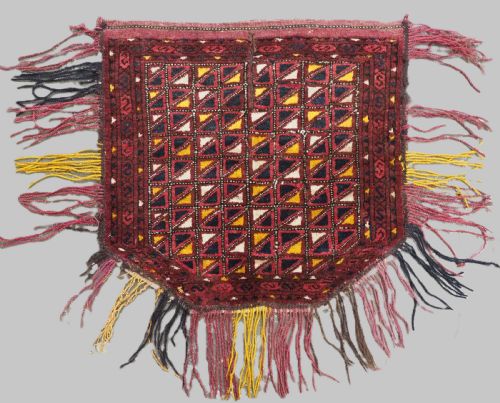
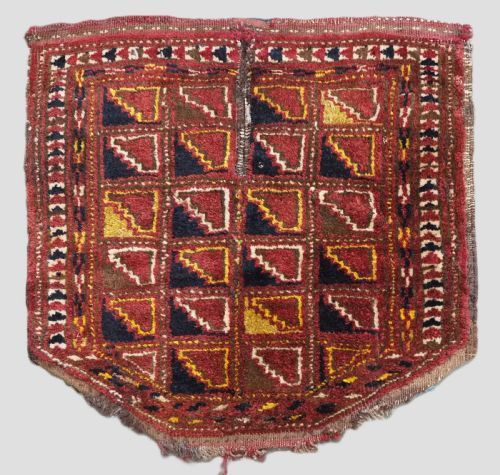
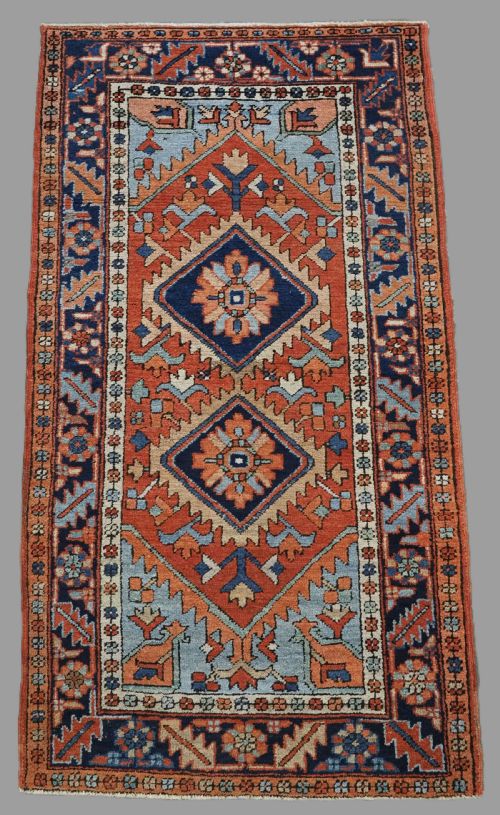
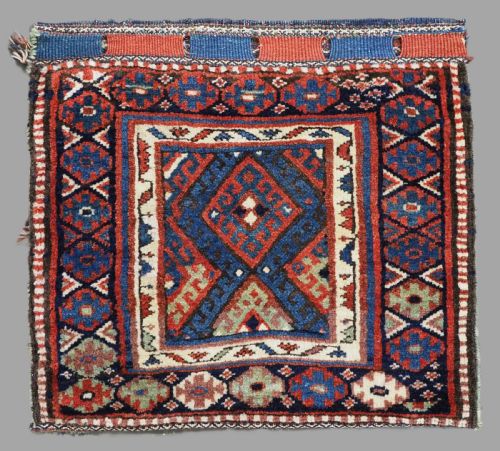
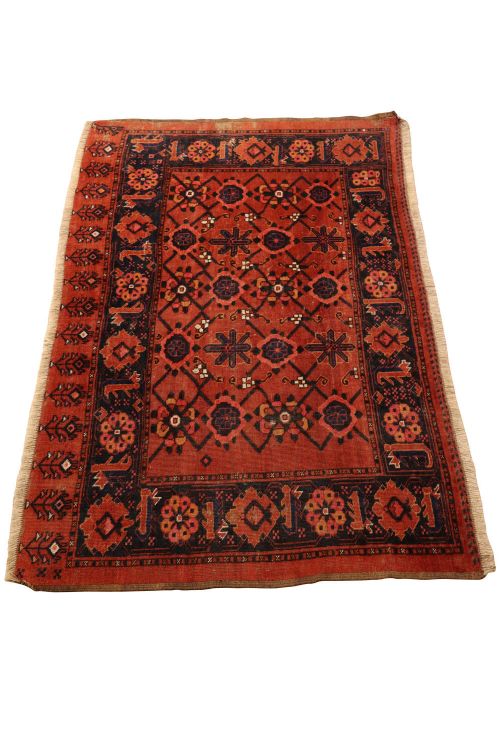
When searching for a circa 1900 woven rug, collectors encounter diverse nomadic and village textiles originating primarily from Persia, Central Asia, and the Caucasus. The selection spans utilitarian storage bags, saddle covers, horse blankets, and flatwoven kilims alongside room-sized carpets and runners. Turkmen, Uzbek, Baluch, and Persian tribal groups dominate the pieces available, reflecting traditional household and utilitarian weaving practices from the turn of the twentieth century.
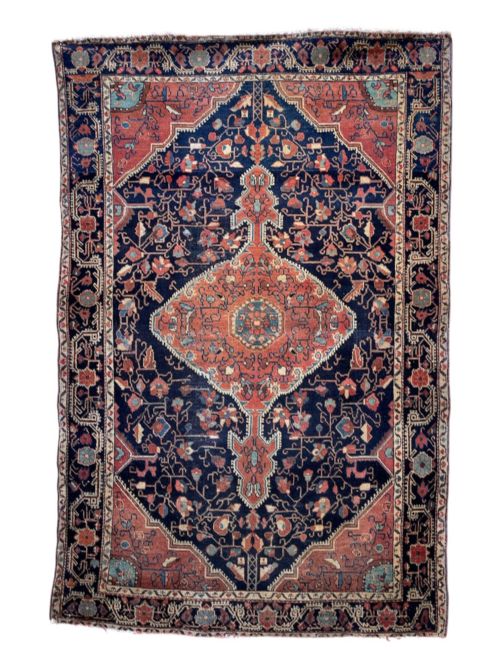
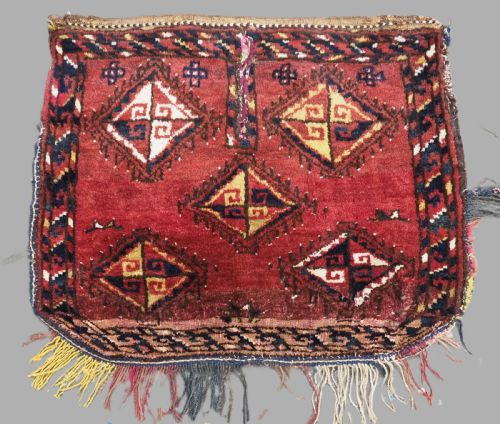
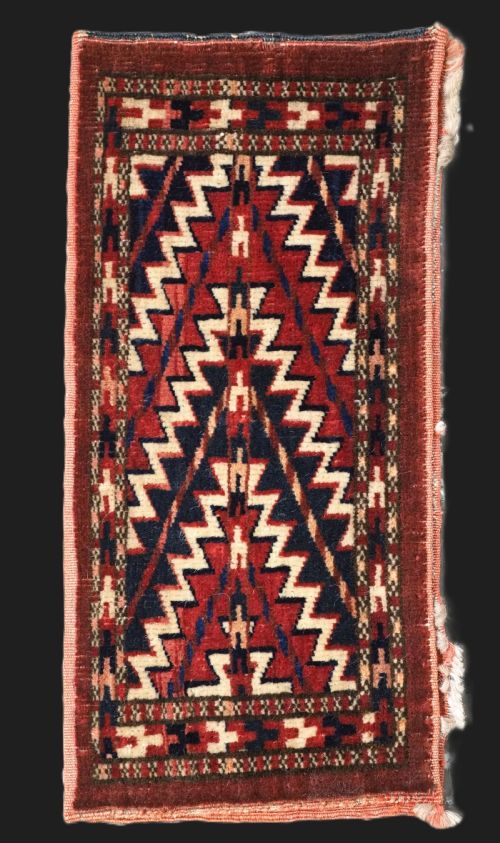
The most common formats met on this page include smaller bag faces such as torbas and chuvals, alongside tribal rugs featuring characteristic regional guls and geometric medallions. Central Asian workshops and weavers produced striking graphic designs, while Persian regions like Heriz, Jozan, and Hamadan contributed robust hand-knotted structures. These textiles bridge the gap between functional tribal gear and enduring decorative floor coverings.
Materials and construction methods
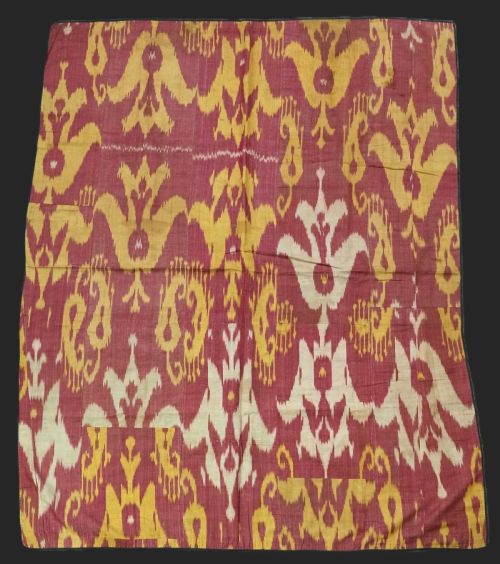
Weavers relied predominantly on hand-spun wool and cotton foundations, often incorporating natural dyes to achieve deep reds, ivories, and soft secondary tones. Certain pieces integrate silk highlights or semi-silk adras fabrics, particularly within Central Asian Suzani and ikat textile panels. Hand-knotting and flatweaving techniques define the structural integrity, with many rugs constructed across multiple narrow strips stitched together.
Nomadic workshops utilised sturdy wool warps and wefts to ensure daily durability for items like saddle bags and floor rugs. Original tassels, plain weave backs, and intricate embroidery frequently survive on these turn-of-the-century examples, displaying traditional regional assembly methods.
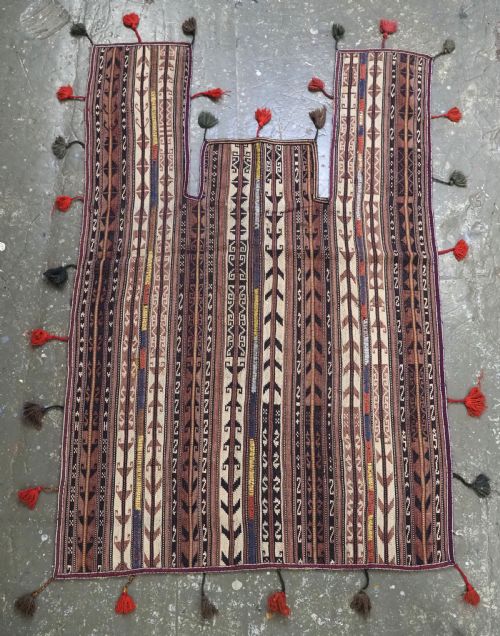
Several horse blankets and saddle covers survive complete with their original tassels and utilitarian flatweave backs.
Distinctions in quality and execution
The precision of tribal motifs, from repeating guls to central medallions, marks the distinction between standard utilitarian items and masterworks. Superior wool quality and expert spin add tactile resilience, ensuring the textile maintains structural coherence after more than a century of existence.
The Circa 1900 Woven Rug Glossary
- Gul
- A repeating primary octagonal medallion used frequently in Turkmen and Central Asian carpet design. These motifs often identify specific tribal lineages and regional groupings.
- Chuval
- A large storage bag face produced by Turkmen nomads for domestic storage inside a yurt. They display characteristic guls and frequently survive as individual decorative wall or floor pieces.
- Kilim
- A flatwoven textile produced without a pile by tightly interweaving warp and weft strands. These pieces offer lightweight versatility and sharp geometric graphics.
- Torba
- A smaller utility bag face created by Turkmen and Baluch weavers for tent storage. They share design elements with larger chuvals but in a more compact format.
- Sofreh
- A woven spread or cloth traditionally used for communal dining or food preparation among nomadic tribes. They often feature minimalist field designs bounded by geometric borders.
Circa 1900 Woven Rug: Frequently Asked Questions
How were these rugs originally used?
Nomadic and village communities utilised these woven pieces for daily practical functions inside tents and homes. Items served as floor coverings, animal trappings, sleeping mats, and storage containers for household possessions.
Larger carpets anchored the living space of a yurt or village house, while smaller bags stored blankets, clothing, and grain. Saddle covers and horse blankets fulfilled functional roles during travel across Central Asia and Persia.
What materials make up these antique textiles?
Most pieces rely primarily on hand-spun wool for the pile and foundation, providing warmth and durability for nomadic life. Cotton and natural dyes appear frequently across both Persian and Central Asian examples.
Selected textiles incorporate silk highlights or are composed entirely of flatwoven wool and cotton structures. Natural dyeing methods yielded the soft reds, ivories, and varied secondary tones visible in the surviving pieces.
How do I identify different tribal designs?
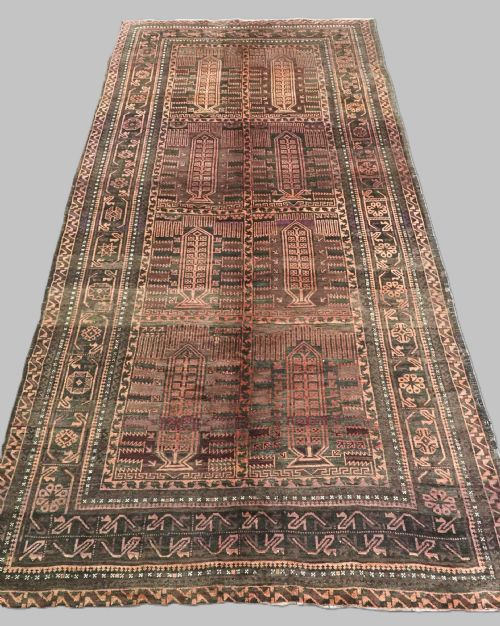
Distinguishing tribal origins involves examining the recurring motifs, border patterns, and structural formats unique to each weaving group. Turkmen pieces often display repeating octagonal guls, while Baluch and Timuri rugs lean towards rich dark palettes and prayer designs.
Persian village rugs from regions like Heriz or Hamadan feature larger geometric medallions and distinct corner spandrels. Central Asian Uzbek and Karakalpak works frequently employ bold graphic flatweave stripes and striking tribal symbols.
How do I care for a circa 1900 rug?
Preserving these antique textiles requires gentle handling, minimal direct sunlight, and regular light vacuuming without a rotating brush roll. Placing a breathable rug underlay prevents slipping and cushions the wool fibres against hard flooring.
Professional antique rug cleaners should handle any washing or heavy conservation work to protect fragile natural dyes and hand-spun foundations. Rotating the piece periodically ensures even exposure to wear and light.