



Church Statue of Mary
These church statue of mary pieces are carved wooden and terracotta figures of the Madonna spanning several centuries.
Church Statue of Mary
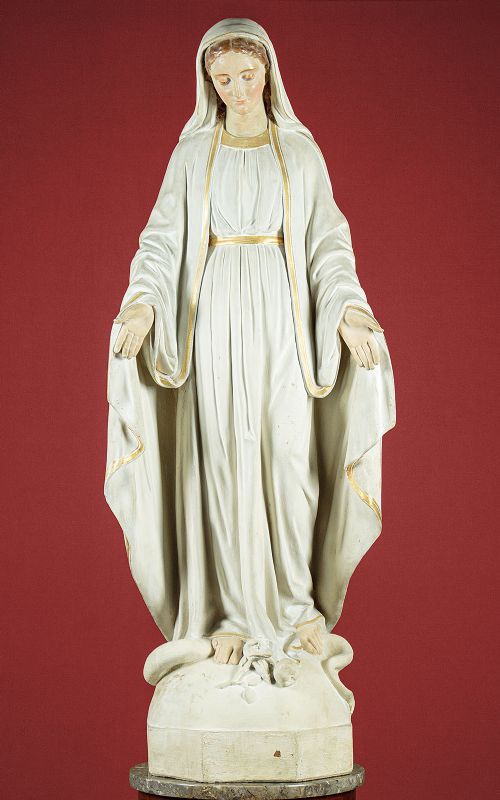
A church statue of mary brings centuries of religious devotion into domestic or ecclesiastical spaces through carved timber and terracotta forms. Buyers hunting for a church statue of mary typically encounter 19th-century interpretations alongside older carved wooden examples dating back through the 16th century and pre-16th century periods.
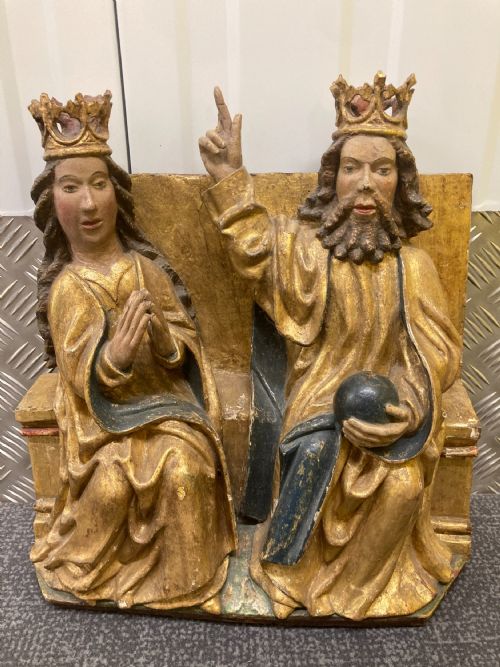
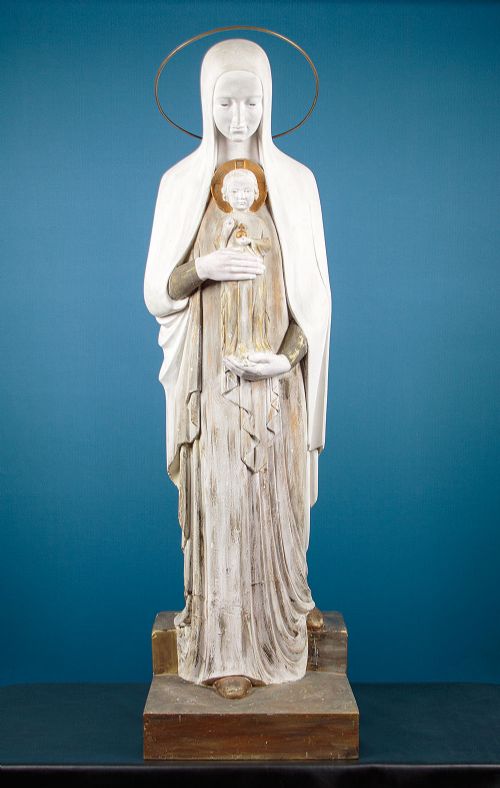
The selections on this page range from large freestanding sculptures of the Virgin Mary and the infant Christ to group carvings like a Spanish Pieta or a God and Mary group. Styles shift from early Gothic and Renaissance expressions through to Spanish Baroque, Gothic Revival, and mid-century ecclesiastical idioms.
Materials and construction
Carvers shaped these figures primarily from oak and other timber, applying polychrome paint and gold leaf to bring depth and colour to the vestments and faces. Later pieces utilise terracotta, demonstrating how workshops adapted their mediums across the 1920s and mid-century periods.
The application of polychrome and gilding follows traditional ecclesiastical methods, where layers of paint and gold leaf protected the carved wood beneath while heightening the devotional presence of the subject.
Several listings feature Mary sharing the spotlight with the infant Christ or God the Father, proving that even heavenly hierarchies occasionally require a group portrait.
What sets examples apart
The hierarchy among these carvings rests on the depth of the carver's hand and the preservation of original surface treatments like polychrome paint and gold leaf. Earlier pre-16th century and 16th-century pieces display a directness of chisel work that distinguishes them from later revivalist interpretations.
Proportion and the handling of drapery dictate the visual power of each figure, where fluid folds in the oak or terracotta create a sense of movement absent in stiffer, purely mechanical workshop output.
The Church Statue of Mary Glossary
- Polychrome paint
- Multi-coloured painting applied directly to wood, stone, or terracotta surfaces to create lifelike or symbolic hues. This technique defines the colourful appearance of many historic religious sculptures.
- Giltwood
- Timber that has been decorated with a thin layer of gold leaf or gold powder. It provides a luminous surface that catches candlelight within ecclesiastical settings.
- Pieta
- A subject depicting the Virgin Mary holding the dead body of Christ. It is a central motif in Spanish Baroque and European religious art.
- Gothic Revival
- An architectural and decorative style popular in the 19th century that revived medieval Gothic forms. Figures from this period often imitate earlier medieval aesthetic conventions.
Church Statue of Mary: Frequently Asked Questions
How do I date a wooden figure of Mary?
Dating relies on tool marks, the choice of timber such as oak, and the style of the carving. Earlier eras like the 16th century show distinct hand-chiseled tool marks compared to later revival periods.
Examining the underlying preparation layers beneath any polychrome paint or gold leaf also helps establish the age and origin of the piece.
What is polychrome wood?
Polychrome wood refers to carved timber that has been painted in multiple colours, often over a prepared gesso ground. This finish was standard for medieval and Renaissance church figures.
Over the centuries, these painted surfaces acquire a natural patination that reflects their long history of devotional use.
Where were these statues originally displayed?
These figures stood in churches, private chapels, and roadside shrines as focal points for prayer and contemplation. They ranged from small devotional objects to large architectural sculptures.
Today, collectors place them in domestic interiors to serve as striking sculptural focal points with deep historical resonance.
How do I care for historic carved timber?
Historic carved timber requires stable indoor humidity levels away from direct sunlight and heat sources. Sudden environmental changes cause the wood to expand and contract, risking damage to the paint layers.
Dusting should be done gently with a dry, soft brush without applying liquid cleaning products to the historic surfaces.